Canal caps (banded, semi-insert hearing protectors) win in one specific situation: intermittent noise between roughly 85 and 95 dB(A), where workers move in and out of a loud zone and need protection they can pop on and off in a second. For continuous exposure above 95 dB(A) or a full shift on a fixed line, foam or silicone ear plugs with a higher NRR are the safer, cheaper choice. This guide breaks down the real trade-offs (attenuation, annual cost, hygiene, loss rate, and compliance) so a safety buyer can stock the right mix instead of over-ordering one type. It is written from the supplier side, by a manufacturer that has shipped CE EN 352 certified hearing protection to importers since 2005.
What a Canal Cap Actually Is
A canal cap is a lightweight band, worn over the head, behind the neck, or under the chin, with a soft pod on each end that seals at the entrance of the ear canal rather than deep inside it. Because the pod caps the canal instead of expanding within it, canal caps sit in the semi-insert category of EN 352-2, alongside conventional ear plugs but with a distinct fit and a distinct use case.
That single design fact drives everything else. The seal is shallower, so attenuation is lower. The band holds the pods in place, so they hang at the collarbone when not in use and are almost impossible to lose. And nothing is pushed into the canal with the fingers, which matters more in dusty or dirty environments than most buyers expect.
The Real Difference Is Attenuation and Wear Time
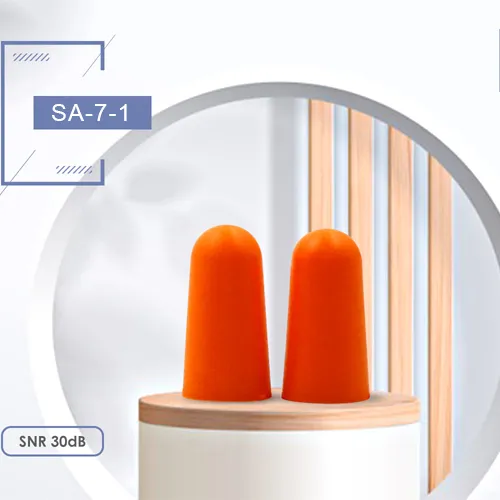
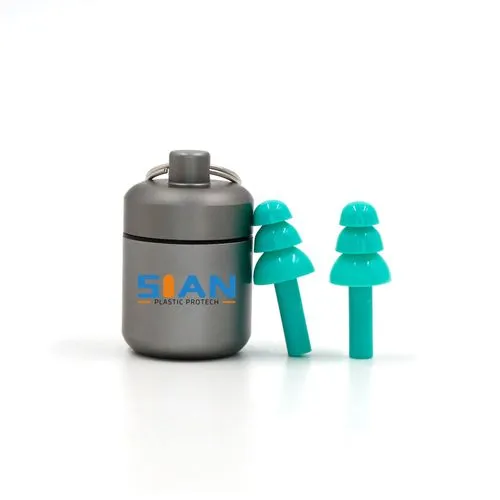
Most banded canal caps rate around NRR 17 to 25 dB. A good foam plug rates NRR 29 to 37 dB, and a silicone plug typically NRR 22 to 27 dB. After you apply the OSHA 50 percent derating rule, a canal cap at NRR 22 gives you roughly 8 to 9 dB of real-world protection, while a foam plug at NRR 32 gives you closer to 13 dB. In an 85 to 95 dB(A) zone that gap is comfortable headroom for the canal cap. In a 100 dB(A) stamping or granulator area it is the difference between compliant and exposed.
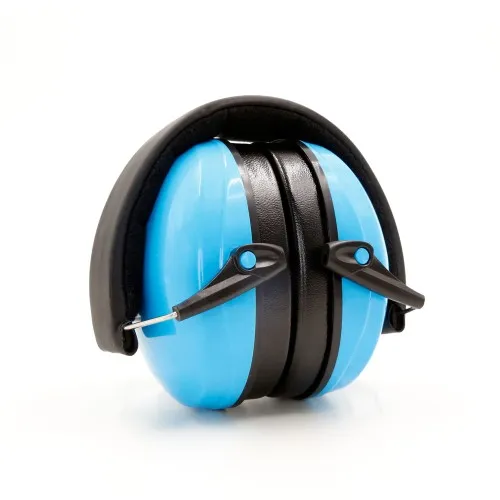
Wear time is the other half of the decision. Canal caps are built for repeated on-off cycles, not for eight uninterrupted hours. The band applies steady pressure to keep the seal, and over a full shift that pressure becomes a comfort complaint and, worse, a reason workers pull them off. Foam plugs, once seated correctly, disappear and stay in. So the honest rule is: canal caps for intermittent tasks, plugs for continuous ones. For a side-by-side on the plug-versus-muff axis, the ear plugs vs ear muffs guide covers the third option.
Cost Over a Year, Not Cost Per Unit
On the shelf a canal cap looks expensive next to a disposable foam plug that costs a few cents a pair. Judged over a year, the comparison inverts. A canal cap is reusable for months, so one unit replaces dozens of disposable pairs for a worker who is in and out of noise all day. For a line worker who wears protection continuously, the disposable foam plug is still cheaper per protected hour, because the canal cap's reusability advantage never gets used.
The procurement mistake we see most often is buying a single type for the whole plant. A forklift driver, a QC inspector, and a maintenance technician who each enter noise briefly are burning through disposable plugs they keep losing, when a reusable canal cap would cost less over the year. Meanwhile the fixed-station operators are put in canal caps that under-protect them. The disposable vs reusable analysis runs the same math in more detail.
Hygiene, Compliance, and Loss Rate
Three practical factors decide as many orders as attenuation does. Hygiene: canal caps are inserted without pushing fingers into the canal, which lowers ear-infection complaints in food, foundry, and outdoor sites where hands are rarely clean. Compliance visibility: a supervisor can see a band around a neck or on the head from across the floor, so canal caps make it easy to verify that protection is being carried, even during the moments it is off. Loss rate: because the pods are tethered, canal caps almost never disappear one-at-a-time the way single foam plugs do, which quietly cuts reorder volume.
None of this changes the certification requirement. A canal cap sold as PPE still needs a valid CE EN 352-2 certificate and a labeled NRR, and material and comfort claims (foam versus thermoplastic pods) should be backed by the notified-body test report, not the catalog copy.
A Procurement Rule You Can Apply by Zone
Take your workplace noise survey and sort roles by two questions: how loud, and how continuous. Fixed stations above 95 dB(A) get high-NRR foam or dual protection. Fixed stations from 85 to 95 dB(A) get foam or silicone plugs matched to the level. Mobile or intermittent roles from 85 to 95 dB(A), the forklift drivers, inspectors, supervisors, and visitors, are where canal caps earn their place. Anyone below 85 dB(A) is availability, not mandate. Stocking two or three lines against that map costs less and protects better than standardising on one.
Frequently Asked Questions
Do canal caps protect as well as ear plugs?
Not in raw attenuation. Canal caps typically rate NRR 17 to 25 dB versus NRR 29 to 37 dB for foam plugs, because the pod seals at the canal entrance instead of expanding inside it. For intermittent exposure in the 85 to 95 dB(A) range that is enough; for continuous exposure above 95 dB(A), choose a higher-NRR plug or pair protection.
Are canal caps compliant with OSHA and EN 352?
Yes, when certified. Canal caps fall under EN 352-2 as semi-insert protectors and carry a labeled NRR the same way plugs do. They satisfy OSHA and EU requirements as long as the derated NRR covers the worker's actual noise exposure. Always request the CE certificate and Declaration of Conformity for the exact model before ordering.
Which industries buy the most canal caps?
Sites with intermittent noise and mobile workers: warehousing and forklift fleets, quality inspection, maintenance crews, airport ground handling, and any operation with frequent zone entry and exit. Continuous heavy-noise industries such as metal stamping or plastics granulating lean toward high-NRR plugs and muffs instead.
Can you supply canal caps under our own brand?
Yes. As a Solution Integrator we OEM banded and semi-insert models alongside foam, silicone, filtered plugs, and earmuffs, with your logo, packaging, and language, on the same order and the same CE documentation set. Typical MOQ starts at 5,000 pieces per model.
Not sure whether your plant needs canal caps, plugs, or both? Send EASTRAGON your noise survey or a zone-by-zone role list and we will match CE EN 352 certified banded, foam, silicone, and earmuff lines to each zone, with NRR/SNR data sheets and Declarations of Conformity in one pack. As a Solution Integrator serving importers in 50+ countries, we ship samples in 3-5 business days. Browse the full product catalog.