Every procurement manager who buys hearing protection at scale faces the same question: should you order disposable foam ear plugs by the pallet, or invest in reusable silicone models that workers keep and clean? The answer depends on more than unit price. It involves noise levels, hygiene conditions, worker compliance rates, storage logistics, and regulatory exposure. This guide puts real numbers on both options so you can make the right call for your specific workforce.
What Makes an Ear Plug Disposable or Reusable?
The distinction is not about quality — it is about material science and intended use cycle. Disposable ear plugs are typically made from slow-recovery polyurethane (PU) foam. You compress them, insert them, and discard them after a single shift or when they lose their shape. Their open-cell foam structure traps dirt and moisture, making cleaning impractical. Reusable ear plugs are molded from medical-grade silicone, thermoplastic elastomer (TPE), or flanged polymer. They maintain shape across hundreds of insertions and can be washed with soap and water between uses.
Both types carry the same certification standards: ANSI S3.19 for NRR in the US market, EN 352-2 for SNR in Europe. A disposable ear plug with NRR 33 provides the same rated attenuation as a reusable ear plug with NRR 33 — under laboratory conditions. Real-world performance, however, depends heavily on fit, insertion technique, and maintenance. For a deeper explanation of how these ratings work, see our SNR and NRR ratings guide.
Head-to-Head Comparison: 7 Factors That Matter
| Factor | Disposable (PU Foam) | Reusable (Silicone/TPE) |
|---|---|---|
| NRR Range | 29–33 dB | 22–27 dB (flanged) / up to 30 dB (custom-molded) |
| Unit Cost | $0.05–0.15 per pair | $1.50–8.00 per pair |
| Lifespan | 1 shift (8 hours) | 2–4 weeks with daily cleaning |
| Hygiene | Fresh pair every shift — no contamination buildup | Requires daily wash; carry case recommended |
| Comfort | Excellent initial fit; conforms to ear canal shape | Firmer insertion; some workers prefer the consistent seal |
| Compliance Rate | Higher in dirty/wet environments (workers discard without guilt) | Higher in office/lab environments (workers invest in fit) |
| Waste | ~25,000 pairs/year per 100 workers | ~600 pairs/year per 100 workers |
5-Year Total Cost of Ownership: The Real Math
Unit price comparisons are misleading. A $0.08 disposable ear plug looks cheap until you multiply by 250 working days, 100 workers, and 5 years. Here is the full calculation for a facility with 100 workers operating 250 days per year:
Disposable Foam Ear Plugs
- Annual consumption: 100 workers × 250 days × 1.04 (loss factor) = 26,000 pairs/year
- Cost per pair (FOB China): $0.08
- Annual product cost: $2,080
- Dispenser hardware: $200 one-time (wall-mounted dispensers × 4 stations)
- 5-year total: $10,600
Reusable Silicone Ear Plugs
- Annual consumption: 100 workers × 6 pairs/year (monthly replacement + loss buffer) = 600 pairs/year
- Cost per pair (FOB China): $2.50
- Annual product cost: $1,500
- Carry cases + cleaning stations: $800 year 1, $200/year maintenance
- 5-year total: $9,100
The reusable option saves roughly $1,500 over 5 years for 100 workers — a 14% reduction. But this assumes workers actually clean and maintain their ear plugs. In environments with heavy dust, oil, or moisture, replacement rates climb and the savings narrow or disappear. The crossover point occurs at roughly 8 replacements per worker per year; above that threshold, disposables become cheaper. For workers who only enter noise intermittently, a tethered banded canal cap often beats both, since it is reusable yet cannot be lost one plug at a time.
When to Choose Disposable Ear Plugs
- High-noise environments (≥95 dB TWA): PU foam delivers NRR 29–33, the highest available without custom-molded options
- Dirty or wet conditions: metalworking, food processing, chemical plants where ear plugs contact contaminants
- Large rotating workforce: temporary workers, contractors, and visitors who need instant protection without fitting
- Compliance-sensitive sites: OSHA inspectors look for fresh ear plugs readily available — disposable dispensers on every wall pass inspection effortlessly
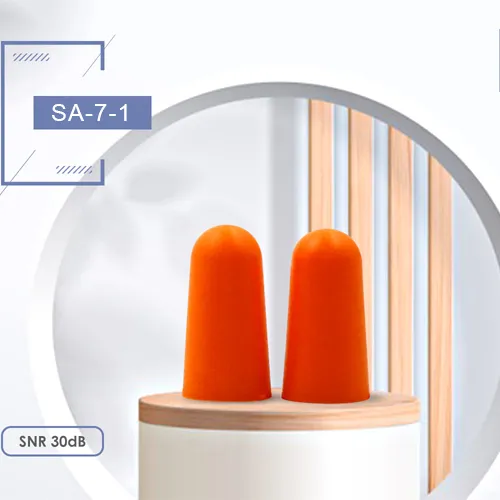
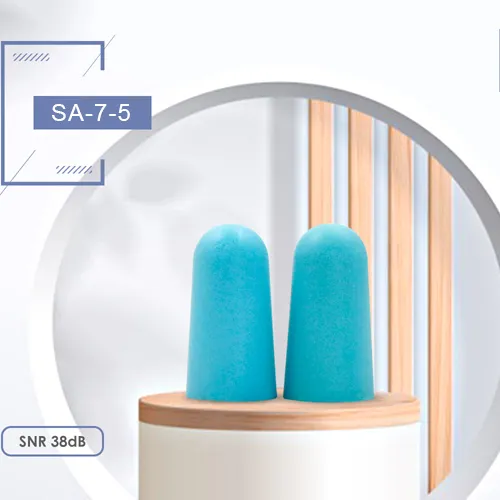
EASTRAGON's SA-7-1 classical bullet-shape PU foam ear plugs are designed for exactly these conditions: NRR 32, slow-recovery foam, skin-friendly polyurethane, individually wrapped for hygiene. MOQ from 50,000 pairs with custom branding available.
When to Choose Reusable Ear Plugs
- Moderate noise (85–95 dB TWA): flanged silicone plugs with NRR 22–27 provide adequate protection at lower attenuation levels
- Communication-critical work: filtered or flat-attenuation reusable plugs preserve speech clarity while reducing overall noise
- Environmental sustainability goals: reducing 25,000 pairs/year of plastic waste to 600 pairs supports corporate ESG reporting
- Stable workforce with PPE training: workers who receive fit training and own their ear plugs consistently achieve better real-world attenuation
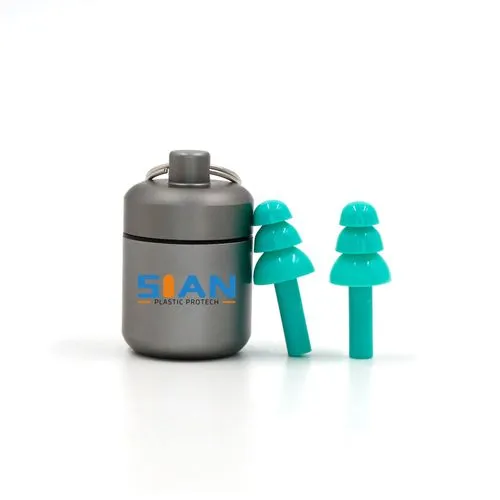
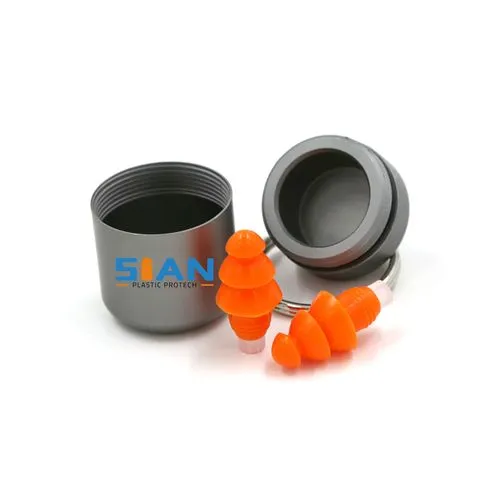
For reusable applications, consider EASTRAGON's SA-1-3 waterproof noise-reduction silicone ear plugs or SA-1-7 triple-flanged silicone ear plugs, both medical-grade silicone with documented NRR ratings and CE EN 352 certification.
The Hybrid Strategy: Why Many Buyers Order Both
The most cost-effective approach for facilities with mixed noise zones is a dual-stock strategy: disposable foam for high-noise production floors and visitor kits, reusable silicone for office-adjacent areas and permanent staff. This approach captures the highest NRR where it matters most while reducing waste and cost in moderate-noise zones. EASTRAGON supplies both categories under one purchase order, simplifying procurement and consolidating shipping.
Frequently Asked Questions
Can reusable ear plugs match the NRR of disposable foam ear plugs?
Standard flanged reusable ear plugs typically reach NRR 22–27, below the NRR 29–33 range of quality PU foam plugs. Custom-molded silicone ear plugs can reach NRR 28–30 but cost significantly more ($15–40 per pair). For environments above 95 dB TWA, disposable foam remains the most cost-effective way to achieve maximum attenuation.
How often should reusable ear plugs be replaced?
With daily soap-and-water cleaning and proper storage in a carry case, most silicone ear plugs last 2–4 weeks of daily use. Signs of replacement need include visible cracks, permanent discoloration, loss of flexibility, or a noticeably looser fit in the ear canal. Budget for monthly replacement per worker as a planning baseline.
What is the minimum order quantity for custom-branded ear plugs from China?
For disposable PU foam ear plugs, most manufacturers require MOQ 50,000–100,000 pairs for custom branding (logo on wrapper, custom color foam). For reusable silicone ear plugs, MOQ is typically 5,000–10,000 pairs due to mold setup costs. EASTRAGON offers MOQ as low as 50,000 pairs for disposable and 5,000 pairs for reusable, with OEM packaging and private labeling. See our OEM vs ODM guide for details.
Are disposable ear plugs bad for the environment?
A 100-worker facility using disposable ear plugs generates approximately 25,000 pairs (50,000 individual plugs) of PU foam waste annually. This foam is not readily recyclable. Switching to reusable plugs in suitable environments reduces this to around 600 pairs per year — a 97.6% waste reduction. Many European buyers now factor waste reduction into procurement scoring, making reusable options more competitive in tenders even when unit economics are similar.
Which type is easier for OSHA compliance audits?
Disposable ear plugs simplify compliance documentation because dispensers provide visual proof of availability, and fresh plugs eliminate questions about maintenance. Reusable programs require documented cleaning protocols, replacement schedules, and individual fit verification records. Both approaches satisfy OSHA 29 CFR 1910.95 requirements, but disposable programs have lower administrative overhead. For a full breakdown of OSHA requirements, see our OSHA hearing conservation guide.
Can workers use disposable and reusable ear plugs together for double protection?
Ear plugs are not designed to be stacked. For double protection in extreme noise environments (above 100 dB TWA), the correct approach is to wear ear plugs underneath ear muffs. This combination typically adds 5–10 dB of effective attenuation beyond a single device. See our industrial ear protection selection guide for dual-protection recommendations.