Every year, 22 million U.S. workers face hazardous noise exposure on the job, and occupational hearing loss costs an estimated $242 million annually in workers' compensation. For safety managers and procurement teams, navigating OSHA's hearing conservation requirements is not just a compliance checkbox — it is a direct line to protecting your workforce and controlling long-term liability. OSHA 29 CFR 1910.95 establishes the federal standard that governs every aspect of industrial hearing protection, from noise monitoring to the specific earplugs sitting in your workers' ears. This guide walks you through exactly what a compliant hearing conservation program demands, how to select earplugs that meet those requirements, and how to make smart bulk purchasing decisions that balance performance, compliance, and total cost.
Understanding OSHA Noise Exposure Limits
Before selecting any hearing protection, you need to understand the two thresholds that define your legal obligations. OSHA measures worker exposure using the Time-Weighted Average (TWA), which calculates noise dose across an 8-hour shift accounting for variations in noise level throughout the day.
The Action Level (AL) is 85 dB(A) TWA. Once any worker reaches this threshold, your organization is legally required to implement a hearing conservation program. This includes noise monitoring, audiometric testing, training, and making hearing protection available — even if workers are not yet required to wear it at this stage.
The Permissible Exposure Limit (PEL) is 90 dB(A) TWA. At or above this level, engineering and administrative controls must be attempted first. Hearing protection becomes mandatory when those controls are not sufficient to reduce exposure below the PEL. For context, a typical manufacturing floor runs 85–95 dB, warehouse loading docks hit 90–112 dB from forklift alarms alone, oil and gas drilling rigs frequently exceed 100 dB, and pneumatic tools can hit 115 dB or more.
OSHA uses a 5 dB exchange rate (sometimes called the "doubling rate"), meaning the permissible exposure time halves for every 5 dB increase: 90 dB for 8 hours, 95 dB for 4 hours, 100 dB for 2 hours, and so on. Understanding this exchange rate matters when you calculate whether your chosen earplugs provide adequate attenuation for specific job tasks. For a broader foundation on how to choose ear protection for industrial use, including situational guidance across industries, that resource covers the decision framework in depth.
The 7 Components of an OSHA Hearing Conservation Program
A compliant hearing conservation program is not a single policy document — it is an integrated system with seven distinct components. Each one carries specific documentation and procedural requirements that OSHA inspectors will examine.
1. Noise Monitoring. You must measure noise levels wherever employee exposures may equal or exceed 85 dB TWA. Monitoring methods include sound level meters and noise dosimeters worn by workers. Records must be retained and made available to employees.
2. Audiometric Testing Program. Workers exposed at or above the action level must receive baseline audiograms within six months of first exposure, followed by annual audiograms. A licensed or certified audiologist, otolaryngologist, or physician must supervise the program. Standard threshold shifts — a 10 dB or more average change at 2,000, 3,000, and 4,000 Hz — trigger follow-up action.
3. Hearing Protectors. Employers must make a variety of hearing protectors available at no cost to employees exposed at or above 85 dB TWA. Workers must be able to choose from a selection of protectors, and they must be properly fitted and trained in use and care.
4. Training Program. Annual training is mandatory for all employees exposed at or above the action level. Training must cover the effects of noise on hearing, the purpose of audiometric testing, and the advantages, disadvantages, and attenuation levels of various types of hearing protectors.
5. Recordkeeping. Noise exposure measurements must be retained for two years. Audiometric test records must be retained for the duration of the affected employee's employment. These records must be transferred to any successor employer.
6. Access to Information. Employees must have access to noise measurement records and audiometric test results. The OSHA standard itself must be posted or otherwise made available.
7. Program Evaluation. While not always listed separately, effective programs include periodic review of controls, hearing protector adequacy, and audiometric data trends to verify the program is actually preventing hearing loss — not just meeting paperwork requirements.
How to Select Earplugs That Meet OSHA Requirements
The most critical specification when evaluating earplugs for OSHA compliance is the Noise Reduction Rating (NRR), a single-number rating derived from ANSI S3.19 laboratory testing. Higher NRR values indicate greater noise attenuation in controlled test conditions. However, the laboratory NRR is not the number you use for real-world compliance calculations — OSHA requires derating.
For a full technical breakdown of what NRR means and how it compares to the European SNR rating system, see our complete buyer's guide to SNR and NRR ratings. The key points for procurement decisions are:
- OSHA-recommended derating (50% method): Divide the labeled NRR by 2 to estimate real-world protection. An earplug with NRR 33 provides an estimated 16.5 dB of effective attenuation in practice.
- NIOSH derating: NIOSH recommends more aggressive derating — 70% for foam earplugs (multiply NRR by 0.3), 50% for formable earplugs, and 25% for earmuffs. Many safety professionals use NIOSH figures to build in a larger safety margin.
- Required attenuation: Subtract the target exposure level (typically 85 dB or below) from the actual TWA to determine how much attenuation you need. If a worker is exposed to 98 dB TWA and you want them below 85 dB, you need at least 13 dB of effective real-world attenuation — which means an NRR of at least 26 using the 50% OSHA method.
For programs operating in EU markets or purchasing from manufacturers certified under European standards, the SNR, H, M, and L rating system applies. Certification under EN 352 is the EU equivalent of ANSI compliance. Our guide on CE vs. ANSI certification for ear plugs explains the key differences and what documentation to require from your supplier.
Foam vs. Silicone vs. Filtered: Which Type for Your Program?
Not all environments call for the same earplug type. Matching protector design to workplace conditions is a key factor in achieving real-world compliance — workers who find their earplugs uncomfortable or inconvenient will not wear them consistently, which defeats the entire program.
| Type | Typical NRR Range | Best For | Limitations | Cost per Unit (bulk) |
|---|---|---|---|---|
| Disposable Foam | 29–33 | High-noise manufacturing, construction, one-time use programs | Requires proper insertion technique; single-use generates waste | $0.05–$0.20 |
| Reusable Silicone | 24–28 | Moderate-noise environments, workers needing repeated donning/doffing | Lower peak attenuation than foam; must be cleaned regularly | $0.40–$1.20 |
| Filtered / Level-Dependent | 20–27 | Environments requiring speech communication or equipment monitoring | Higher cost; filter maintenance required | $2.00–$8.00 |
For a more detailed comparison of foam and silicone performance across industries, our foam vs. silicone ear plugs business guide covers durability testing, hygiene considerations, and volume pricing structures.
At EASTRAGON, our hearing protection product line covers all three categories with products engineered specifically for industrial and commercial bulk programs:
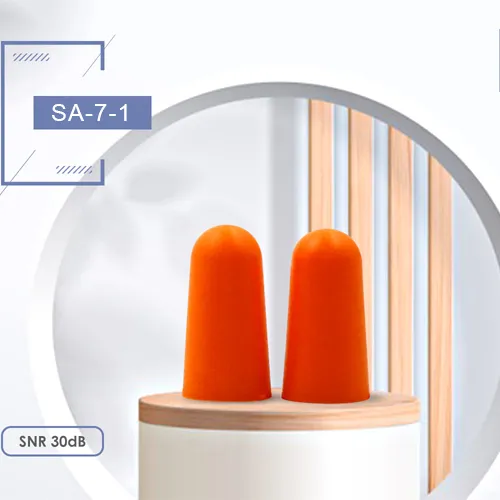
- Disposable high-attenuation foam: The SA-7-1 Classical Bullet Shape PU Foam Ear Plugs deliver consistent NRR 33 performance with a tapered bullet profile that accommodates a wide range of ear canal sizes — a critical factor when buying for diverse workforces. The low-pressure PU foam expands slowly, reducing the insertion errors that cause real-world attenuation to fall well below the labeled NRR.
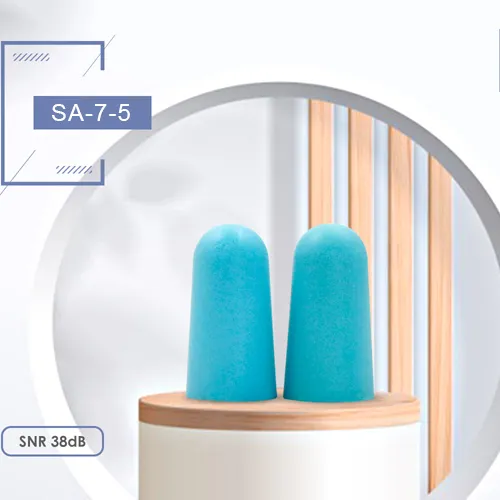
- Standard program foam: The SA-7-5 Standard Bullet Shape Foam Ear Plugs are designed for high-volume programs where cost efficiency matters without sacrificing NRR 29 rated protection. Available in corded and uncorded variants for different workflow requirements.
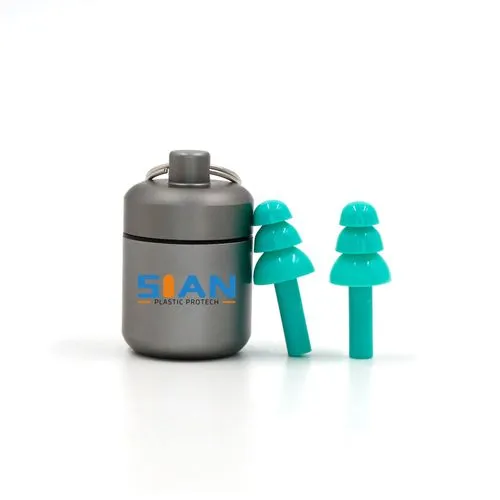
- Reusable waterproof silicone: The SA-1-3 Waterproof Noise Reduction Silicone Ear Plugs are built for wet environments — food processing, chemical plants, and outdoor operations where foam degrades rapidly. The triple-flange design creates a reliable seal without requiring the deep insertion technique that many workers resist.
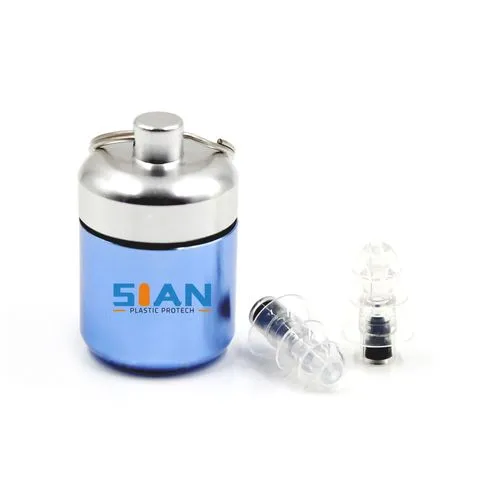
- Communication-friendly filtered: The SA-2-1 Standard Filtered Earplugs allow conversational speech and warning signals to pass through while attenuating harmful peak noise levels — the right tool for supervisors, quality inspectors, or any role requiring situational awareness alongside noise protection.
Bulk Buying Guide for Safety Managers and Distributors
Procurement decisions for hearing conservation programs involve more than selecting the right NRR. Volume, lead time, certification documentation, and supplier reliability all affect whether your program stays compliant when it counts.
Minimum Order Quantities (MOQ). For disposable foam earplugs from a direct manufacturer like EASTRAGON, MOQ typically starts at 5,000–10,000 pairs per SKU for standard catalog items. OEM and private-label orders usually require 20,000–50,000 pairs minimum to cover tooling and packaging setup costs. If your annual consumption is below these thresholds, consolidating SKU selection — choosing one or two earplug models to cover multiple job classifications — often makes bulk pricing accessible.
Lead Times. Standard in-stock models: 7–15 days for container quantities from China to major US/EU ports. Custom OEM orders with private label packaging: 30–45 days from artwork approval. Plan your inventory cycles accordingly, particularly if your program is subject to OSHA recordkeeping audits that require continuous availability documentation.
Certifications Required for US and EU Markets. For the US market, ANSI S3.19 NRR certification and EPA labeling compliance are the baseline requirements. For EU distribution, CE marking under EN 352-2 (earplugs) is mandatory. Require your supplier to provide test reports from accredited third-party laboratories — not just a CE mark on the packaging — and verify the report covers the specific product model and lot you are ordering. Our guide on top criteria for choosing a PPE supplier from China outlines the documentation checklist that separates reliable manufacturers from brokers reselling uncertified product.
OEM and Private Label Options. Many distributors and large employers build branded hearing conservation programs with custom-labeled products. This approach strengthens program identity, simplifies employee recognition of approved PPE, and can support commercial distribution. Understanding the difference between OEM (building to your spec) and ODM (selecting from existing manufacturer designs) affects both cost and timeline — see our breakdown of OEM vs. ODM differences for PPE products before initiating supplier conversations.
Total Cost of Ownership: Disposable vs. Reusable Over One Year
The unit price of an earplug is rarely the most meaningful cost figure for a safety manager running a program for 100 workers. Replacement frequency, administration burden, and compliance-related costs create substantial differences in total cost of ownership between disposable and reusable options.
| Cost Factor | Disposable Foam (100 workers, daily replacement) | Reusable Silicone (100 workers, replace every 3 months) |
|---|---|---|
| Annual units required | ~26,000 pairs (250 working days) | ~400 pairs (4 replacements/year) |
| Unit cost (bulk FOB) | $0.08 per pair | $0.65 per pair |
| Annual product cost | $2,080 | $260 |
| Dispensing / admin labor | ~$800 (daily replenishment of dispensers) | ~$200 (quarterly issue) |
| Cleaning / hygiene supplies | $0 | ~$150 |
| Lost/damaged replacement | Included in daily supply | ~$130 (estimated 20% loss rate) |
| Estimated Total Annual Cost | $2,880 | $740 |
This simplified model illustrates why reusable silicone earplugs dominate programs with moderate noise exposures and stable workforces — the economics favor reusables by a factor of nearly 4:1 over one year. However, disposable foam consistently outperforms on peak attenuation (NRR 33 vs. NRR 24–28), making it the technically correct choice for high-noise operations above 100 dB TWA where maximum protection is non-negotiable. The decision should always start with the noise exposure data, not the price sheet.
For volume pricing, certification documentation, or to request samples for fit testing before committing to a program SKU, contact our B2B team directly. We work with safety distributors, importers, and industrial end-users across North America and Europe, and we can provide test reports, compliance documentation, and OEM packaging options from a single source.
Frequently Asked Questions
What is the minimum NRR required to comply with OSHA standards?
OSHA does not specify a single minimum NRR — the required attenuation depends on the actual noise exposure at your facility. The standard requires that hearing protectors reduce employee exposure to at or below 90 dB (or 85 dB if the worker has experienced a standard threshold shift). Using OSHA's 50% derating method, an earplug with NRR 29 provides approximately 14.5 dB of effective real-world attenuation. If your noise exposure measurements show TWA levels of 100 dB or higher, you will need an earplug with NRR 33 or higher, or consider dual protection (earplugs combined with earmuffs).
How many earplugs should I order annually for 100 workers?
For a disposable foam program with daily replacement, plan for approximately 250 to 260 pairs per worker per year (based on 250 working days), or 25,000–26,000 pairs for 100 workers. Buffer inventory of 10–15% above this baseline accounts for breakage, loss, visitors, and new hires during the year. For reusable programs, plan for 4 to 6 replacement pairs per worker annually, plus a 20% loss contingency. Ordering in container quantities (typically 50,000–100,000 pairs) from a direct manufacturer significantly reduces unit cost and ensures consistent lot certification across your program year.
Does OSHA require employers to provide multiple earplug options to workers?
Yes. OSHA 29 CFR 1910.95(i)(3) explicitly states that employers must make a variety of hearing protectors available to employees. The intent is to allow workers to find a protector that fits comfortably and that they will actually wear consistently. In practice, most compliance programs offer at least two earplug types — typically a disposable foam option and a reusable option — plus at least one earmuff model for workers who cannot properly insert earplugs. Offering only a single product model is a documented OSHA citation risk.
Can we use CE-certified earplugs to satisfy OSHA requirements in the United States?
CE certification alone is not a direct substitute for ANSI S3.19 NRR certification under US OSHA requirements. OSHA's standard references NRR (derived from ANSI S3.19 testing methodology), while CE uses the SNR system under EN 352. However, many manufacturers — including EASTRAGON — obtain both certifications on the same products, and the underlying acoustic test data is substantially comparable. If you are sourcing CE-certified product for a US program, verify that the supplier also provides ANSI S3.19 test reports and that the product bears a valid NRR label as required by the EPA Noise Labeling Regulation (40 CFR Part 211). Our CE vs. ANSI certification guide details exactly what documentation to request.
How do I conduct fit testing for bulk earplug programs?
OSHA does not currently mandate individual earplug fit testing (as opposed to respirator fit testing), but NIOSH strongly recommends it, and many safety professionals consider it best practice under a 2024 NIOSH guidance update. The two primary methods are: field attenuation estimation systems (FAES) such as 3M E-A-Rfit or Honeywell VeriPRO, which use real-time measurement to confirm each worker achieves adequate attenuation with their chosen device; and group fit testing during training sessions to verify proper insertion technique. When sourcing earplugs for fit testing programs, request samples of each model from your supplier before committing to bulk quantities — proper fit is product-specific, and what achieves NRR 33 in one worker may only deliver NRR 20 in another without proper training and sizing.
What documentation should a supplier provide to verify earplug compliance for our program records?
A credible PPE supplier should provide, without hesitation: a current NRR test report from an accredited third-party laboratory (not self-certified); EPA labeling compliance documentation; CE test certificate under EN 352-2 if your program covers EU operations; ISO 9001:2015 manufacturing quality certification; and a Declaration of Conformity. For OEM or private-label programs, also request documentation confirming that the product you will receive is identical in specification to the tested model. Retain all supplier documentation for the duration of your OSHA hearing conservation program records — these become part of your compliance file and may be requested during an OSHA inspection. Visit our homepage or browse our full product catalog to request a compliance documentation package for any EASTRAGON hearing protection product.