EN 352 is the European standard for hearing protection, because it defines exactly how ear muffs and ear plugs must be tested, rated, and CE-certified before they can be legally sold in the EU. Published by CEN as a 10-part series (EN 352-1 through EN 352-10), it sets the SNR, HML, and APV attenuation ratings and the EU-type examination rules required under PPE Regulation 2016/425. Without a valid EN 352 certificate issued by a Notified Body, hearing protectors face customs seizure and fines of up to €500,000 in some EU member states.
If you source hearing protection products for the European market, EN 352 is the standard you cannot ignore. It governs how ear muffs, ear plugs, and specialized hearing protectors are tested and classified — and it determines whether your products can legally carry the CE mark. According to the EU PPE Regulation 2016/425, hearing protectors fall under Category III (complex PPE protecting against irreversible damage), requiring EU-type examination by a Notified Body and ongoing production surveillance.
What Is EN 352?
EN 352 is a series of European harmonized standards published by CEN (European Committee for Standardization). Rather than a single document, it consists of 10 parts — each covering a different type of hearing protector. When a product passes testing under the relevant EN 352 part, the manufacturer can declare conformity to the EU PPE Regulation and apply the CE mark.
Industry definition: EN 352 is the harmonized European standard series (EN 352-1 to EN 352-10) that specifies the safety requirements, acoustic test methods, and product marking for every category of hearing protector, published by CEN under mandate from the European Commission.
Official spec: under EU PPE Regulation 2016/425, hearing protectors are classified as Category III PPE and must pass EU-type examination (Module B) against the relevant EN 352 part, followed by ongoing production control, before the CE mark may be applied. The EU Noise Directive 2003/10/EC then governs how employers must select and provide that protection in the workplace.
This matters for buyers because products sold without valid EN 352 certification in the EU face customs seizure, market withdrawal, and fines of up to €500,000 in some member states. If you're importing from China, your supplier must provide a valid EU-type examination certificate — not just a factory test report.
The 10 Parts of EN 352 at a Glance
| Part | Product Type | Key Test | Typical Application |
|---|---|---|---|
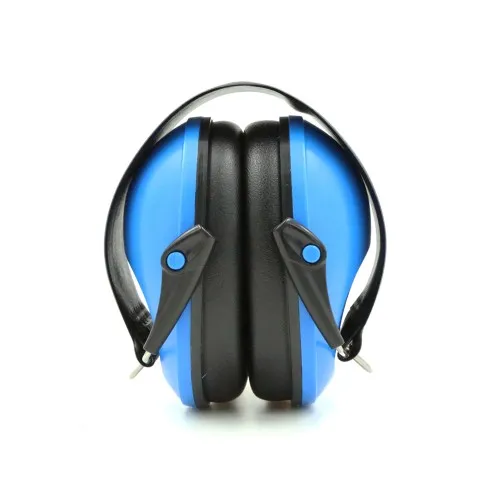
| EN 352-1 | Ear muffs | Sound attenuation, headband force, cup pressure | Construction, manufacturing, oil and gas |
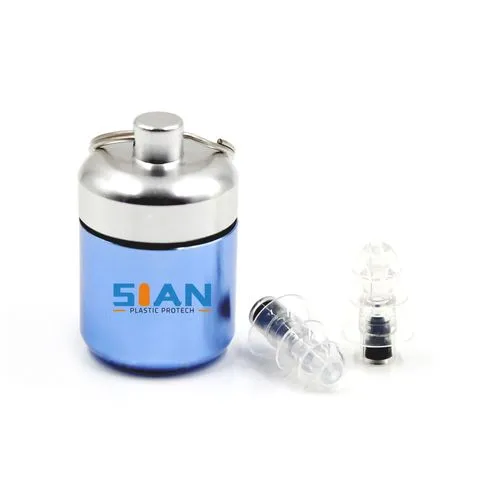
| EN 352-2 | Ear plugs | Sound attenuation (REAT method), fit variability | General industry, food processing |
| EN 352-3 | Helmet-mounted ear muffs | Attenuation when mounted, attachment strength | Construction with hard hats |
| EN 352-4 | Level-dependent ear muffs | Level-dependent function, recovery time | Intermittent noise (shooting, stamping) |
| EN 352-5 | Active noise reduction (ANR) ear muffs | ANR performance, battery failure behavior | Aviation, military |
| EN 352-6 | Ear muffs with audio input | Maximum output level (82 dB limit) | Communication in noisy environments |
| EN 352-7 | Level-dependent ear plugs | Level-dependent attenuation curve | Shooting sports, impulse noise |
| EN 352-8 | Entertainment audio ear muffs | Maximum output ≤85 dB(A) | Consumer audio products |
| EN 352-9 | Ear plugs with audio input | Maximum output level, attenuation | In-ear monitors, communication |
| EN 352-10 | Combined ear muffs | Overall attenuation of dual systems | Extreme noise (>105 dB) |
Most B2B buyers deal primarily with EN 352-1 (ear muffs) and EN 352-2 (ear plugs). If you're sourcing foam ear plugs for workplace distribution, EN 352-2 is your reference standard.
How EN 352 Testing Works
The testing methodology under EN 352 uses the REAT (Real-Ear Attenuation at Threshold) method for ear plugs and acoustic test fixtures for ear muffs. Here is the process:
- Sample collection — The Notified Body selects samples directly from production (not hand-picked prototypes)
- Subject testing — For EN 352-2, a panel of 16 human subjects wears the protectors while threshold measurements are taken at frequencies from 63 Hz to 8,000 Hz
- Statistical analysis — Mean attenuation and standard deviation are calculated at each frequency to produce the APV (Assumed Protection Value) = mean minus one standard deviation
- Rating calculation — From APV data, three rating systems are derived: SNR, HML, and octave band values
Understanding SNR, HML, and APV Ratings
These three rating systems serve different levels of precision when selecting hearing protection. EASTRAGON provides all three on every product data sheet:
| Rating | What It Measures | When to Use | Precision |
|---|---|---|---|
| SNR (Single Number Rating) | Overall attenuation across all frequencies | Quick selection: Noise level (dBC) minus SNR = estimated exposure | Low — one number for all noise types |
| HML (High/Medium/Low) | Attenuation at three frequency bands | When noise spectrum is known (H for high-freq, L for low-freq dominant) | Medium — accounts for noise character |
| APV (Assumed Protection Value) | Attenuation at each octave band (125–8000 Hz) | Detailed noise assessment with octave-band measurements | High — frequency-specific matching |
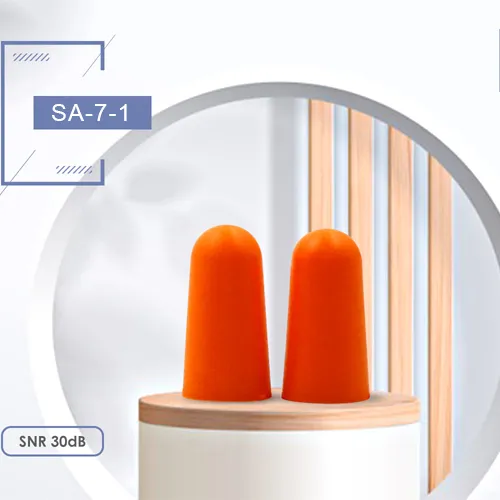
Practical example: A factory floor measures 95 dB(C). You need exposure below 80 dB(A). Required SNR = 95 − 80 = 15 dB minimum. Our SA-7-1 PU foam ear plugs offer SNR 36 dB — well above the minimum, providing a comfortable safety margin even accounting for real-world fit variability.
EN 352 vs ANSI S3.19 and ANSI S12.6: Key Differences for Global Buyers
If you sell into both European and North American markets, you need to understand how EN 352 compares to the ANSI standards used in the US:
| Aspect | EN 352 (Europe) | ANSI S3.19 / S12.6 (USA) |
|---|---|---|
| Rating system | SNR / HML / APV | NRR (Noise Reduction Rating) |
| Test subjects | 16 subjects, experimenter-fit | S3.19: 10 subjects, experimenter-fit; S12.6: 20 subjects, subject-fit (Method B) |
| Derating | No official derating (employer discretion) | OSHA recommends 50% derating of NRR |
| Legal requirement | Mandatory for CE marking | Required for NIOSH listing |
| Typical SNR vs NRR | SNR often 2–5 dB higher than NRR for same product | NRR typically conservative |
Key takeaway: An SNR 33 product and an NRR 29 product may offer identical real-world protection. The difference is in test methodology, not product quality. When comparing quotes from different suppliers, always compare within the same rating system.
What to Ask Your Supplier About EN 352
Before placing a PO, verify these five items with your hearing protector supplier:
- EU-type examination certificate number — Must reference a specific EN 352 part and be issued by an EU-recognized Notified Body (check the NANDO database)
- Declaration of Conformity (DoC) — The manufacturer's signed statement referencing EU 2016/425 and the relevant EN 352 part
- Full test report with APV data — Not just the SNR headline number, but the frequency-by-frequency attenuation values
- Production quality control — EN 352 certification is for the type, not each batch. Ask about ongoing factory production control (FPC) and annual surveillance audits
- Marking compliance — Each unit must display: CE mark, Notified Body number, manufacturer name, product model, size indication, SNR value, relevant EN 352 part number, and storage/care instructions
At EASTRAGON, we provide complete documentation packages including EU-type examination certificates, full APV test data, and DoC for every product line. Our foam and silicone ear plug ranges are tested under EN 352-2 by accredited Notified Bodies, and our ear muffs under EN 352-1.
Frequently Asked Questions
What happens if my products fail EN 352 testing?
Failure typically results from inconsistent manufacturing quality — high standard deviation in attenuation values across test subjects. This means the product works well for some ear canal shapes but poorly for others. The solution is better quality control in materials and dimensions. EASTRAGON maintains ±0.3mm dimensional tolerance on all ear plug molds, which directly reduces fit variability and improves pass rates.
Can one EN 352 certificate cover multiple product variants?
No. Each distinct product model (different material, shape, or size) requires separate testing. Color variations of the same mold typically share one certificate, but a change in foam density or plug geometry requires retesting. Budget €3,000–8,000 per product variant for Notified Body testing.
How long does EN 352 certification take?
From sample submission to certificate issuance: 6–12 weeks for standard testing. Expedited service (4–6 weeks) is available from some Notified Bodies at premium pricing. Plan certification timelines before committing to large production runs for the EU market.
Is EN 352 accepted outside the EU?
EN 352 is recognized in the EU, UK (adopted as BS EN 352 — see our guide to the UK Noise at Work Regulations 2005), Turkey, and most EFTA countries. Many Middle Eastern and African countries accept CE-marked products. However, Australia/New Zealand uses AS/NZS 1270, and Japan uses JIS T 8161 — these require separate testing. Learn more about global rating systems.
What is the difference between EN 352-1 and EN 352-2?
EN 352-1 covers ear muffs and tests headband force, cup pressure, and sound attenuation using an acoustic test fixture. EN 352-2 covers ear plugs and uses the REAT method with 16 human subjects to measure real-ear attenuation and fit variability. Most B2B buyers need EN 352-1 for muffs and EN 352-2 for foam or silicone plugs; a single product cannot be certified under both parts at once.
How much does EN 352 certification cost and who pays for it?
Budget €3,000 to €8,000 per product variant for Notified Body EU-type examination, plus annual surveillance audit fees. The manufacturer holds and pays for the certificate, not the buyer. Reputable suppliers absorb this cost and supply the certificate free with your order, so you should never be charged separately for an EN 352 certificate that already exists for a stock product.
What are the red flags of a fake EN 352 or CE certificate?
Five warning signs: (1) a four-digit Notified Body number that does not appear in the EU NANDO database; (2) a "CE" logo with the wrong proportions or letter spacing (the China Export mark looks deliberately similar); (3) a self-issued factory test report instead of an EU-type examination certificate; (4) one certificate reused across clearly different product models; and (5) no APV octave-band data behind the headline SNR number. Always verify the certificate number directly with the issuing Notified Body.
Need EN 352-certified hearing protection with full documentation for your EU import? Contact EASTRAGON for samples, test certificates, and a quote — MOQ from 5,000 pairs, delivery in 25–35 days.