Most buyers pick hearing protection by looking at one number — the NRR or SNR rating on the packaging. But that single number assumes a flat, steady noise source, which rarely matches real factory conditions. According to OSHA's Noise and Hearing Conservation guidelines, the type of noise pattern in your facility should directly influence which hearing protector you specify. Get this wrong, and workers end up either over-protected (unable to communicate, removing PPE) or under-protected during peak exposures.
Here are the four noise patterns found in industrial environments and how each one changes the hearing protection decision.
1. Continuous Noise: The Constant Hum
Continuous noise stays at a relatively stable level for extended periods — think HVAC systems, generators, textile looms, or paper machines running at 85–95 dB for an entire shift. This is the most common pattern in manufacturing and the simplest to protect against.
Why it matters for selection: Workers wear protection for 8+ hours without breaks. Comfort becomes the deciding factor because a technically superior protector that workers remove after 4 hours provides less real protection than a comfortable one worn all day. The CDC/NIOSH research confirms that real-world attenuation drops by roughly 50% when fit compliance falls.
Best match:
- Foam ear plugs — highest NRR (29–37 dB), lightweight for all-day wear
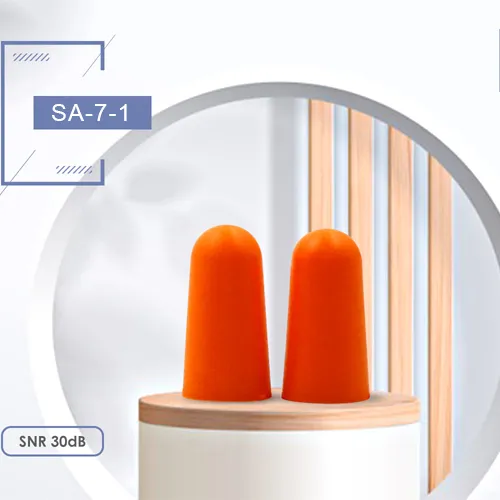
- Our SA-7-1 PU foam plugs (SNR 36) are designed for exactly this scenario: slow-rebound foam that stays comfortable across a full shift
- Avoid over-protection — if floor noise is 88 dB, an NRR 33 plug reduces perceived level to ~55 dB, which can isolate workers from warning signals and speech
OSHA rule: 85 dB TWA (8-hour time-weighted average) triggers a hearing conservation program. 90 dB TWA requires engineering controls or PPE.
2. Intermittent Noise: On-Off Cycles
Intermittent noise cycles between loud and quiet — stamping presses, CNC machines starting and stopping, batch processing, woodworking table saws and routers spinning up between cuts, or forklift traffic in warehouses. Levels may swing from 70 dB during idle to 100+ dB during active cycles, sometimes dozens of times per hour.
Why it matters for selection: Workers in intermittent noise environments remove and reinsert their hearing protection frequently. If reinsertion is slow or difficult, many workers skip putting them back in for short loud cycles — this is where cumulative damage happens. Convenience beats raw attenuation here.
Best match:
- Over-ear muffs — flip up in 1 second, flip down in 1 second, no reinsertion technique needed
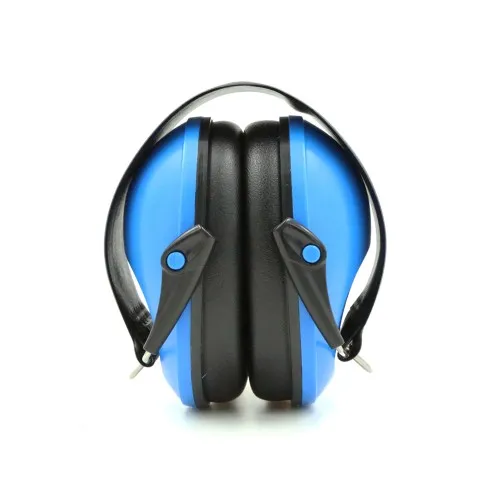
- Our SA-8-5 Foldable Earmuffs fold flat between cycles and provide SNR 28 dB when deployed
- Corded foam plugs are the budget alternative — workers keep them around their neck during quiet periods
- Filtered (pre-molded) plugs like our SA-2-1 Filtered Earplugs allow push-in/pull-out without the roll-and-wait cycle of foam
Key calculation: OSHA uses the 5 dB exchange rate — every 5 dB increase halves the allowable exposure time. A worker exposed to 100 dB for 15 minutes per hour across an 8-hour shift accumulates a dose that may exceed the action level, even though the environment is "quiet" most of the time.
3. Impulse Noise: Sharp Peaks, Instant Risk
Impulse noise consists of sharp, high-energy peaks lasting less than 1 second — metal-on-metal impact, pneumatic nail guns, drop forging, explosive actuators, or demolition. Peak levels can exceed 140 dB, which is the threshold for instant acoustic trauma.
Why it matters for selection: Standard passive hearing protectors have a response lag. Foam plugs compress under sustained pressure but may not fully attenuate a 2-millisecond spike. Over-protection is also a risk — workers who cannot hear warning shouts or backup alarms between impacts face safety hazards from other sources.
Best match:
- Electronic (level-dependent) ear muffs — amplify normal speech and ambient sounds, then clip or compress peaks above 82 dB. This is the gold standard for impulse environments
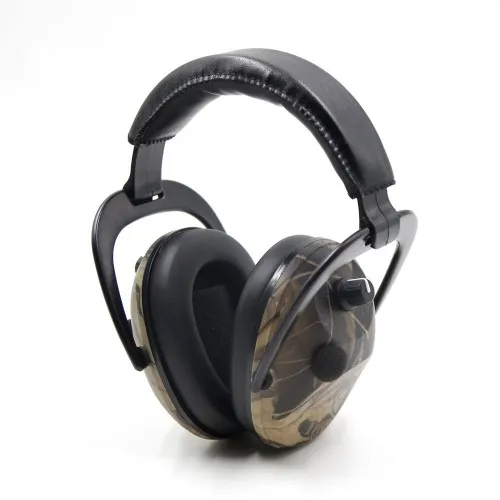
- Our SA-9-2 Electronic Active Noise Isolation Ear Muffs provide level-dependent protection: conversations at normal volume pass through, but impulse peaks are electronically limited
- Dual protection (foam plugs under passive muffs) for peak levels above 130 dB — see our ear protection selection guide for dual-protection pairing
Military/NATO reference: ISO 17512 and MIL-STD-1474E define impulse noise limits at 140 dB peak SPL. For role-by-role selection in defense and police settings, see our military and law enforcement hearing protection guide. EN 352-4 and EN 352-7 specifically address level-dependent protectors for impulse environments.
4. Variable/Mixed Noise: The Real-World Default
Most industrial facilities have overlapping noise sources — continuous background from ventilation, intermittent spikes from machinery, and occasional impulse events from maintenance or material handling. A single assembly plant floor may present all three patterns within a 50-meter walk.
Why it matters for selection: No single protector optimizes for all patterns simultaneously. The practical solution is either a versatile protector that performs adequately across patterns, or a two-tier system where workers carry both plugs and muffs and switch based on zone.
Best match:
- Zone-based PPE assignment — map the facility into noise zones, post signage, and assign protector type per zone
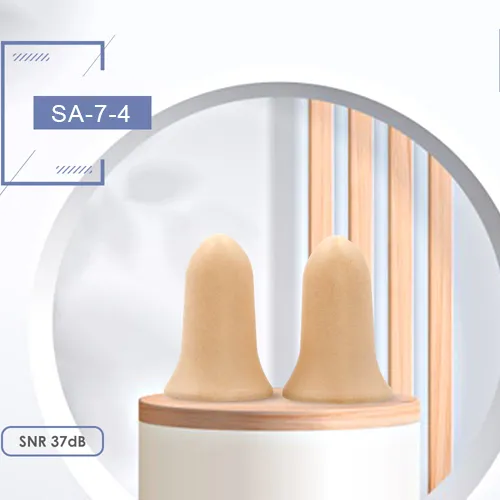
- SA-7-4 Bell Shape Foam Plugs (SNR 34) for continuous zones + SA-8-5 Foldable Earmuffs for intermittent zones
- Electronic muffs for supervisors and maintenance workers who move between all zones
- Banded plugs for workers who transition between quiet and loud areas multiple times per shift — they hang around the neck and insert in seconds
Practical tip: Run a noise survey that captures not just peak and average levels, but the pattern — a 90 dB continuous floor and a 90 dB intermittent press room have the same TWA but need different protectors. The survey form should include columns for noise type, cycle duration, and worker movement patterns.
Quick Reference: Noise Pattern → Protector Match
| Noise Pattern | Typical Sources | Primary Protector | Key Selection Factor |
|---|---|---|---|
| Continuous (85–100 dB) | Generators, looms, HVAC | Foam ear plugs | All-day comfort + high NRR |
| Intermittent (70–105 dB cycles) | Presses, CNC, forklifts | Over-ear muffs or corded plugs | Quick on/off convenience |
| Impulse (>130 dB peaks) | Metal impact, nail guns, forging | Electronic level-dependent muffs | Peak clipping + speech pass-through |
| Variable/Mixed | Multi-source factory floors | Zone-based dual system | Versatility + zone mapping |
Frequently Asked Questions
Can I use the same ear plugs for all noise patterns?
Technically yes — a high-NRR foam plug provides passive attenuation regardless of noise pattern. But the practical answer is no. Workers in intermittent noise environments remove foam plugs during quiet periods and often skip reinsertion. For intermittent and impulse patterns, quick-deploy protectors (muffs, banded plugs, or electronic muffs) produce better real-world compliance and protection.
How do I measure noise patterns in my facility?
Use a Type 2 integrating sound level meter (SLM) set to "slow" response and log readings every 5 seconds for at least one full production cycle. Record the minimum, maximum, and time-weighted average (TWA). If you see a spread greater than 10 dB between min and max, you have intermittent or impulse noise that requires pattern-specific protector selection. Contact EASTRAGON for guidance on matching measurement data to product specifications.
What is the OSHA exchange rate and why does it matter for intermittent noise?
OSHA uses a 5 dB exchange rate: every 5 dB increase in noise level halves the allowed exposure time. At 90 dB, the limit is 8 hours. At 95 dB, it drops to 4 hours. At 100 dB, just 2 hours. In intermittent environments, short bursts at 100+ dB can push the cumulative daily dose above the action level even if the average sounds moderate. This is why time-weighted calculations — not just peak readings — drive compliant protector selection.
When should I specify dual protection (plugs plus muffs)?
When the noise exposure exceeds 100 dB TWA or peak levels reach 130+ dB. Dual protection adds approximately 5–10 dB of real-world attenuation beyond a single device (not the sum of both NRR values). Common applications include metal stamping, shipbuilding, and airport ground operations. Pair our SA-7-1 foam plugs under the SA-8-10 ear muffs for maximum combined attenuation.
Need help matching hearing protectors to your facility's noise patterns? Request a consultation from EASTRAGON — we help buyers across 50+ countries select the right protection for their specific industrial environment. MOQ from 5,000 pairs, samples available within 7 days.