A noise exposure limit is the maximum sound level a worker may legally be exposed to over an 8-hour shift before hearing protection becomes mandatory. The OSHA permissible exposure limit (PEL) is 90 dB(A) TWA with a 5 dB exchange rate (per 29 CFR 1910.95), while the EU exposure limit value is 87 dB(A) with a 3 dB exchange rate (per Directive 2003/10/EC). Most countries outside the US follow the EU model. This guide compares 8 major markets so you can select products that keep your buyers compliant everywhere.
Why Noise Exposure Limits Matter for PPE Buyers
Noise exposure limits determine two critical purchasing decisions:
- Minimum NRR/SNR required — a 90 dB limit means less attenuation is needed than an 85 dB limit for the same workplace noise level
- When hearing protection becomes mandatory — the "action level" where employers must provide protectors varies from 80 dB (EU) to 85 dB (OSHA)
Getting this wrong has real consequences. An ear plug rated for US compliance may not meet EU requirements for the same noise environment. For distributors and OEM/ODM buyers selling across borders, understanding these differences prevents compliance failures and product returns.
8-Country Noise Exposure Limits Comparison Table
| Country / Region | Standard | PEL (8-hr TWA) | Action Level | Exchange Rate | Peak Limit |
|---|---|---|---|---|---|
| United States (OSHA) | 29 CFR 1910.95 | 90 dB(A) | 85 dB(A) | 5 dB | 140 dB |
| United States (NIOSH) | REL (recommended) | 85 dB(A) | 85 dB(A) | 3 dB | 140 dB(C) |
| European Union | Directive 2003/10/EC | 87 dB(A)* | 80 / 85 dB(A) | 3 dB | 140 dB(C) |
| United Kingdom | Control of Noise at Work 2005 | 87 dB(A)* | 80 / 85 dB(A) | 3 dB | 140 dB(C) |
| China | GBZ 2.2-2007 | 85 dB(A) | 85 dB(A) | 3 dB | — |
| Australia | SWA Code of Practice 2021 | 85 dB(A) | 85 dB(A) | 3 dB | 140 dB(C) |
| Canada (Federal) | Canada Labour Code Part II | 87 dB(A) | 84 dB(A) | 3 dB | 140 dB(C) |
| Brazil | NR-15 / NHO-01 | 85 dB(A) | 80 dB(A) | 5 dB (NR-15) / 3 dB (NHO-01) | — |
*EU/UK: The 87 dB limit is measured at the ear after accounting for hearing protector attenuation — this is unique and makes the effective workplace limit more protective than the number suggests.
Per OSHA 29 CFR 1910.95, "permissible exposure limit" (PEL) is the maximum 8-hour time-weighted average (TWA) noise level a worker may be exposed to without engineering or administrative controls reducing the source. Per the CDC/NIOSH Criteria Document, TWA is calculated by integrating sound pressure levels over the full work shift and normalizing to an 8-hour reference period.
3 Critical Differences That Affect Product Selection
1. Exchange Rate: 3 dB vs 5 dB
Per occupational hygiene standards, the exchange rate (also called the doubling rate or trading ratio) is the increase in decibels that halves the permitted exposure duration. The exchange rate determines how quickly allowed exposure time halves as noise increases. Under OSHA's 5 dB rule, a worker can endure 95 dB for 4 hours. Under the EU's 3 dB rule, the same 95 dB cuts to just 2.5 hours. This means EU-destined products need higher attenuation for the same noise environments.
2. Action Level: When Protection Becomes Mandatory
Industry definition: the action level is the noise exposure threshold at which employers must begin a hearing conservation program, including audiometric testing, training, and provision of hearing protectors. The EU requires employers to make hearing protection available at 80 dB (lower exposure action value per Directive 2003/10/EC, Article 3) and mandatory at 85 dB. OSHA's action level is 85 dB with mandatory use at 90 dB. Result: EU buyers order hearing protection for quieter environments — more units per facility, but often lower-attenuation products like banded plugs or reusable silicone plugs.
3. Certification Requirements
US-market products need NRR testing per ANSI S3.19 or S12.6. EU-market products need CE marking with EN 352 certification and SNR/H-M-L ratings. Dual-certified products command premium pricing but simplify inventory for multinational distributors.
How to Select Products for Multi-Market Compliance
If you supply hearing protection to multiple countries, follow this decision framework:
- Identify the strictest limit in your target markets — for most combinations, that is the EU at 87 dB (with attenuation) or NIOSH at 85 dB
- Calculate required attenuation using the 3 dB exchange rate (even for US shipments, NIOSH-aligned selection prevents liability)
- Choose dual-certified products — CE + ANSI testing covers US, EU, UK, Australia, and most markets that recognize either standard
- Specify both SNR and NRR on packaging — buyers need both numbers for local compliance documentation
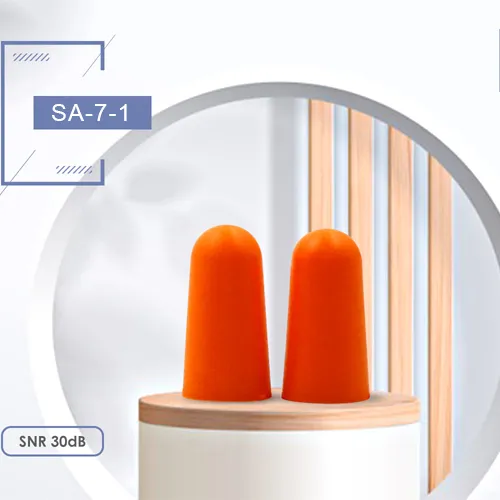
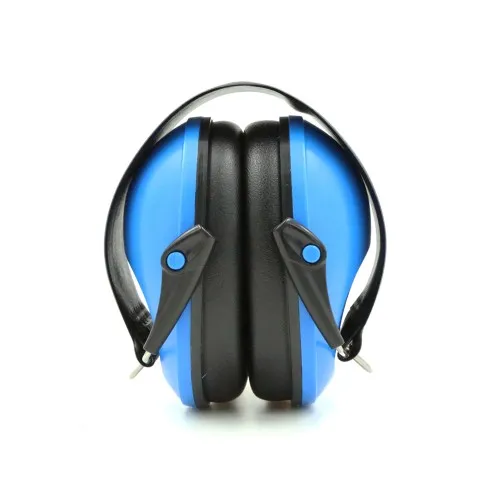
At EASTRAGON, our SA-7-1 foam ear plugs (SNR 37 / NRR 33) and SA-8-5 foldable earmuffs (SNR 31) are dual-certified for both US and EU markets, simplifying compliance for distributors serving multiple regions.
Frequently Asked Questions
Why is the OSHA limit (90 dB) higher than most other countries?
OSHA's permissible exposure limit was set in 1971 based on the knowledge available at the time. Scientific consensus has since shifted toward 85 dB as the safe threshold, which is why NIOSH recommends 85 dB. OSHA has not updated the PEL, but the action level of 85 dB triggers hearing conservation program requirements that effectively push real-world compliance closer to other countries' standards.
Does the EU 87 dB limit mean workers can be exposed to louder noise than under OSHA?
No — the EU limit is more protective. The 87 dB is measured at the ear after hearing protector attenuation is applied. The real-world equivalent without protectors would be the lower action values: 80 dB (make protectors available) and 85 dB (mandatory use). This combined with the 3 dB exchange rate makes EU requirements stricter than OSHA for identical noise environments. See EU Directive 2003/10/EC for the full legal text.
Which rating should I print on product packaging — SNR or NRR?
Both, if you sell to multiple markets. US law (EPA regulation 40 CFR Part 211) requires NRR on all hearing protectors sold in the United States. EU law requires SNR plus H/M/L values per EN 352. Printing both ratings on packaging — which EASTRAGON does as standard — lets distributors sell the same SKU in both markets without relabeling.
How do I calculate whether my ear plugs provide enough protection for a specific country?
For NRR (US): Subtract 7 from the NRR, divide by 2, then subtract from measured noise level. For SNR (EU): Subtract the SNR directly from measured noise level. Example: a 100 dB factory with NRR 33 plugs → effective exposure = 100 − (33−7)/2 = 87 dB. Same factory with SNR 37 → effective exposure = 100 − 37 = 63 dB. The derating difference exists because NRR accounts for real-world fit variability. Use the method required by your destination market's standard.
Do I need separate certifications for each country?
Not for most markets. CE certification covers the entire EU, EEA, UK (UKCA is accepted alongside CE until 2028), and countries that recognize European standards. ANSI testing covers the US and Canada. Australia accepts either CE or AS/NZS 1270 (closely aligned with ISO 4869). China requires a domestic LA mark, which is a separate process. Contact EASTRAGON to discuss dual or multi-market certification for your product line — our R&D lab handles CE, ANSI, and LA testing.
Supplying hearing protection to buyers across multiple countries? Request a multi-market compliance consultation from EASTRAGON — we help distributors in 50+ countries select products that meet every local standard. MOQ from 5,000 pairs, samples within 7 days.