Food processing plants generate noise levels between 85 and 100 dB across bottling lines, grinding stations, packaging machines, and refrigeration compressors. That puts them squarely in the range where hearing protection is legally required under OSHA 29 CFR 1910.95 and EU Directive 2003/10/EC. But unlike general manufacturing, food plants must also satisfy hygiene regulations that restrict what materials and colors can enter production areas. This guide covers the 5 requirements every food processing buyer must meet when sourcing hearing protection in 2026.
What hearing protection does the food-processing industry need? Food and beverage plants require metal-detectable ear plugs in a high-visibility colour (usually blue), made from FDA-compliant materials and rated for the 85–100 dB noise their production lines generate. Beyond noise attenuation, every device must satisfy HACCP foreign-body control — so a lost plug is caught by the same metal detectors that screen the product. An ordinary foam ear plug, however well it blocks noise, fails this test and exposes the plant to recall risk.
Why Food Processing Is Different
A metal stamping factory can hand out any NRR-rated ear plug and meet compliance. A food processing plant cannot. The difference comes down to contamination risk: if an ear plug falls into a batch of product, it must be detected before that batch ships. A single foreign body incident can trigger a product recall costing $10 million or more, according to the Food Marketing Institute and the Grocery Manufacturers Association.
This is why food processing buyers evaluate hearing protection on two axes simultaneously: noise attenuation performance and food safety compliance. Getting one right while ignoring the other creates liability. Pharmaceutical and cleanroom facilities face a similar dual-compliance challenge, with the added constraint of ISO 14644 particulate shedding limits.
Requirement 1: Adequate Noise Reduction (NRR ≥ 29 for Most Areas)
Common noise sources and their typical levels in food plants:
| Equipment | Typical dB Range | Minimum NRR Needed |
|---|---|---|
| Bottling and canning lines | 88–95 dB | NRR 25+ |
| Grinding and milling stations | 92–100 dB | NRR 29+ |
| Packaging machines | 85–92 dB | NRR 22+ |
| Refrigeration compressors | 90–98 dB | NRR 27+ |
| Steam cleaning / CIP systems | 85–95 dB | NRR 25+ |
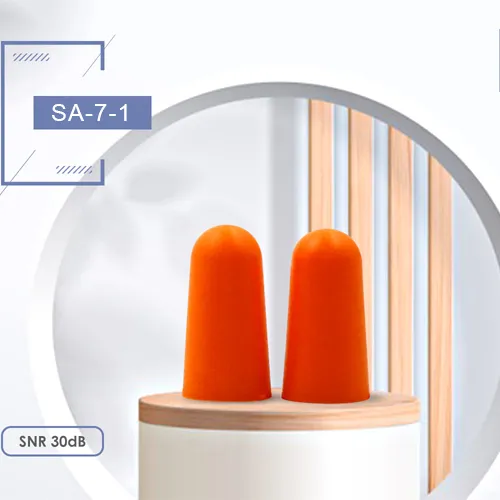
For most food processing environments, an NRR of 29 or higher provides adequate protection. PU foam ear plugs like the SA-7-1 Classical Bullet Shape (NRR 32) offer the highest attenuation at the lowest cost per pair, making them the default choice for high-noise zones.
Requirement 2: Detectable Design for Foreign Body Control
HACCP and BRC Global Standard for Food Safety both require that foreign bodies be detectable. For hearing protection, this means:
- High-visibility colors: Blue is the industry standard because blue does not occur naturally in food. Orange and green are also used but blue remains the global default for food-grade PPE.
- Metal-detectable options: Ear plugs with an embedded metal bead or metal-detectable cord can be picked up by metal detectors on the production line. This is mandatory for many BRC-certified facilities.
- Corded designs: A cord connecting both ear plugs prevents individual plugs from falling undetected into product. The cord also makes visual detection easier during line inspections.
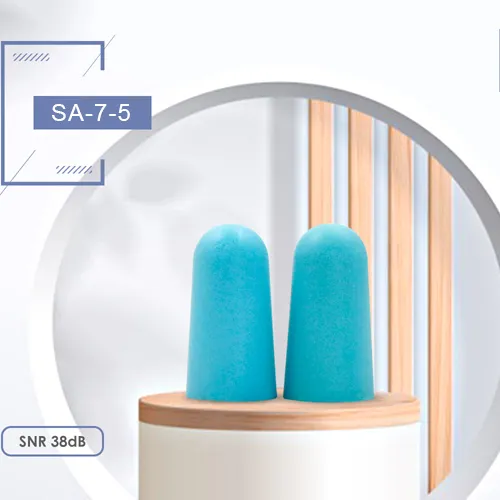
When sourcing from a manufacturer like EASTRAGON, specify "food-grade blue, corded, metal-detectable" in your inquiry. Most foam ear plug models — including the SA-7-5 Standard Bullet Shape — can be produced in custom colors with cord and metal bead options under OEM terms. Typical MOQ for custom color foam ear plugs is 50,000 pairs. See our OEM vs ODM guide for sourcing details.
Requirement 3: Disposable Over Reusable in Wet Environments
Food processing plants are wet. Washdown procedures, steam, condensation, and product splashes create an environment where reusable silicone ear plugs degrade faster and harbor bacteria if not properly maintained. For most food processing applications, single-use PU foam ear plugs are the safer and more practical choice because:
- No cleaning protocol needed — use once and dispose
- No cross-contamination risk between shifts
- Lower per-unit cost ($0.05–0.15 per pair for foam vs. $2–8 for reusable)
- Easier compliance documentation — dispenser usage is visible and auditable
For a deeper comparison of the two types, read our disposable vs reusable ear plugs workplace guide.
Requirement 4: Compliance Documentation for Audits
Food safety audits (BRC, SQF, FSSC 22000, IFS) increasingly examine PPE programs as part of foreign body prevention. Auditors look for:
- Technical data sheets showing NRR/SNR rating, material composition, and certification (CE EN 352-2, ANSI S3.19 or S12.6)
- Declaration of conformity confirming the product meets applicable standards
- Color specification documented in the HACCP plan as a visual detection control
- Usage and disposal SOP defining how workers are issued ear plugs and how used plugs are collected
- Metal detector validation records if using metal-detectable plugs (calibration logs showing the detector can find the specific plug model)
When evaluating suppliers, ask for a complete documentation package upfront — not just a product catalog. A reliable manufacturer provides test reports from accredited labs, CE or ANSI certificates with model numbers matching your order, and material safety data sheets. This saves weeks of back-and-forth during audit preparation.
Requirement 5: Cost Efficiency at Scale
A food processing plant with 200 workers using disposable ear plugs daily consumes approximately 100,000 pairs per year (assuming one pair per worker per shift, 250 working days). At scale, the price difference between suppliers matters significantly:
| Sourcing Option | Price per Pair | Annual Cost (100K pairs) |
|---|---|---|
| US/EU branded (3M, Moldex, Howard Leight) | $0.20–0.40 | $20,000–40,000 |
| Direct from China manufacturer (OEM) | $0.03–0.08 | $3,000–8,000 |
| Private label (ODM, your brand) | $0.05–0.12 | $5,000–12,000 |
For multi-facility operations, switching to direct OEM sourcing from a certified Chinese manufacturer can reduce hearing protection costs by 60–80% while maintaining equivalent NRR performance and CE/ANSI certification. The key is selecting a manufacturer with food industry experience who understands blue color requirements, metal-detectable options, and documentation needs from the start.
Frequently Asked Questions
Are blue ear plugs required by law for food processing?
No specific law mandates blue ear plugs, but BRC Global Standard, most HACCP plans, and food safety best practices require that all foreign bodies in production areas be visually detectable. Since blue does not occur naturally in food, blue PPE has become the de facto industry standard. Many food processors write "blue only" into their PPE specifications as a blanket policy.
What is the difference between metal-detectable and standard ear plugs?
Metal-detectable ear plugs contain a small stainless steel bead or wire embedded in the plug or cord. This allows production-line metal detectors to identify the plug if it falls into product. Standard ear plugs without this feature cannot be detected by metal detectors and must rely on visual inspection alone. For BRC-certified facilities processing packaged goods, metal-detectable ear plugs are strongly recommended.
How often should disposable ear plugs be replaced in food plants?
Once per shift is the standard practice. In wet or high-humidity environments typical of food processing, foam ear plugs absorb moisture and lose their shape faster than in dry manufacturing settings. Never reuse a disposable foam ear plug — the hygiene risk and reduced noise attenuation make it a false economy.
Can I get blue corded foam ear plugs with my own brand from China?
Yes. Most Chinese hearing protection manufacturers offer OEM services including custom color (blue, orange, green), corded or uncorded options, metal-detectable bead, and private label packaging. Typical MOQ is 50,000 pairs for custom color corded foam ear plugs. Lead time is 30–45 days for ODM orders. EASTRAGON produces custom blue corded foam ear plugs certified to both CE EN 352-2 and ANSI S3.19 standards. Request a quote with your specifications.
What NRR rating do I need for a bottling line running at 92 dB?
Using the OSHA derating method (NRR minus 7, divided by 2), a 92 dB environment needs ear plugs with NRR 25 or higher to bring exposure below the 85 dB action level. An NRR 32 foam ear plug provides an estimated 12.5 dB reduction under real-world conditions, bringing the effective exposure to approximately 79.5 dB — well within safe limits. For detailed NRR calculations, see our SNR and NRR ratings buyer's guide.
Do food safety auditors check hearing protection specifically?
Yes. BRC Issue 9, SQF Edition 9, and FSSC 22000 v6 all include foreign body prevention clauses that cover PPE worn in production areas. Auditors verify that PPE is documented in the HACCP plan, that colors are specified, that metal-detectable items are validated on the line detector, and that usage SOPs exist. Failing to document your hearing protection program can result in a minor nonconformity that affects your audit score.