A plastics processing plant is quiet and loud at the same time. The molding hall itself usually sits at 80-95 dB — right at the edge where hearing protection becomes mandatory — but the granulator room runs 95-115 dB, compressed-air blow-offs spike past 100 dB at the operator's ear, and blow molding, trim presses, and pelletizers hold 90-105 dB through round-the-clock shifts. That mix of a borderline main floor and a handful of extreme hotspots is exactly what makes plastics plants easy to get wrong: buy one product for everyone and you either overspend on the molding floor or underprotect the granulator operator. This guide maps plastics plant noise zone by zone and gives PPE buyers a sourcing framework — written by a manufacturer that runs its own PU-foam and silicone molding lines, so this noise floor is one we stand on every day.
Why Plastics Plant Noise Is a Different Problem
Most hearing protection guides picture one continuously loud floor. A plastics plant does not work like that. The dominant pattern is a moderate baseline with severe hotspots: an injection molding machine on its own typically measures 80-95 dB depending on tonnage, clamp design, and hydraulics — loud, but survivable near the 85 dB(A) action level of OSHA's occupational noise standard, 29 CFR 1910.95 — while the granulator grinding sprues and rejects two doors away can exceed 110 dB. The UK's Health and Safety Executive singles out granulators as the loudest common machine in plastics processing, and its plant-survey data consistently puts sizing and grinding among the industry's worst exposures.
Three more features change the buying logic. First, compressed air is everywhere — part blow-offs, mold-face cleaning, conveying — and an unregulated air nozzle produces a high-frequency blast of 100 dB or more precisely where the operator leans in. Second, plastics plants run continuous shifts: a 24/7 molding operation accumulates time-weighted average (TWA) exposure the way a mill does, so comfort over a full 8-12 hour wear time decides whether protection stays in ears, a pattern we map in detail in our industrial noise patterns guide. Third, experienced technicians listen to the machine — a screw slipping, a check-ring failing, a dry bearing on a robot rail all announce themselves by sound first — so protection that seals the ear off completely can hide the early warning that prevents a scrapped mold.
Mapping Noise by Plant Zone
A practical zone map for a typical injection molding or mixed plastics converting plant looks like this:
| Zone / Task | Typical Noise | Noise Character | Protection Priority |
|---|---|---|---|
| Granulator / grinding room | 95-115 dB | Continuous + tonal screech, worst on hard regrind | Maximum attenuation; dual protection at the top end |
| Injection molding hall | 80-95 dB | Continuous hum + cycle peaks (clamp, ejection) | All-day comfortable plugs; hearing-through preferred for technicians |
| Blow molding / extrusion lines | 90-100 dB | Continuous, air-noise heavy | High-NRR plugs |
| Compressed-air blow-offs | 100-110 dB peaks | Intermittent high-frequency blasts at ear height | Plugs worn before the task, not during it |
| Trim presses / thermoforming | 95-105 dB | Repetitive impact | High-NRR plugs or muffs |
| Pelletizers / compounding | 95-105 dB | Continuous | High-NRR plugs |
| Compressor & chiller rooms | 90-100 dB | Continuous, low-frequency | Muffs for short entries |
| Material handling / vacuum loaders | 85-95 dB | Intermittent | Standard plugs |
Two readings matter more than any table: your own. Because the molding hall sits so close to the 85 dB(A) action level, whether your program is legally triggered depends on measured TWAs, not on how the floor feels — walk the plant with a sound level meter, then put dosimeters on the mobile roles (material handlers, technicians, grinder operators). Our dosimeter vs sound level meter guide explains which instrument answers which question, and the full method is in the workplace noise survey guide.
Choosing Protection Zone by Zone
Start from the measured TWA and apply the derating habit that keeps selection honest: halve an earplug's labeled NRR before trusting it, per OSHA's 50% derating guidance, because lab ratings overstate field attenuation. Our guide to NRR and SNR ratings covers the arithmetic.
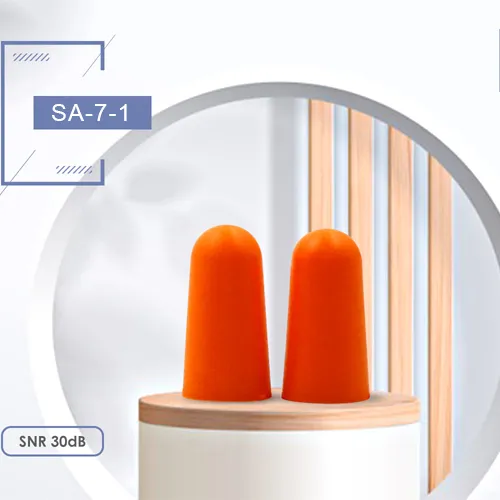
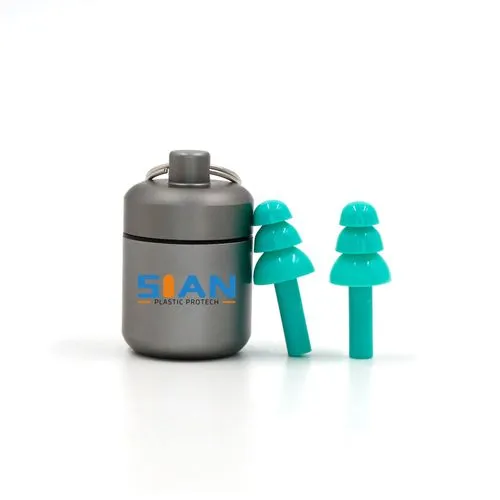
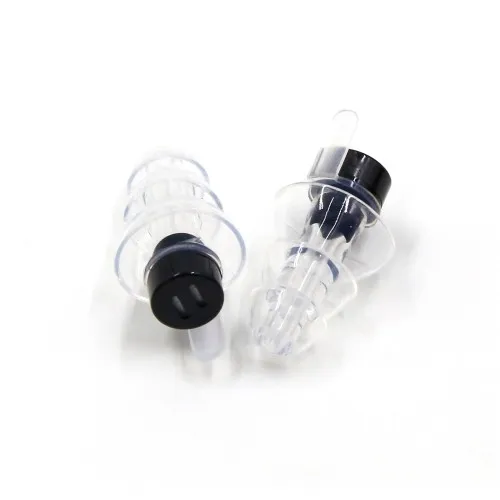
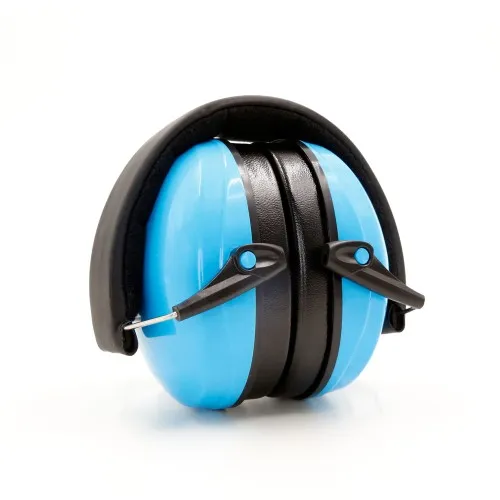
For the molding hall (80-95 dB), the enemy is wear-time, not decibels. A washable silicone plug such as the SA-1-3 waterproof silicone ear plugs stays comfortable through a 12-hour shift, survives sweat and machine oil, and washes clean — the properties that decide whether protection is actually worn at hour nine. For technicians who must hear the machine, filtered plugs like the SA-2-7 acoustic mesh filtered ear plugs lower the level while preserving the cycle sounds and speech that diagnostics depend on. For the granulator room, trim presses, and pelletizers (95-115 dB), high-NRR foam such as the SA-7-1 PU foam ear plugs is the default, and at the top of that range — a granulator chewing thick-wall regrind — pair plugs with SA-8-10 earmuffs for dual protection. The zone-by-zone method, including how to set wear rules workers accept, is in our how to choose ear protection guide.
One manufacturer's note from our own floor: we mold ear plugs on the same class of machinery this article describes — PU foam dosing and silicone injection lines at the SIAN PROTECH factory — and our granulation station is the one place on our floor where dual protection is house rule, not option. When a supplier tells you the grinder corner needs more than the molding hall, that is not upselling; it is what our own dosimetry says.
Cost, MOQ, and a Sourcing Framework for Plastics Plants
A plastics plant program is a mixed-SKU order, not a single line item. In practice a 200-worker converting plant buys three tiers: bulk disposable foam for the loud zones and visitors (typical import cost $0.04-0.12 per pair at volume), washable silicone for the molding hall's daily wearers ($0.30-0.80 per pair, replaced monthly instead of daily), and a smaller count of filtered plugs for technicians plus muffs for grinding and compressor rooms. Blended correctly, the reusable tiers usually reduce annual spend per head versus all-disposable programs — the arithmetic is worked through in our hearing protection ROI analysis.
On compliance paperwork: for European plants and exporters, protection must be certified to EN 352; for North American programs, ANSI S3.19-derived NRR labeling applies. Factory-direct MOQs for custom-branded product typically start around 10,000 pairs for foam and 5,000 for silicone, with standard-catalog orders lower — comparable to the sourcing terms across the general manufacturing programs we supply, and the complete buyer guide covers vetting, sampling, and QC step by step.
Frequently Asked Questions
How loud is a plastic injection molding machine?
A modern injection molding machine typically measures 80-95 dB at the operator position, depending on tonnage, hydraulic versus electric drive, and cycle stage — clamp close and ejection are the peaks. That places a multi-machine hall right around the 85 dB(A) OSHA action level, which is why measurement, not intuition, should decide whether your hearing conservation program is triggered.
What is the loudest machine in a plastics plant?
The granulator. Grinding sprues, runners, and rejects produces 95-115 dB with a harsh tonal component, and the UK HSE identifies granulators as the loudest common equipment in plastics processing. Blow-off air nozzles are the second offender, producing 100+ dB blasts directly at ear height.
Do injection molding workers need hearing protection?
Wherever the 8-hour time-weighted average reaches 85 dB(A), OSHA requires a hearing conservation program with protection made available, and at 90 dB(A) TWA its use becomes mandatory; EU rules trigger earlier, at 80/85 dB(A). In practice that means granulator, extrusion, and trim-press zones are almost always mandatory-wear areas, while molding halls depend on the measured TWA.
What NRR do plastics plant workers need?
After applying the 50% field derating, an NRR 32-37 foam plug delivers roughly 16-18 dB of real-world reduction — enough to bring a 100 dB granulator room under 85 dB. For the 85-95 dB molding hall, a comfortable silicone or filtered plug with a lower rating is usually the better choice, because all-shift wear time protects more hearing than an unworn high rating.
How do you reduce granulator noise besides ear protection?
Engineering controls come first: acoustic enclosures or a separate grinding room, sharp blades (dull blades run several dB louder), feeding little and often instead of bulk dumping, and lined feed trays. Most plants still end up above 85 dB inside the grinding room after controls, which is why granulator operators wear dual protection in well-run programs.
Sourcing hearing protection for a plastics or injection molding operation? Send EASTRAGON your zone map or dosimetry results and we match certified EN 352 and ANSI-tested protection to each zone — foam, washable silicone, filtered, and earmuff lines with consolidated documentation, from a manufacturer that molds PU foam and silicone in-house. As a Solution Integrator serving importers in 50+ countries, we ship samples in 3-5 business days. Browse the full product catalog.