China produces roughly 70% of the world's disposable and reusable ear plugs. That share has held steady for over a decade, and for a simple reason: the raw materials, tooling suppliers, labor pool, and export logistics for this category are all concentrated in a handful of Yangtze River Delta cities. If you are a distributor, wholesaler, or procurement manager sourcing hearing protection at any meaningful volume, you are almost certainly going to end up in China at some point in your supply chain. The question is not whether, but how to do it correctly.
This guide walks through every stage of the import process in practical order. It is written for buyers who may be familiar with general sourcing but are either new to China or new to the PPE category. We have tried to include the specific numbers, timelines, and compliance requirements that get glossed over in most supplier-produced content.
Step 1: Define Your Product Specifications Before Contacting Any Supplier
The single most common cause of failed ear plug sourcing projects is starting supplier conversations before knowing what you actually need. Manufacturers quote based on specifications. If your spec sheet is vague, you will get wildly different quotes, incompatible samples, and a painful reconciliation process three months into the project.
Choose Your Product Type
The ear plug category breaks into five main product families, and each has different manufacturing complexity, certification requirements, and price bands:
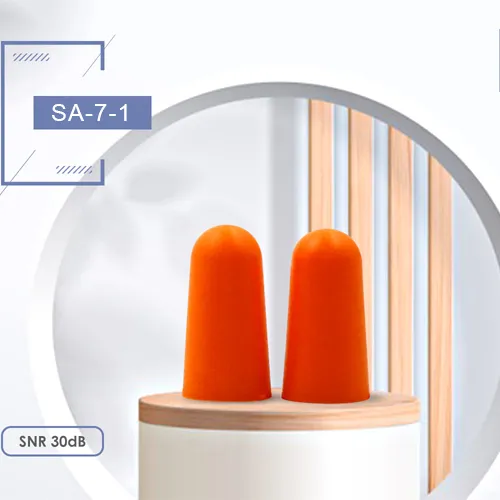
- PU Foam ear plugs (disposable) — The largest volume category globally. Made from slow-recovery polyurethane foam, typically bullet or taper shaped. Classic bullet-shape foam plugs like the SA-7-1 series are the commodity baseline of the market. NRR typically 29-33 dB, SNR 35-38 dB.
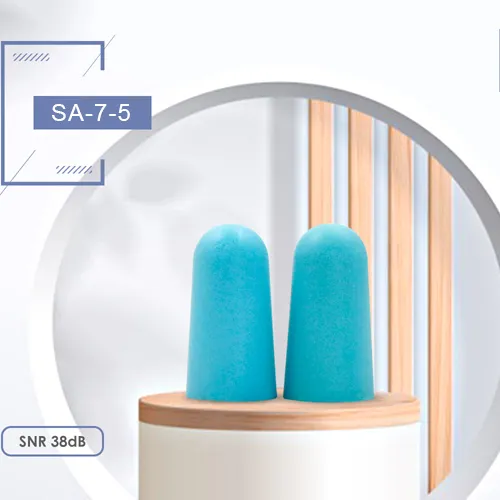
- Standard foam plugs — Slightly different foam density or shape compared to premium, suited for general industry and consumer use. The SA-7-5 standard bullet-shape series represents this tier.
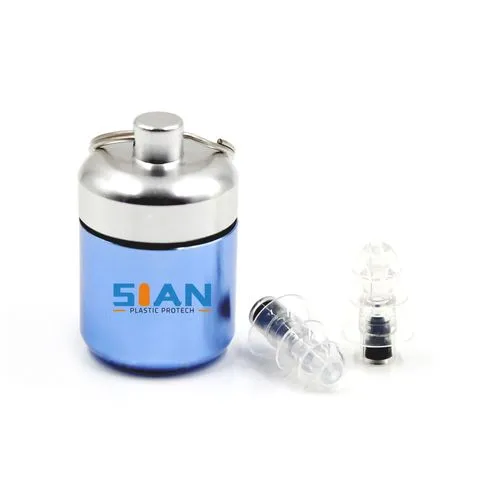
- Filtered ear plugs — Allow communication and situational awareness while attenuating harmful frequencies. More complex to manufacture, certified separately. The SA-2-1 filtered earplug is a good reference product.
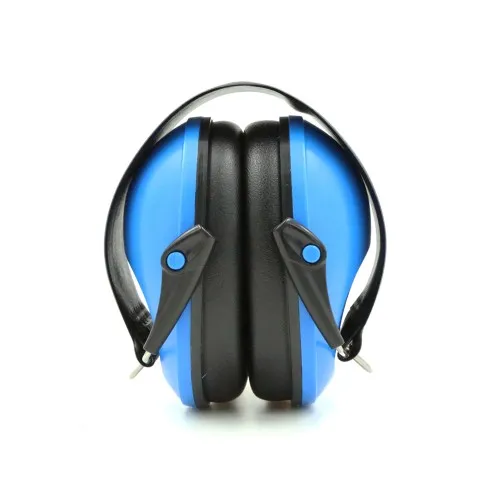
- Earmuffs (passive) — Over-ear protection, foldable or fixed. Higher unit cost, longer shelf life. The SA-8-5 foldable earmuffs are a representative catalog item.
- Electronic earmuffs — Include active noise reduction or communication electronics. The most complex product in the category, requiring separate electronic component certification on top of acoustic performance certification.
Establish Your Performance Requirements
Two rating systems are used globally, and they are not interchangeable:
- NRR (Noise Reduction Rating) — The US standard. A single-number dB rating measured per ANSI S3.19. The actual field protection is typically 50% of the listed NRR under real-world conditions (NIOSH recommended derating). So an NRR 33 product provides approximately 16.5 dB of effective protection in practice.
- SNR (Single Number Rating) — The European standard, measured per EN ISO 4869-2. SNR values are generally 3-6 dB higher than NRR for the same product due to methodological differences, not better performance. SNR 35-38 is typical for foam plugs.
Define which market you are importing for before sampling begins. A product certified only to ANSI S3.19 cannot be legally sold in the EU for occupational use, and vice versa.
Also define your secondary requirements now: corded vs uncorded, bulk vs case-packed vs blister-packed, color requirements, material allergen restrictions (latex-free is mandatory for many markets), and whether you need custom branding (private label / OEM).
Step 2: Find and Vet Suppliers
Factory or trading company? This is the first structural question. A factory gives you direct pricing and production control. A trading company gives you product breadth and easier communication but adds a margin layer and potentially obscures quality chain-of-custody.
How to Tell the Difference
The clearest signal is whether the company holds its own ISO and product certifications in its own legal name. A factory will show you CE certificates or ANSI test reports issued to their registered manufacturing entity. A trading company will show you certificates issued to a third-party factory with a note that they "work with" that factory. This matters a great deal for CE compliance verification in the EU.
The best suppliers combine both: factory ownership with export-oriented commercial operations. EASTRAGON, for example, has operated its own manufacturing facility (SIAN PROTECH) since 2015, while running export commercial operations since 2005. The company holds CE and ANSI certifications in its own name and ships to over 50 countries.
For more on evaluating supplier claims, see our guide on the top criteria for choosing a PPE supplier in China.
Supplier Audit Checklist
Before requesting a formal quote, verify these minimum requirements:
- Business license — confirm the company is registered and active
- Factory audit report (BSCI, Sedex, or equivalent), ideally within the last 24 months
- CE certificate(s) with EN 352 scope listed, issued to the manufacturing entity name
- ANSI S3.19 test reports from an accredited lab (SGS, Intertek, Bureau Veritas are the recognized names)
- ISO 9001:2015 certificate as a baseline quality management signal
- Proof of export activity: customs export records or shipment photos
- Photos of the production floor and finished goods warehouse dated within the last 30 days
You can also cross-reference the supplier on platforms like Made-in-China or Alibaba, but do not treat platform badges as due diligence. They reflect self-reported data. The documents above are what matter.
For a deeper look at the full supplier evaluation framework, the top ear plug manufacturers in China guide covers how to compare factories across multiple dimensions.
Step 3: Understand Certifications
Hearing protection products are safety-critical PPE. Every major market has mandatory certification requirements before the product can be legally sold for occupational use. Getting this wrong does not mean a fine. It can mean your entire container is held at customs, or your retail buyer rejects the shipment on arrival.
For a comprehensive breakdown, read our dedicated CE vs. ANSI certification guide for ear plugs.
CE Marking (EU, UK, and Many Other Markets)
Ear plugs are Category II PPE under EU Regulation 2016/425. CE marking requires:
- Testing and certification to EN 352-2 (for ear plugs specifically) by a Notified Body
- The CE certificate must be held by the manufacturer, not a distributor
- A Declaration of Conformity (DoC) must accompany every shipment
- Products sold in the UK post-Brexit require UKCA marking in addition to CE
ANSI S3.19 (United States)
The US market requires NRR labeling per EPA regulations (40 CFR Part 211, Subpart B). The NRR must be calculated from testing conducted per ANSI S3.19-1974. OSHA does not require pre-market certification from a third party, but buyers should request accredited lab test reports to confirm NRR values before signing contracts.
AS/NZS 1270 (Australia and New Zealand)
The Australian market requires compliance with AS/NZS 1270:2002. This involves testing by a NATA-accredited or equivalent laboratory. Products without AS/NZS 1270 compliance cannot be used in Australian workplaces under Safe Work Australia requirements. Not all Chinese suppliers test to this standard. If you are importing for Australia, verify during supplier qualification.
Step 4: Sampling and Quality Control
Never place a production order without samples. This is basic sourcing discipline, and it applies even if you have worked with the supplier on other products.
Pre-Production Samples
Request production samples made on the same tooling and with the same materials as your production order. The supplier should be able to provide 5-10 pairs within 3-5 working days for catalog items. Custom colors or packaging will take longer.
When samples arrive, check:
- Dimensional consistency (measure at least 5 pairs, variability indicates tooling issues)
- Foam recovery time (slow-recovery foam should return to shape in 60+ seconds at room temperature)
- Surface finish and color consistency across pairs
- Packaging print quality if applicable
- Match against provided NRR/SNR documentation
Third-Party Inspection
For orders above roughly 10,000 pairs (or any first order with a new supplier), commission a third-party pre-shipment inspection. The major options are SGS, Bureau Veritas, Intertek, and QIMA. Costs run $200-400 for a standard AQL 2.5 inspection at a China factory.
The inspection should include dimensional checks, visual defect sampling per AQL 2.5, packaging verification, and carton weight/count verification. Request the inspection report before authorizing release of the balance payment.
Step 5: Negotiate Pricing and MOQs
Typical Price Ranges (2025-2026)
Ear plug pricing varies significantly by product type, certification level, and order quantity. Rough FOB China benchmarks for catalog products:
- Standard PU foam ear plugs (uncorded, bulk-packed): $0.04-0.10 USD per pair at 5,000+ pairs
- Corded foam ear plugs with case: $0.15-0.30 USD per pair
- Filtered ear plugs (flanged): $0.50-1.50 USD per pair depending on filter complexity
- Passive foldable earmuffs: $2.50-6.00 USD per unit
- Electronic earmuffs: $8.00-25.00 USD per unit
Custom colors add $0.005-0.02 per pair in pigment cost plus a tooling change fee if a new mold is needed. Private label packaging (your logo on the box) typically adds $0.02-0.08 per pair at modest volumes.
Minimum Order Quantities
Most ear plug manufacturers operate with an MOQ of 5,000 pairs per SKU for catalog items. Custom colors or custom packaging may require higher MOQs of 10,000-20,000 pairs to justify setup costs.
If your initial order is below these thresholds, some suppliers will accommodate a first trial order at a small premium (5-15% above standard unit price) to establish the relationship.
Payment Terms
Standard payment terms with Chinese ear plug manufacturers:
- 30% T/T deposit at order confirmation (triggers production)
- 70% T/T balance before shipment or against copy of Bill of Lading
Letters of Credit (LC) are accepted by most established exporters but add cost (bank fees, 1-2% of invoice value) and processing time. For ongoing volume contracts above $50K, an LC from a recognized trade bank is a legitimate risk management tool.
Step 6: Shipping and Logistics
Incoterms
The two most common Incoterms used in China-to-overseas ear plug shipments:
- FOB (Free on Board) — The supplier handles export clearance and loading onto the vessel at the named port (typically Shanghai, Ningbo, or Guangzhou). You are responsible for freight, insurance, and import clearance from that point.
- CIF (Cost, Insurance, Freight) — The supplier arranges and pays for freight and insurance to the named destination port. Simpler for buyers new to China but typically costs more due to supplier freight markup.
Container Loading and Lead Times
Ear plugs are lightweight, high-unit-count products. A 20ft container holds approximately 500,000-1,000,000 pairs of standard foam ear plugs depending on packaging. Most buyers at distributorship scale ship LCL (Less than Container Load) initially.
Standard production lead times for catalog items are 15-20 working days from order confirmation. Air freight for ear plugs is viable for urgent replenishment orders under 200 kg. At scale, sea freight (25-35 days transit from Shanghai to US West Coast; 28-35 days to Rotterdam) is the standard channel.
HS Codes
The relevant HS codes for ear plug and hearing protection imports:
- HS 6812.80 or 3926.90 — PU foam ear plugs (classification varies by destination customs authority)
- HS 9019.20 — Hearing protection devices (earmuffs)
- HS 8518.30 — Electronic ear protection with active electronics
Always confirm the correct HS code with your customs broker before the first shipment. Misclassification causes customs holds and potential back-duty assessments.
Step 7: Import Regulations by Market
United States
- NRR labeling is required per EPA 40 CFR Part 211. Products without NRR labeling on the retail package cannot be sold for hearing protection purposes.
- Section 301 tariffs (additional 25% for most Chinese-origin goods) apply to most foam and silicone ear plugs. Confirm the applicable tariff rate before pricing your landed cost.
- CPSC requirements apply if the product is sold as a consumer item (not purely occupational PPE).
European Union
EU imports require CE marking under PPE Regulation 2016/425. The importer of record in the EU has legal obligations under the regulation. A Declaration of Conformity must accompany every shipment. An EU Authorized Representative (AR) is required for non-EU manufacturers placing products on the EU market.
REACH compliance documentation (confirmation that no restricted substances above threshold limits are present) is increasingly required by EU retailers as a pre-condition of listing.
Australia
Australian customs applies standard import duty (5% for most PPE) plus GST (10%). AS/NZS 1270 compliance is required for occupational use. Safe Work Australia's model WHS Regulations require that hearing protection used in workplaces meets the Australian/New Zealand standard.
Common Mistakes to Avoid
1. Assuming CE = ANSI or AS/NZS
Each standard uses different test methods and the ratings are not interchangeable. A product with only CE/EN 352 certification is not automatically legal for occupational use in the US or Australia.
2. Placing a production order before verifying certification documents are current
CE certificates expire and must be renewed after significant product changes. Request the certificate expiry date and confirm it will remain valid through your selling season.
3. Ignoring Section 301 tariffs in your landed cost calculation
The additional US tariffs on Chinese-origin goods can push landed cost 25-30% above the FOB price. If your pricing model was built on FOB cost only, you may have a fundamental margin problem.
4. Accepting "we can do it" on OEM without a written specification sheet
Custom color, custom packaging, and private label are all possible with most established factories. The mistake is proceeding on a verbal agreement. Get the spec sheet in writing before paying the deposit.
5. Skipping pre-shipment inspection on first orders
A $300 third-party inspection on a $15,000 FOB order is not optional. The cost of a failed shipment is typically 4-8x the inspection cost.
6. Not specifying packaging and labeling requirements in the PO
Market-specific labeling requirements (NRR value, warning text, allergen disclosure, Prop 65 warnings for California) must be specified by the buyer. The supplier does not automatically know your destination market's requirements.
Frequently Asked Questions
What is the minimum order quantity for importing ear plugs from China?
Most established factories set an MOQ of 5,000 pairs per SKU for catalog products. Custom colors, custom shapes, or private label packaging generally require a higher MOQ of 10,000-20,000 pairs to cover setup costs. First-time trial orders below standard MOQ are sometimes accommodated at a small unit price premium.
How long does production take for ear plugs in China?
For catalog items at an established factory, production lead time is typically 15-20 working days from receipt of deposit. Custom color or custom packaging adds 5-10 working days. Sample lead time for catalog items is 3-5 working days. Add sea freight transit time (25-35 days to US West Coast, 28-35 days to EU) for total delivery timeline planning.
Do I need CE certification to sell ear plugs in the EU?
Yes. Ear plugs sold for hearing protection in the EU are regulated as Category II PPE under Regulation 2016/425 and must bear CE marking based on testing to EN 352-2. The CE certificate must be held by the manufacturer, and a Declaration of Conformity must accompany the product. Importing uncertified hearing protection for sale in the EU as PPE is illegal and can result in market withdrawal and fines.
What is the difference between NRR and SNR ratings?
NRR (Noise Reduction Rating) is the US standard, calculated per ANSI S3.19-1974 and required by the EPA for US market products. SNR (Single Number Rating) is the European standard, calculated per EN ISO 4869-2. Both measure attenuation but use different methodologies, so the numbers cannot be directly compared. When buying a product for multiple markets, request both test reports separately.
Can I get private label ear plugs from China with my own branding?
Yes. Private label (your logo and brand on the packaging) is standard practice at most established factories. OEM (your design on the product itself, custom color, custom shape) and ODM (factory develops a new product to your brief) are also available, with higher MOQs and development lead times. See our OEM vs ODM guide for the full breakdown.
Ready to start sourcing? Contact the EASTRAGON team directly. We can turn around samples in 3-5 working days, provide full certification documentation, and have shipped hearing protection to buyers in over 50 countries. Browse our full product catalog to see the range before reaching out.