A sound level meter measures how loud a place is at one moment; a noise dosimeter measures how much noise a person actually receives across a full shift. Use a sound level meter to map fixed noise zones and screen whether an area crosses the 85 dB(A) action level, and use a dosimeter whenever workers move between stations or noise varies through the day, because only a body-worn dose measurement produces the time-weighted average (TWA) that OSHA compliance and hearing-protection selection are built on. Most facilities need both — the meter to find the problem areas, the dosimeter to prove what representative workers are actually exposed to — and the result is only useful once it changes what you put in your workers' ears.
What Each Instrument Actually Measures
A sound level meter (SLM) is a hand-held instrument you point at the world. It reads the sound pressure level in dB(A) at that spot, at that moment. It answers questions like "how loud is the granulator area?" and "did the new compressor push the packing line over 85 dB?" Under OSHA's occupational noise standard, 29 CFR 1910.95, you must monitor wherever employee exposure may equal or exceed 85 dB(A) as an 8-hour TWA — and an SLM walk-through is usually the first screening step that tells you whether you have a problem at all.
A noise dosimeter is a small badge or shoulder-worn device a worker wears for the whole shift. It logs level continuously and integrates it into a personal noise dose and TWA. It answers the question the SLM cannot: "how much noise did this maintenance technician — who spent the morning at the chipper, midday in the control room, and the afternoon on the packing floor — actually accumulate today?" Because real workers move, dosimetry is the instrument of record for compliance sampling in almost every plant where jobs are mobile, a pattern we see across industrial noise environments from mills to airports.
Dosimeter vs Sound Level Meter: Side-by-Side
| Factor | Sound Level Meter | Noise Dosimeter |
|---|---|---|
| What it measures | Level at a location, at a moment | Personal dose / TWA across a shift |
| Best for | Area mapping, screening, source ranking | Mobile workers, variable noise, compliance records |
| OSHA role | Screening + engineering surveys | Representative personal exposure monitoring |
| Accuracy classes | Class 1 (±1 dB) / Class 2 (±2 dB); Class 2 is acceptable for OSHA compliance work | Set to the relevant criterion and exchange rate (OSHA 90 dB PEL / 5 dB; NIOSH 85 dB / 3 dB) |
| Typical cost | Roughly $100-1,000 for Class 2; precision Class 1 instruments run several thousand | Roughly $500-2,000 per unit; surveys often rent a set |
| Limitations | Misses variation over time; says nothing about an individual's dose | Needs a full representative shift; results are only as good as worker task patterns that day |
One nuance buyers ask about: the exchange rate. OSHA integrates dose with a 5 dB exchange rate against a 90 dB permissible exposure limit, while NIOSH (and the EU noise directive framework) use the more protective 3 dB doubling rule against 85 dB. A good dosimeter logs both simultaneously — ask for both numbers in any survey report, because a shift that passes the OSHA calculation can still exceed the NIOSH recommended limit, and the limit that applies depends on the country your facility operates in.
When to Use Which: A Practical Decision Framework
Start with the walk-through. Use an SLM (a calibrated Class 2 instrument is sufficient; the free NIOSH Sound Level Meter app is a legitimate pre-screening tool on iOS devices, though not a substitute for a calibrated instrument in compliance work) and map every production area. Anything reading above roughly 80 dB(A) goes on the follow-up list.
Then answer one question per job role: does this person stay put? If a press operator stands at the same machine all shift, an SLM reading at that station, repeated at representative times, characterizes the exposure well. If workers rotate, patrol, or split time between loud and quiet areas — maintenance, forklift drivers, line supervisors, machine tenders — put dosimeters on a representative sample of them for a full shift. This two-step sequence is the core of a proper workplace noise survey, and it is what an auditor will ask to see documented in your hearing conservation program.
On repeat frequency: re-measure whenever production changes — new machinery, layout changes, line-speed increases — and treat an annual review as good practice even in a stable plant. A survey done once in 2019 does not describe the plant you run today.
From Measurement to Protection: What the Numbers Buy You
This is the step most measurement guides skip. A TWA is not the goal; it is the input for selecting protection that actually fits the exposure. The working method: take the measured TWA, then apply the OSHA 50% derating rule to any earplug's labeled NRR — halve the label value — because laboratory ratings overstate real-world attenuation once fit and movement are accounted for. Understanding how NRR and SNR ratings are derived keeps this honest.
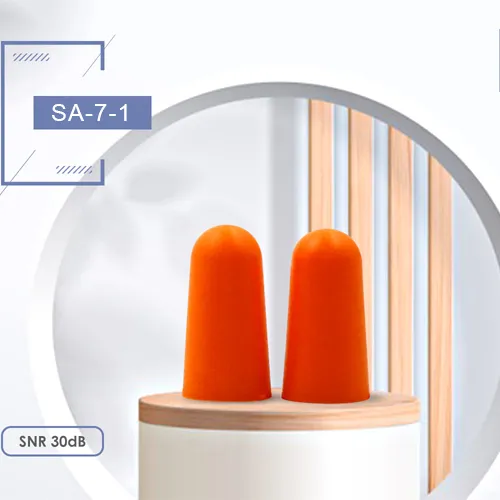
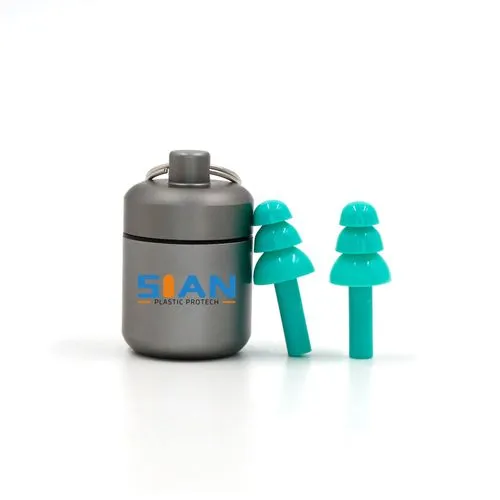
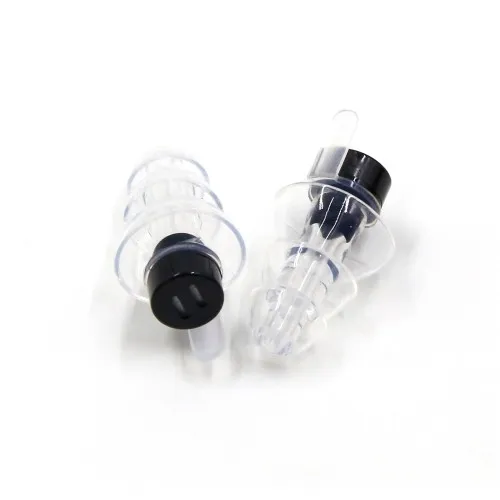
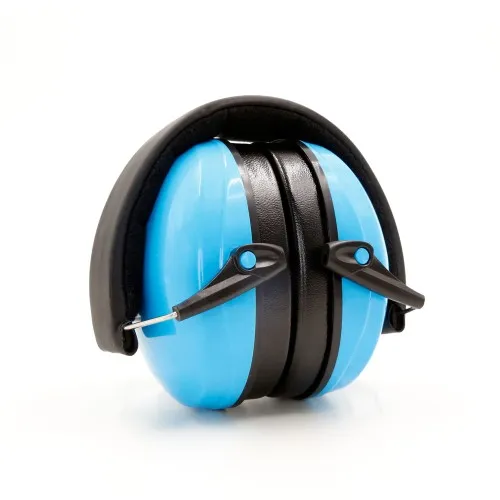
In practice, for zones a dosimeter confirms at 85-95 dB TWA, comfortable all-day plugs such as washable SA-1-3 silicone ear plugs deliver enough derated attenuation while staying in for the whole shift. For steady zones above 95 dB, high-NRR foam like the SA-7-1 PU foam ear plugs is the default. Where the meter says a crew must also hear speech, alarms, or machine tone, SA-2-7 filtered ear plugs lower the level without sealing the ear off. And where dosimetry shows accumulated doses near the loudest sources, pair plugs with SA-8-10 earmuffs for dual protection. The full zone-by-zone method is in our how to choose ear protection guide and the complete buyer guide.
Frequently Asked Questions
What is the difference between a noise dosimeter and a sound level meter?
A sound level meter measures the sound level at one location at one moment, and is used to map areas and screen for problems. A noise dosimeter is worn by a worker for a full shift and integrates every level the worker encounters into a personal noise dose and time-weighted average. The meter characterizes places; the dosimeter characterizes people.
How do you conduct a workplace noise survey?
In sequence: walk the plant with a calibrated sound level meter and map readings by area; identify every zone and job role that may reach 85 dB(A); place dosimeters on a representative sample of mobile workers for a full shift; calculate TWAs under the applicable exchange rate; then document results, notify affected workers, and select hearing protection against the measured numbers. Our workplace noise survey guide covers each step in detail.
Is a phone app accurate enough for occupational noise measurement?
Only for pre-screening. The NIOSH Sound Level Meter app on iOS has documented accuracy close to a Class 2 instrument under controlled conditions and is a legitimate way to decide whether a formal survey is needed. It is not a calibrated instrument, produces no defensible compliance record, and should never be the basis of a hearing conservation program.
How often should occupational noise monitoring be repeated?
OSHA requires re-monitoring whenever a change in production, process, equipment, or controls may increase exposures. As practical policy, re-survey after any new machinery, layout, or line-speed change, and review annually even in a stable plant, keeping records available to workers.
What noise level requires hearing protection?
Under OSHA, an 85 dB(A) 8-hour TWA triggers a hearing conservation program, and hearing protection becomes mandatory at or above the 90 dB(A) permissible exposure limit or where a standard threshold shift has occurred. In the EU, employers must provide protection from 80 dB(A) and enforce its use at 85 dB(A) — the UK applies the same triggers under the Noise at Work Regulations 2005. The measured TWA — not how loud a floor feels — decides.
Have survey results in hand and need protection matched to the numbers? Send EASTRAGON your zone map or dosimetry TWAs and we match certified EN 352 and ANSI-tested protection to each zone — foam, silicone, filtered, and earmuff lines with consolidated documentation. As a Solution Integrator serving importers in 50+ countries, we ship samples in 3-5 business days. Browse the full product catalog.