The Control of Noise at Work Regulations 2005 give UK employers three hard numbers. At a daily noise exposure of 80 dB(A) you must make hearing protection available and train workers on the risk. At 85 dB(A) you must enforce its use, mark hearing protection zones, and offer hearing checks. And 87 dB(A) — measured with hearing protection factored in — is the legal ceiling no worker may exceed on any day. This guide explains what each threshold demands, when a noise at work survey is legally required, and how to turn survey results into the right SNR — written from the supplier side, by a manufacturer that has shipped CE EN 352 certified hearing protection to importers and distributors since 2005.
The Three Numbers That Drive Everything
The Regulations, which implement EU Directive 2003/10/EC in Great Britain and came into force in April 2006, are built around two action values and one exposure limit value. Each is defined as a daily or weekly personal noise exposure (LEP,d) plus a peak sound pressure for impulsive noise:
| Trigger | Daily/weekly average | Peak (C-weighted) | What the employer must do |
|---|---|---|---|
| Lower exposure action value | 80 dB(A) | 135 dB(C) | Assess the risk, provide hearing protection to any worker who asks for it, and give information and training |
| Upper exposure action value | 85 dB(A) | 137 dB(C) | Reduce noise at source so far as reasonably practicable, enforce hearing protection use, designate and sign hearing protection zones, provide health surveillance |
| Exposure limit value | 87 dB(A) | 140 dB(C) | Absolute ceiling — unlike the action values, this one is measured with the attenuation of hearing protection taken into account |
Two details trip up buyers coming from a US compliance background. First, the UK triggers are tougher than OSHA's: mandatory protection starts at 85 dB(A) against OSHA's 90 dB(A) permissible exposure limit, and the UK counts a 3 dB exchange rate rather than OSHA's 5 dB — so time-and-a-half in noise costs you compliance headroom twice as fast. Our country-by-country exposure limit comparison covers the full picture. Second, Northern Ireland runs parallel rules under its own 2006 regulations — the numbers are the same, the enforcing authority is not.
When Is a Noise at Work Survey Legally Required?
The Regulations do not use the word “survey.” They require a risk assessment by a competent person whenever employees are likely to be exposed at or above the lower action value of 80 dB(A). In practice, that assessment must rest on a reliable estimate of exposure — and once levels sit anywhere near the action values, the only defensible estimate comes from measurement: a walk-through noise survey with a sound level meter, personal dosimetry for mobile workers, or both. The Health and Safety Executive (HSE) guidance L108 sets out what a competent assessment looks like.
A practical rule of thumb: if two people standing two metres apart have to raise their voices to hold a normal conversation, you are probably at or above 80 dB(A) and the assessment duty has already been triggered. From there:
- Choose the right instrument for the job. Fixed workstations suit a sound level meter; workers who roam between zones need body-worn dosimeters. Our dosimeter vs sound level meter guide walks through the decision.
- Follow a defensible method. Walk the floor, map the zones, measure at the ear position, and convert readings into daily exposures — the five-step process in our workplace noise survey guide mirrors what an HSE inspector expects to see documented.
- Review when things change. The assessment must be kept up to date: new machinery, layout changes, longer shifts, or any doubt about validity re-opens the duty. HSE regards a review at least every two years as good practice even without change.
From Survey Numbers to SNR: Picking Protection the UK Way
UK and EU selection runs on SNR (Single Number Rating), not the American NRR — if your spec sheets quote both, our SNR vs NRR guide explains the mapping. The SNR method is deliberately simple: take the C-weighted workplace level (LCeq) from your survey and subtract the protector's SNR to estimate the level at the ear.
Worked example: a granulation area measures 102 dB(C). A foam ear plug with SNR 34 gives an estimated 68 dB(A) at the ear. Apply HSE's recommended real-world correction — knock 4 dB off the labelled rating to reflect how protectors perform outside the laboratory — and the realistic figure is about 72 dB(A). That lands in the target window.
And there is a target window. HSE guidance aims for 70–80 dB(A) at the ear. Below 70 dB(A) counts as overprotection: workers feel isolated, miss alarms and shouted warnings, and start loosening or removing protectors mid-shift — which destroys real-world protection far faster than a slightly lower SNR would. Chasing the highest rating on the shelf is the most common specification mistake we see in UK-bound orders. Match the SNR to the measured zone, not to the catalogue maximum.
Employer Duties Beyond Handing Out Ear Plugs
Buyers usually own the PPE line item, but the Regulations make hearing protection one duty among several. A compliance file that survives an HSE visit typically shows:
- Control at source first. Hearing protection is the last resort after engineering and organisational controls — quieter machinery, damping, enclosures, job rotation — have been considered.
- Hearing protection zones. Areas at or above 85 dB(A) signed with the blue mandatory ear-protection symbol, with use enforced inside.
- Health surveillance. Regular audiometry for workers routinely exposed above the upper action value, with records kept.
- Information and training. Workers must know the risk, the results of the assessment, and how to fit their protectors correctly — a poorly inserted foam plug can lose most of its rated attenuation.
- Maintenance and replacement. Reusable protectors cleaned and inspected; disposable stock actually available at the point of entry to the zone.
Sourcing Compliant Hearing Protection for UK Sites
Hearing protection is Category III PPE in both the UK and the EU, so documentation matters as much as the product. As of 2026, Great Britain continues to recognise CE marking for PPE alongside the domestic UKCA mark — check current GOV.UK guidance for your category before ordering, but CE EN 352 certified protectors remain compliant to place on the GB market. When you qualify a supplier for a UK contract, demand three things:
- The EN 352 certificate itself — part 1 covers ear muffs, part 2 covers ear plugs — issued by a notified body, not a self-declared “tested to” claim. Our guide to testing ear plug quality before a bulk order shows how to verify certificates.
- Full attenuation data: SNR plus the H/M/L values and octave-band table, so your competent person can run zone-by-zone selection rather than guessing from a single number.
- A Declaration of Conformity naming the exact model you are buying, with consistent markings on the packaging.
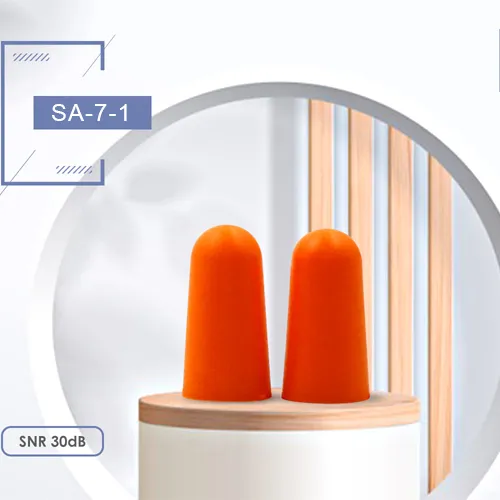
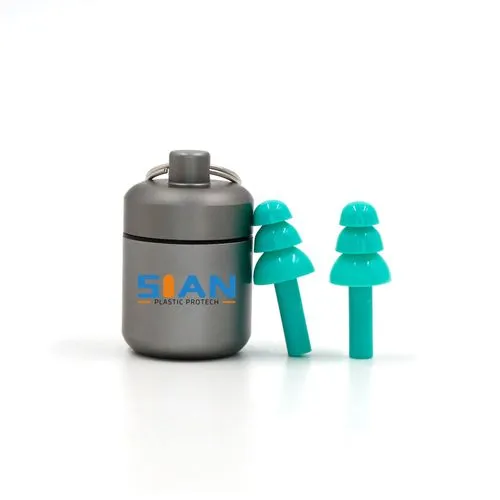
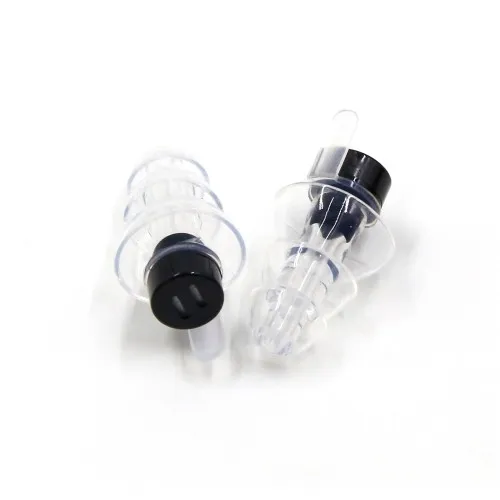
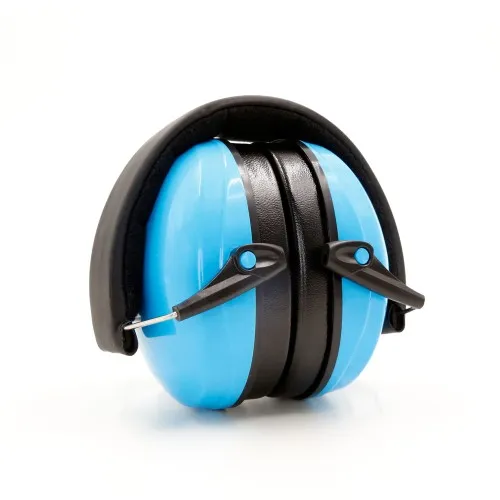
EASTRAGON manufactures PU foam, silicone, and filtered ear plugs plus ear muffs on our own lines, certified to CE EN 352 with ISO 9001:2015 quality management, REACH compliance, and BSCI social audit. Typical UK orders pair SA-7-1 foam plugs for fixed high-noise zones with SA-8-10 ear muffs for visitors and intermittent exposure, and filtered plugs where situational awareness matters at moderate levels.
Frequently Asked Questions
What are the action levels under the Noise at Work Regulations 2005?
There are two action values and one limit. The lower exposure action value is 80 dB(A) daily average (135 dB(C) peak): provide hearing protection on request and train workers. The upper exposure action value is 85 dB(A) (137 dB(C) peak): enforce hearing protection, sign hearing protection zones, and provide health surveillance. The exposure limit value is 87 dB(A) (140 dB(C) peak), measured with hearing protection taken into account, and must never be exceeded.
Do the regulations require a noise at work survey?
The legal duty is a risk assessment by a competent person whenever exposure is likely to reach 80 dB(A). In any workplace near that level, the assessment is only defensible when built on measurement — a noise survey with a sound level meter, personal dosimetry, or both. See our step-by-step noise survey guide for the method HSE inspectors expect to see documented.
How do UK action values differ from OSHA limits?
The UK mandates hearing protection from 85 dB(A); OSHA's permissible exposure limit is 90 dB(A) with a hearing conservation program from 85 dB(A). The UK also uses a 3 dB exchange rate (each 3 dB doubles the dose) versus OSHA's 5 dB, so high peaks consume the allowable dose much faster under UK rules. Exporters serving both markets should specify against the stricter UK numbers.
What SNR do I need to comply with UK regulations?
Enough to bring the level at the ear into the 70–80 dB(A) window HSE recommends — and no more. Subtract the SNR from the C-weighted zone level, then subtract a further 4 dB as a real-world correction. For a 95 dB(C) zone, an SNR in the mid-20s is typically right; an SNR 34 plug in that zone risks overprotection. Match protection zone by zone from your survey data.
Does hearing protection sold in the UK need UKCA or CE marking?
As of 2026, Great Britain recognises CE marking for PPE alongside UKCA, so CE EN 352 certified hearing protection remains compliant to place on the GB market. Always ask the supplier for the notified-body certificate and Declaration of Conformity for the exact model, and check the latest GOV.UK guidance before large orders, as marking policy is set by the UK government and can change.
Preparing a UK order and need protection matched to your noise assessment? Send EASTRAGON your survey results or zone map and we will match CE EN 352 certified foam, silicone, filtered, and earmuff lines to each zone, with SNR/H/M/L data sheets and Declarations of Conformity in the same pack. As a Solution Integrator serving importers in 50+ countries, we ship samples in 3-5 business days. Browse the full product catalog.