Agriculture is one of the most underestimated noise hazards in industry: open and older tractors run 90 to 100+ dB(A), combine harvesters reach 80 to 105 dB(A), grain dryers and augers sit around 90 to 100 dB(A), and chainsaws and livestock barns spike well past 100 dB(A) — all comfortably above the 85 dB(A) action level where hearing protection becomes necessary. What makes farming different from a factory is not the peak level but the pattern: exposure is seasonal and intermittent, the same worker moves between a loud combine and a quiet office in one day, dust and moisture are constant, and the operator still needs to hear road traffic, animals, and machinery faults. The right program for a farm is therefore not the highest single-number NRR but protection matched to intermittent use, dusty conditions, and situational awareness. This guide breaks farm noise down by task and gives buyers a sourcing framework built for agriculture.
Why Farm Noise Is a Different Problem
Most industrial guides assume a fixed workstation in constant noise. A farm is the opposite. A single operator may spend three hours on an open tractor at 95 dB(A), an hour servicing a 100 dB(A) grain auger, then move to quiet paperwork — and during planting or harvest those loud hours stretch across long days for weeks, then drop to almost nothing off-season. Because the exposure is bursty and seasonal, the failure mode is not discomfort over a 12-hour continuous shift but protection that is not on hand the moment a worker climbs onto a machine. Convenience and availability matter as much as attenuation, which is exactly the kind of real-world exposure a workplace noise survey is designed to capture before hearing loss becomes permanent.
The second difference is the environment. Fields and barns are dusty, humid, and often far from clean water, and hands handling soil, fuel, or feed are rarely clean. That punishes disposable foam, which must be rolled and inserted with the fingers and absorbs dust and moisture. The third difference is safety-critical hearing: a farm worker often needs to hear an approaching vehicle, a PTO shaft engaging, a distressed animal, or a change in engine note that signals a fault. Sealing the ear off completely can trade a hearing hazard for a collision or machinery hazard, which pushes many farm tasks toward filtered or level-dependent protection rather than maximum attenuation.
Mapping Noise by Farm Task
Like any site, a farm is not uniformly loud, and buying one product for everything overspends in quiet work and underprotects in the loud hours. A practical map looks like this:
- Open or older tractors (90 to 100+ dB(A)): long continuous exposure during field work; high-attenuation plugs or muffs are the core product, with enclosed modern cabs often 78 to 85 dB(A) and far quieter.
- Combine and forage harvesters (80 to 105 dB(A)): long harvest-season hours, justifying comfortable all-day protection and, in the loudest older machines, maximum protection.
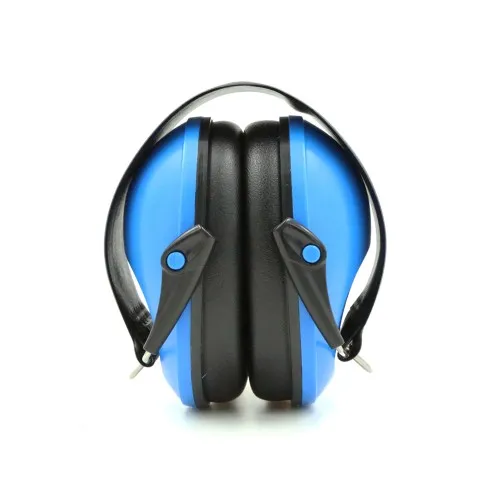
- Grain handling — dryers, augers, fans (90 to 100 dB(A)): intermittent but loud; quick-on ear muffs suit workers moving in and out.
- Chainsaws, brush cutters, orchard blowers (95 to 115 dB(A)): the loudest farm tools, requiring high attenuation and, for chainsaw work, combined eye and face protection.
- Livestock barns — squealing pigs, ventilation (95 to 110 dB(A) peaks): variable noise where workers must still hear animals; filtered plugs that lower the level without full sealing are a strong fit.
- Workshop and maintenance (85 to 100 dB(A)): grinders and air tools in the farm shop; protection needed in some tasks, optional in others, confirmed by survey.
Measure each task, apply the OSHA 50 percent derating to the labeled NRR, and match the product to the derated number rather than the catalog figure.
Material and Fit: Dust, Reuse, and Awareness
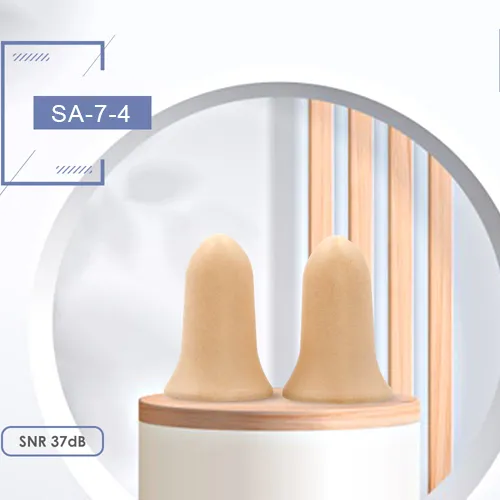
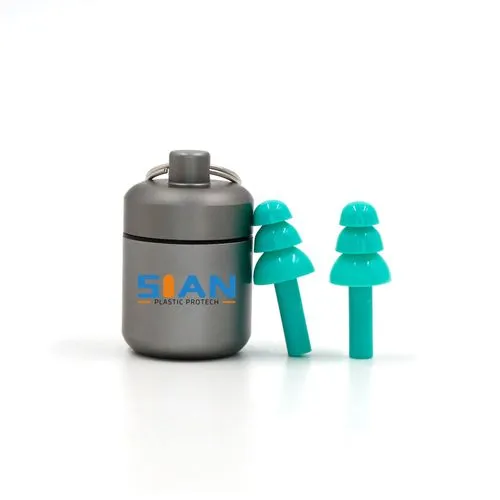
In a clean engineering plant the debate is often foam versus silicone on attenuation alone. On a farm, dust tolerance and reuse move to the front. Disposable foam inserted with soil-covered hands is a contamination risk and gets wasted fast, so washable pre-molded silicone or flanged plugs that a worker can rinse and reuse cut both the hygiene risk and the consumable spend — which is why waterproof reusable silicone plugs suit operators who climb on and off machines all day. For long high-noise stretches on an open combine, high-NRR slow-rebound foam still gives the most attenuation per dollar when kept clean.
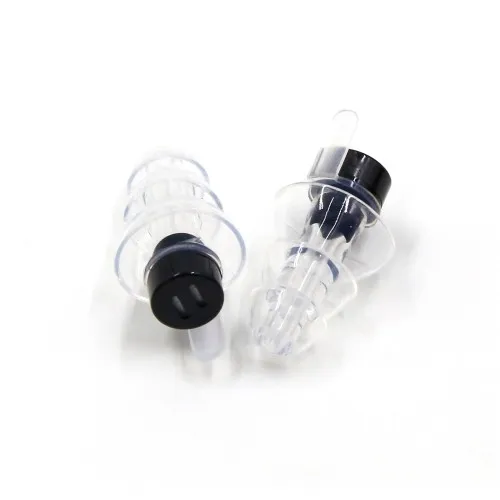
Situational awareness is the farm-specific factor. Where a worker must hear a tractor approaching, an animal, or a change in engine note, flat-attenuation acoustic-mesh filtered plugs lower the level while preserving speech and warning cues, and foldable ear muffs are the practical choice for grain-handling and shop work where protection goes on and off many times a day.
The OSHA Exemption Myth
Many small farms believe hearing protection does not apply to them, and there is a grain of truth behind it: in the United States, farms with ten or fewer employees and no temporary labor camp are largely exempt from routine OSHA enforcement, and family members are not counted as employees. But exemption from enforcement is not exemption from hearing loss — noise-induced hearing loss is one of the most common occupational injuries among farmers, and it is permanent. The moment a farm hires non-family labor, runs a labor camp, or operates in a jurisdiction with stricter rules (the EU and most of Asia have no such carve-out), the legal obligation returns. Insurers and buyers increasingly expect a documented program regardless, so the practical answer is to run a real hearing conservation program and require protectors certified to a recognized standard.
That documentation side matters when you source. Whatever protectors a farm or ag dealer standardizes on should carry test reports to a recognized standard so the program survives an audit. The EN 352 standard and its ANSI equivalents are what buyers should require on the spec sheet for every line item.
A Sourcing Framework for Agricultural Buyers
Most farm hearing protection is bought not by individual farmers but by ag equipment dealers, farm co-operatives, and agricultural PPE distributors who supply many growers at once. Because a farm needs several product types across its tasks, the procurement advantage goes to consolidating, not splitting. A practical sourcing checklist:
- Match by task, not by farm: high-NRR plugs for open tractors and harvesters, filtered plugs for livestock and awareness-critical work, quick-on muffs for grain handling and the shop.
- Prioritize washable and reusable designs to handle dust and control consumable cost across a season.
- Favor situational awareness products where workers share roads, yards, and animal spaces, to avoid trading a noise hazard for a collision hazard.
- Require certified test reports to EN 352 or ANSI for every item, so dealers can pass compliance documentation to their growers.
- Consolidate to one accountable supplier who ships plugs and muffs together with one set of documentation, and confirm lead times before a planting or harvest season, when demand spikes and stock-outs hurt most.
The same task-matching logic is laid out for general worksites in the how to choose ear protection guide and the complete buyer guide, which walk procurement through selection step by step. Authoritative noise and exposure data for agriculture is published by the U.S. NIOSH agricultural safety program.
Frequently Asked Questions
How loud is farm work?
Noise varies sharply by task. Open and older tractors run 90 to 100+ dB(A) while modern enclosed cabs are far quieter at 78 to 85 dB(A); combine and forage harvesters reach 80 to 105 dB(A); grain dryers, augers, and fans sit around 90 to 100 dB(A); and chainsaws, brush cutters, and livestock barns spike past 100 dB(A). Most field machinery exceeds the 85 dB(A) action level, but because farm exposure is seasonal and intermittent rather than a constant shift, the protection has to be convenient enough that workers actually put it on for the loud hours.
Do small farms legally need hearing protection?
It depends on jurisdiction and headcount. In the United States, farms with ten or fewer employees and no temporary labor camp are largely exempt from routine OSHA enforcement, and family members are not counted as employees. But the exemption is from enforcement, not from hearing damage, which is permanent and one of the most common occupational injuries in farming. As soon as a farm hires non-family labor or operates under stricter rules — the EU and most of Asia have no such exemption — the obligation returns, and most insurers and B2B buyers expect a documented program regardless.
What is the best hearing protection for tractor and combine operators?
For long hours on open or older machines, high-NRR slow-rebound foam plugs or comfortable ear muffs give the most attenuation, and washable reusable silicone plugs suit operators who climb on and off equipment in dusty conditions. Workers who must still hear road traffic, machinery cues, or radio calls are better served by filtered or level-dependent protection that lowers the level without sealing them off. Modern enclosed cabs are often quiet enough (78 to 85 dB(A)) that lighter protection suffices, confirmed by measurement.
Why are filtered plugs useful around livestock?
Livestock barns combine high peak noise from squealing animals and ventilation with a genuine need to hear the animals, alarms, and colleagues. Flat-attenuation filtered or acoustic-mesh plugs reduce the overall sound level while preserving speech and warning cues, so a worker stays protected without losing the awareness needed to handle animals safely. This is the same logic that makes filtered protection valuable wherever situational awareness is safety-critical, not just on a farm.
What certifications should an agricultural PPE buyer require?
Require test reports to EN 352 (Europe) or the ANSI S3.19 / ANSI S12.6 methods (United States) for every product line, not just the flagship. These reports document the attenuation rating and let an ag dealer or farm hearing conservation program withstand an audit and pass compliance evidence to growers. A supplier who can ship certified plugs and muffs together, with consistent documentation, simplifies both compliance and seasonal procurement.
Sourcing hearing protection for farms or an ag dealer network? Contact EASTRAGON with your task noise map, seasonal volumes, and target markets, and we match certified EN 352 and ANSI protection to each task with consolidated pricing across high-NRR foam plugs, reusable silicone plugs, filtered plugs, and ear muffs. As a Solution Integrator serving importers in 50+ countries, we ship samples in 3-5 business days. Browse the full product catalog.