A merchant ship's engine room is one of the few workplaces that runs 100-115 dB(A) continuously, for weeks at a stretch, on a crew that cannot leave the site — and it is governed by its own rulebook. Since 1 July 2014 the IMO Code on Noise Levels Onboard Ships has been mandatory under SOLAS for ships of 1,600 gross tonnage and above, setting space-by-space noise limits that are stricter and more detailed than any single shore standard. This guide maps onboard noise from the engine room to the accommodation, explains where the IMO Code and the Maritime Labour Convention (MLC 2006) actually bite, and gives fleet operators and marine PPE buyers a sourcing framework for equipping a crew — written from the supplier side, by a manufacturer that molds its own PU foam and silicone hearing protection.
Why a Ship Is Not Just Another Loud Factory
Two things make hearing protection at sea a distinct problem. The first is that the crew lives inside the noise source. On a shore plant a worker goes home to quiet; a seafarer on a four-month contract sleeps, eats, and works aboard the same steel hull that transmits engine and propeller noise everywhere. The IMO Code recognises this by regulating not only work spaces but cabins, mess rooms, and the hospital, and by capping the 24-hour equivalent exposure — Leq(24) must not exceed 80 dB(A). That is a whole-life limit, not an 8-hour shift figure, and it is why quiet accommodation matters as much as ear protection on the engine-room plates.
The second is the regulatory stack. This is the detail marine buyers most often miss: an engine room does not simply follow OSHA. In the U.S. inland and near-shore fleet, work still answers to OSHA 29 CFR 1910.95 or the equivalent USCG rules, but any SOLAS ship — the ocean-going fleet — is bound by the IMO noise Code, and the crew's living-and-working conditions sit under the ILO's Maritime Labour Convention, 2006 (Regulation 4.3, on health, safety and accident prevention), which points flag states back at the same IMO limits. A protector spec that satisfies a shore factory audit will not, on its own, close out a Port State Control inspection.
Mapping Noise Space by Space
The IMO Code (Resolution MSC.337(91)) sets maximum allowable levels by space. The table below pairs those legal ceilings with the noise a crew actually meets, so a buyer can see where protection is mandatory rather than optional:
| Space / Location | IMO Code Limit | Typical Real Level | Protection Reality |
|---|---|---|---|
| Main engine room (unmanned periods) | 110 dB(A) max* | 100-115 dB(A) | Mandatory; dual protection near the engine |
| Machinery space (continuously manned) | 85 dB(A) | 90-105 dB(A) | High-NRR plugs, all-watch comfort critical |
| Engine control room (ECR) | 75 dB(A) | 65-80 dB(A) | Filtered plugs to hear alarms & comms |
| Workshop | 85 dB(A) | 85-100 dB(A) | Plugs or muffs for grinding & impact tasks |
| Pump room / steering gear / purifier room | 90 dB(A) | 90-105 dB(A) | High-NRR plugs; muffs for entries |
| Navigating bridge & chartroom | 65 dB(A) | 55-65 dB(A) | Situational hearing; protection rarely needed |
| Cabins & hospital | 55-60 dB(A) | Varies with hull & deck | Rest quality — part of the Leq(24) budget |
| Mess rooms / recreation / offices | 65 dB(A) | 60-70 dB(A) | Comfort limit; no PPE |
*Spaces where the level exceeds 85 dB(A) must be marked and hearing protection worn; the Code treats 110 dB(A) as an absolute ceiling above which no unprotected entry is allowed even briefly. No table replaces your own readings, though. A ship's noise survey is a class-society requirement, so the noise report is usually already on board — ask the chief engineer for it, then put dosimeters on the roles that move through several spaces a watch (engineers on rounds, oilers, motormen). Our dosimeter vs sound level meter guide explains which instrument answers which question, and the documented method a surveyor expects is in the workplace noise survey guide.
Onboard Is Not the Shipyard
It is worth being precise, because the two get confused. Building or repairing a hull in a yard — chipping, riveting, grinding, plasma cutting on a dry dock — is impact-and-fabrication noise, and we cover it in the shipyard and shipbuilding guide. A working engine room at sea is the opposite: a continuous, low-frequency-heavy roar that never stops for the length of a voyage. The exposure pattern is closer to a continuous-process manufacturing plant than to construction, and it changes the selection priority from peak attenuation toward all-watch wear-time and the humidity resistance a hot, oily engine room demands.
Choosing Protection Space by Space
Start from the measured level and apply the derating habit that keeps selection honest: halve a plug's labeled NRR before trusting it, per OSHA's 50% derating guidance, because lab ratings overstate field attenuation. Our guide to NRR and SNR ratings covers the arithmetic, and it matters here because the engine room needs every real decibel.
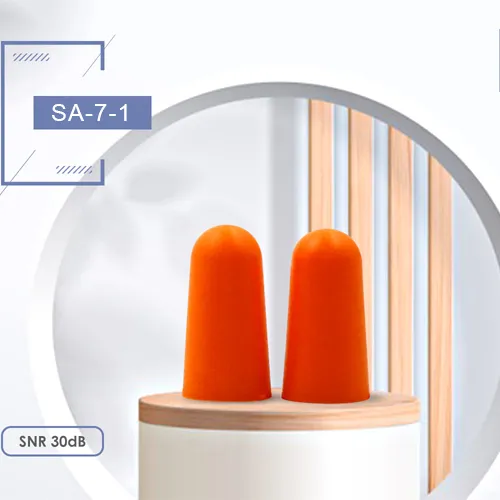
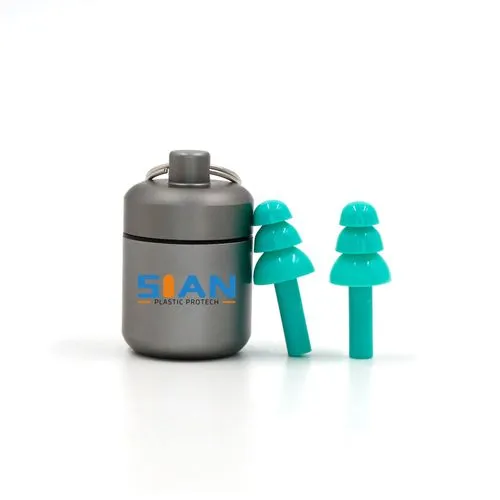
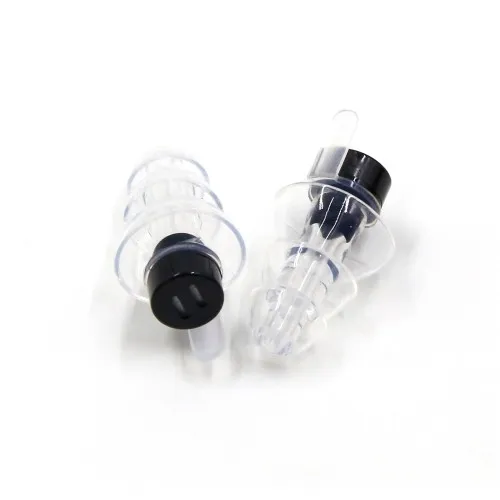
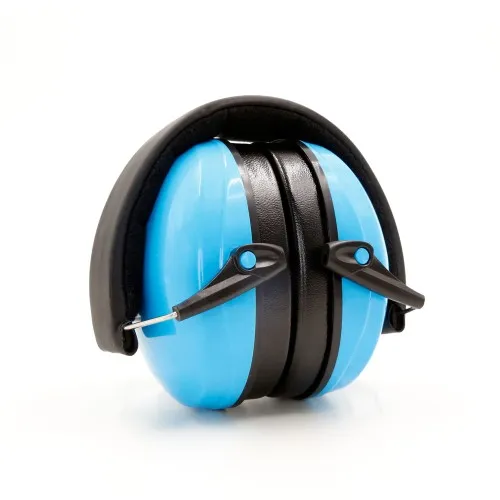
For the engine-room plates, purifier room, and steering gear (100-115 dB(A)), high-NRR foam such as the SA-7-1 PU foam ear plugs is the default, and directly alongside the main engine or a running generator — anywhere past roughly 105 dB(A) — pair plugs with SA-8-10 earmuffs for dual protection, the only reliable way to bring the level at the ear below the action level. For engineers who stand long watches and manned machinery spaces (85-100 dB(A)), the enemy is wear-time and humidity, not raw decibels: a washable silicone plug like the SA-1-3 waterproof silicone ear plugs stays comfortable through a 12-hour watch in engine-room heat, resists sweat and oil mist, and washes clean — the property that decides whether protection is still in the ear at the end of a watch. For the engine control room and anyone who must hear alarms, telephones, and radio traffic, filtered plugs such as the SA-2-7 acoustic mesh filtered ear plugs lower the level while preserving speech and warning tones — critical where mishearing an alarm is a safety event, not just a comfort issue. The full method for setting protection by space, including wear rules a crew will actually accept, is in our how to choose ear protection guide.
One manufacturer's note from our own floor: the hot, oily, salt-laden air of an engine room is unusually hard on disposable foam, which absorbs moisture and loses recovery, so in these spaces treat it as single-watch, single-use rather than stretching it across days. Washable silicone earns its place precisely where humidity would otherwise turn a reusable foam plug into a hygiene and fit problem.
Cost, MOQ, and Equipping a Fleet
Kitting a ship is a mixed-SKU order, not a single line item, and a fleet program multiplies it. In practice an operator buys three tiers: bulk disposable foam for the loud machinery spaces, engine-room visitors, and riding crews (typical import cost $0.04-0.12 per pair at volume), washable silicone for the engineers and ratings who wear protection every watch ($0.30-0.80 per pair, replaced monthly rather than daily), and a smaller count of filtered plugs plus muffs for the ECR and workshop. Blended correctly, the reusable tiers usually reduce annual spend per seafarer versus an all-disposable slop-chest — the arithmetic is worked through in our hearing protection ROI analysis.
On documentation, the marine buyer needs more than a shore factory does. Protection carried on a SOLAS ship should be certified to EN 352 with SNR and H/M/L octave-band data (the format flag states and class surveyors expect), while ANSI/NRR labeling covers the U.S. inland fleet. Keep the attenuation certificates filed with the ship's noise survey and the Safety Management System so a Port State Control officer can close the item out on the spot. Factory-direct MOQs for custom-branded product typically start around 10,000 pairs for foam and 5,000 for silicone, with standard-catalog orders lower and well suited to a single ship or small fleet; the complete buyer guide covers vetting, sampling, and QC step by step.
Frequently Asked Questions
How loud is a ship's engine room?
A merchant vessel's main engine room typically runs 100-115 dB(A) continuously, with the highest levels — sometimes 115-120 dB(A) — directly alongside the main engine and running generators. Manned machinery spaces and the shaft alley usually hold 90-105 dB(A), while the engine control room, if properly acoustically treated, sits at 65-80 dB(A). Because the noise is continuous for the whole voyage, nearly every engine-department role accumulates exposure above the 85 dB(A) action level.
What noise regulations apply to ships?
For ocean-going SOLAS ships the governing instrument is the IMO Code on Noise Levels Onboard Ships (Resolution MSC.337(91)), mandatory for ships of 1,600 GT and above built on or after 1 July 2014. It sets space-by-space limits and caps the 24-hour exposure at 80 dB(A). The Maritime Labour Convention, 2006 reinforces it as a seafarer health-and-safety requirement. U.S. inland and near-shore vessels also fall under OSHA/USCG occupational noise rules. A single fleet often has to satisfy more than one of these at once.
What is the IMO noise limit for an engine room?
Under the IMO Code, continuously manned machinery spaces are limited to 85 dB(A) and machinery control rooms to 75 dB(A). Machinery spaces that are not continuously manned may reach up to 110 dB(A), which the Code treats as an absolute ceiling — above that level no entry is permitted even briefly, and any space above 85 dB(A) must be marked with warning signs and mandatory hearing-protection notices.
What ear protection is best for seafarers?
Match it to the space. On the engine-room plates and in the purifier and steering-gear rooms (100-115 dB(A)), use high-NRR foam, and dual protection — plugs plus muffs — directly by the main engine. For engineers standing long watches, washable silicone plugs win on comfort and humidity resistance across a 12-hour watch. In the engine control room, filtered plugs let the crew hear alarms and radio traffic while still lowering the level. Comfort and hygiene decide real-world wear far more than a high number on the packet.
Does the MLC 2006 require hearing protection at sea?
Yes, indirectly but enforceably. MLC 2006 Regulation 4.3 obliges flag states to ensure seafarers work and live in a safe and hygienic environment, and its guidance points to the IMO noise Code for the technical limits. In practice that means a compliant ship must carry certified hearing protection for spaces above 85 dB(A), keep the noise survey and PPE certificates on file, and be able to show a Port State Control inspector that the protection matches the measured levels.
Equipping a ship or a fleet with hearing protection? Send EASTRAGON your onboard noise survey and we match certified EN 352 and ANSI-tested protection to each space — foam, washable silicone, filtered, and earmuff lines with consolidated documentation for your Safety Management System and Port State Control file, from a manufacturer that molds PU foam and silicone in-house. As a Solution Integrator serving importers and shipmanagers in 50+ countries, we ship samples in 3-5 business days. Browse the full product catalog.