Military and law enforcement hearing protection is governed by a different physics than factory hearing protection. Gunfire, artillery, and explosive ordnance produce impulse noise, single peaks above 140 dB lasting milliseconds, while industrial machinery produces steady noise you measure as an 8-hour average. For weapons noise the number that matters is peak sound pressure level (SPL), not the Noise Reduction Rating printed on the box. Procurement teams that spec by NRR alone leave shooters and operators under-protected against the exact exposure that causes instant, permanent damage. According to the National Institute for Occupational Safety and Health (NIOSH), a single unprotected gunshot at the muzzle can reach 165 dB peak, and the Occupational Safety and Health Administration caps any impulse or impact noise exposure at 140 dB peak SPL regardless of duration. Sourcing hearing protection for defense and police roles starts with that ceiling, not with a derated average.
Why Impulse Noise Is Not Industrial Noise
Industry definition: impulse noise is a transient burst of acoustic energy lasting less than one second, with a rapid rise to a high peak and a fast decay, as distinct from continuous or intermittent noise measured over a work shift. Gunfire, breaching charges, artillery, and aircraft ordnance all sit in this category. The danger is the peak, not the dose. A rifle report can hit 160 dB and be over before a passive muff fully reacts, which is why peak attenuation and seal integrity matter more here than the steady-state numbers that dominate our workplace noise survey guide.
Two consequences follow for buyers. First, the OSHA 50% derating logic explained in our NRR ratings guide still applies to real-world fit, but the starting point is a 140 dB peak limit rather than an 85 dBA action level. Second, situational awareness becomes a safety requirement, not a comfort preference. An operator who cannot hear commands, footsteps, or radio traffic is exposed to a different hazard entirely, which is what drives the demand for level-dependent protection covered below.
The Standards: MIL-STD-1474, EN 352, and Peak SPL
Three standards frame defense and police procurement, and a one-stop supplier should map your protection against all three:
- MIL-STD-1474: the U.S. military design criteria standard for noise limits on materiel, including impulse and steady-state ceilings that drive what protection is mandated around specific weapons systems.
- EN 352 (with EN 13819): the European framework for hearing protector testing and CE marking. Our EN 352 standard explainer breaks down the part numbers, and high-impulse muffs are tested for peak performance, not just SNR.
- ANSI / NRR vs CE / SNR: defense buyers often procure across regions, so the certification you accept must be readable on both scales. Our CE vs ANSI guide shows how to reconcile the two so a spec written for one market is defensible in another.
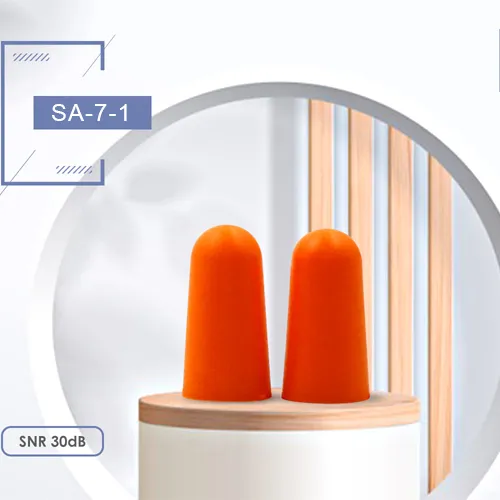
The practical rule: confirm the product is tested for impulse peak attenuation and carries the right CE EN 352 or ANSI S3.19 documentation, then verify the labeled rating against the residual exposure your weapons produce. A 33 NRR foam plug is an excellent first layer precisely because foam reacts fast and seals deep, which is why it appears in nearly every tactical loadout despite the headline rating being identical to an industrial plug.
Passive vs Level-Dependent (Electronic) Protection
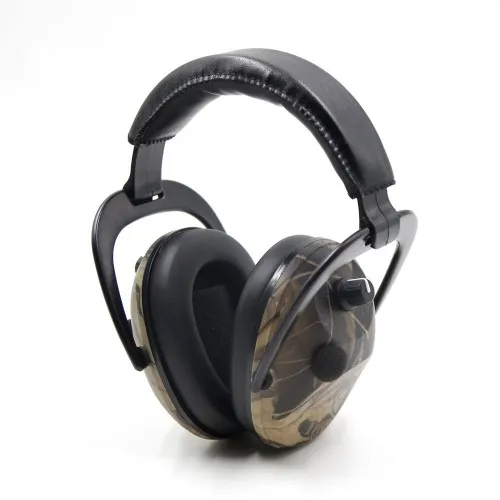
The central procurement decision for military and police roles is passive versus level-dependent. Level-dependent (also called sound-restoration or electronic) protectors use microphones and circuitry to pass through low-level sound at natural volume while clamping down instantly on any impulse above a threshold. This preserves the situational awareness an operator needs and still blocks the gunshot. The trade-off is cost, battery dependence, and fleet maintenance. This table sets out where each wins, and it extends the logic from our electronic vs passive ear muffs guide into the impulse-noise context:
| Factor | Passive Protection | Level-Dependent (Electronic) |
|---|---|---|
| Impulse blocking | Constant attenuation, blocks everything | Instant clamp on impulse, passes speech |
| Situational awareness | Low, muffles commands and footsteps | High, restores ambient sound |
| Best role | Static ranges, artillery crews, sustained fire | Patrol, breaching, training, command roles |
| Cost per unit | Low, ideal for bulk issue | Higher, plus batteries and upkeep |
| Failure mode | None, always protecting | Reverts to passive if battery dies |
Most defense fleets run both: passive foam plugs and high-NRR muffs for static high-volume environments, level-dependent muffs for roles where hearing the environment is itself a survival factor. For the maximum-attenuation static cases, see how to stack ratings in our highest-NRR protection guide.
Dual Protection for Artillery and Heavy Ordnance
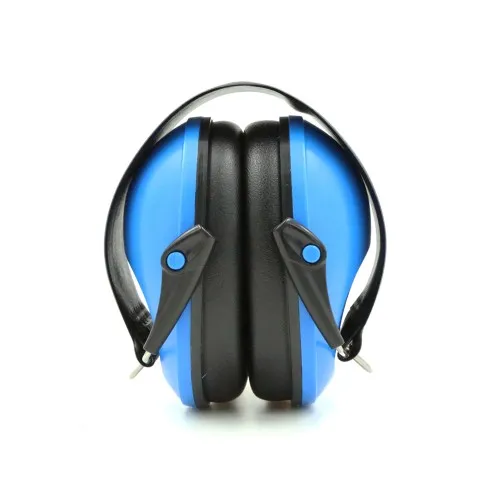
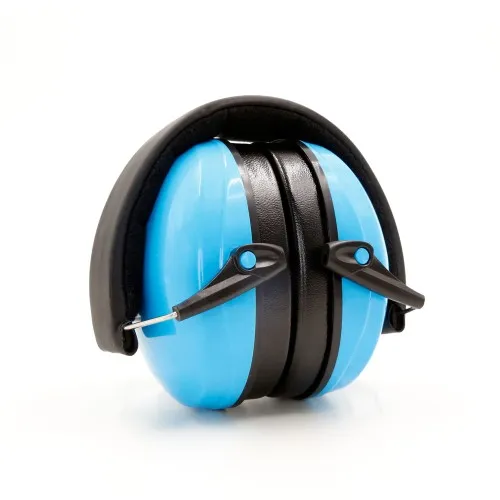
No single protector brings a 165 dB muzzle peak under the 140 dB ceiling with margin. For artillery crews, demolition, and heavy weapons, the answer is dual protection, a deep-sealing foam plug worn under a high-NRR muff. As covered in our how to choose guide, dual protection does not add the two ratings together; it yields roughly the higher rating plus 5 dB of combined real-world attenuation. That combined layer is what brings impulse and sustained artillery exposure into a survivable range, and it is mandatory practice in most artillery and range-safety doctrines.
Protection Matched to Role
Defense and law enforcement procurement is rarely one product for everyone. Match the protector to the exposure profile of each role:
- Indoor and outdoor ranges (instructors, armorers): dual protection, foam plug plus high-NRR muff, because exposure is sustained and repeated.
- Patrol and tactical (police, infantry): level-dependent electronic muffs or electronic plugs so commands, radio, and threats remain audible between impulse events.
- Artillery and demolition crews: mandatory dual protection with the highest available muff NRR.
- Vehicle and aircraft crews: communications-integrated headsets with passive attenuation plus active noise reduction for the steady engine and rotor noise alongside impulse risk.
- Recruit and bulk issue: high-quality PU foam plugs as the universal first layer, low cost and fast to deploy across an entire intake.
Frequently Asked Questions
Does a high NRR mean a protector is safe for gunfire?
Not on its own. NRR is derived from steady-state laboratory testing, while gunfire is impulse noise dominated by a millisecond peak. A high NRR helps, but you must confirm the protector is tested for impulse peak attenuation and that the residual exposure stays under the 140 dB peak limit OSHA sets. For peaks above roughly 160 dB, plan on dual protection rather than relying on a single rating.
What are MoD hearing protection regulations based on?
UK Ministry of Defence hearing protection requirements flow from the Control of Noise at Work Regulations applied to military activity, combined with defense-specific standards governing weapons and platform noise. In practice that means peak action values for impulse noise, mandatory protection above defined thresholds, and approved protector lists. Buyers serving MoD or NATO programs should source protectors that carry EN 352 CE certification and documented impulse performance so the protection is auditable against those rules.
Why do soldiers and police need to hear while protected?
Situational awareness is a safety and operational requirement. An operator who cannot hear commands, approaching threats, or radio traffic faces a hazard that passive over-attenuation can worsen. Level-dependent protectors solve this by passing low-level ambient sound through at natural volume while instantly clamping any impulse above the threshold, so the wearer stays connected to the environment and protected from the gunshot at the same time.
Can the same protection work for industrial and military buyers?
The base products overlap, foam plugs and high-NRR muffs serve both, but the selection logic differs. Industrial selection starts from an 8-hour TWA and the action level, military selection starts from peak SPL and situational awareness. A Solution Integrator can supply both from one catalog while spec-matching each order to the correct standard, which is more efficient than running separate supply chains.
How fast can bulk military-grade hearing protection ship?
For passive foam plugs and certified muffs held in stock, samples ship within 3 to 5 business days and bulk orders follow standard lead times. Level-dependent and communications-integrated units are typically built or configured to order. Provide your role mix and the weapons or platforms involved, and a supplier can quote a layered package rather than a single SKU.
Sourcing hearing protection for defense, police, or range operations? Contact EASTRAGON with your role mix and exposure profile, and we will spec a layered package, from bulk PU foam plugs for recruit issue to high-NRR ear muffs and dual-protection kits, with CE EN 352 and ANSI documentation included. As a Solution Integrator we supply factories, ranges, and security agencies across 50+ countries, and samples ship within 3-5 business days. Browse the full product catalog.