Textile and garment manufacturing is one of the loudest continuous-noise industries in the world: spinning, weaving, and knitting halls commonly run between 95 and 105 dB(A) across the whole shift, which puts nearly every machine operator above the 85 dB(A) action level where hearing protection becomes mandatory. The right program for a mill is not a single product but a zone-by-zone match: high-attenuation reusable plugs for operators in constant high noise, washable or filtered plugs where lint and humidity are heavy, and ear muffs for maintenance crews and supervisors who move in and out of the noise. Because textile plants run high headcounts and high turnover, hygiene, easy fit, and consistent supply matter as much as the raw NRR number. This guide breaks the floor down by department and gives procurement a sourcing framework built for the realities of a mill.
Why Textile Mills Are a Distinct Noise Problem
Most noisy industries have peaks; textile mills have a constant roar. Weaving sheds in particular are notorious, because dozens or hundreds of looms strike in overlapping cycles to produce a sustained, broadband noise that rarely drops below the action level for the entire shift. Unlike a fabrication shop where exposure is intermittent, a loom operator can stand in 100 dB(A) for eight to twelve hours. That changes the brief: the protector has to be comfortable enough to wear continuously without becoming the reason a worker takes it out, which is exactly the failure mode a workplace noise survey is designed to catch before it becomes a claim.
The second complication is the environment itself. Cotton dust and lint are everywhere, humidity and heat are deliberately controlled high for fiber handling, and hands are often not clean. Those conditions are hard on disposable foam, which absorbs moisture and lint and has to be inserted with fingers that may carry fiber and oil. That is why material choice in a mill leans toward washable, reusable, and pre-flanged designs more than in a typical metal shop.
Mapping Noise by Department
A textile or garment plant is not uniformly loud, and buying one product for the whole site overspends in quiet zones and underprotects in loud ones. A practical map looks like this:
- Spinning and ring-frame halls (95 to 102 dB(A)): constant high noise, operators stationary for long periods. Highest-attenuation reusable plugs are the core product here.
- Weaving sheds (100 to 110 dB(A)): the loudest zone in most mills, often justifying maximum protection and, near older shuttle looms, dual protection (plugs under muffs).
- Knitting and warping (90 to 98 dB(A)): sustained exposure, good fit for comfortable reusable or filtered plugs that still allow some machine-sound monitoring.
- Dyeing, finishing, and printing (80 to 92 dB(A)): variable, with steam and pump noise; protection needed in some bays, optional in others.
- Cutting, sewing, and garment assembly (75 to 85 dB(A)): usually near or below the action level, where lighter protection or none may apply, confirmed by survey.
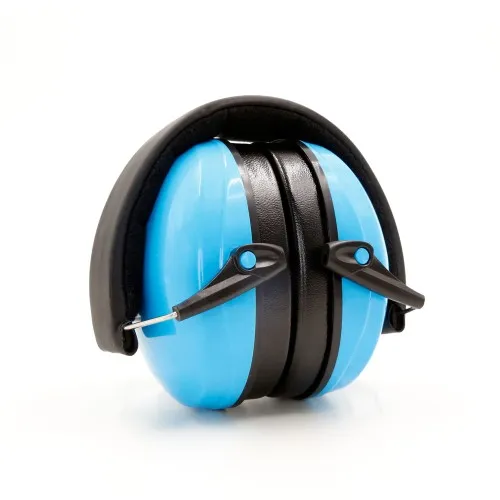
- Maintenance and supervision (moving): in and out of all zones, best served by quick-on ear muffs.
Measure each zone, apply the OSHA 50 percent derating to the labeled NRR, and match the product to the derated number rather than the catalog figure.
Material and Fit: Why Hygiene Wins in a Mill
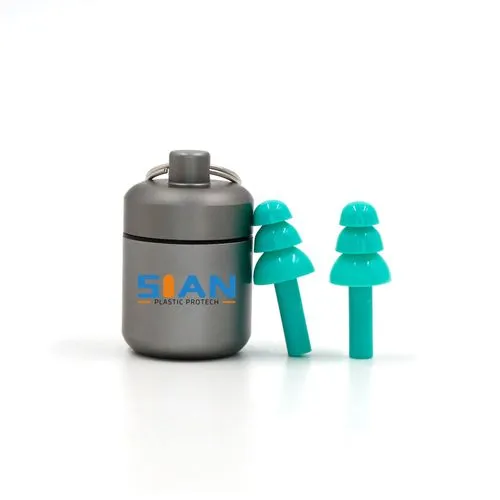
In a clean engineering plant the debate is often foam versus silicone on attenuation alone. In a textile mill, hygiene and reuse move to the front. Lint-laden disposable foam inserted with dirty hands is a contamination and ear-infection risk, and the daily consumption at high headcount is significant. Washable pre-molded silicone or flanged plugs that workers can rinse and reuse cut both the hygiene risk and the consumable spend, which is why waterproof reusable silicone plugs are a natural fit for spinning and weaving operators.
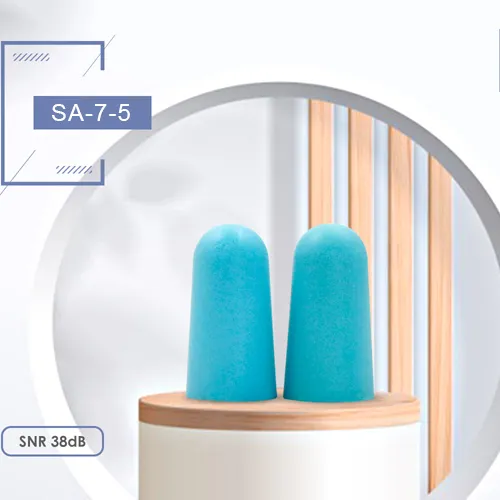
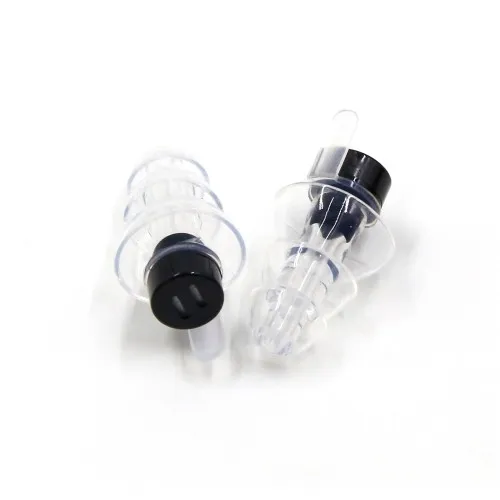
Filtered or acoustic-mesh plugs deserve a look in zones where operators still need to hear machine cues, alarms, or a colleague, because flat-attenuation filtered plugs lower the level without fully sealing the worker off. Where a low entry cost is non-negotiable, keep disposable foam available for visitors and short tasks, but treat it as the exception in a mill, not the default.
The Turnover and Compliance Reality
Garment and textile manufacturing runs some of the highest workforce turnover and largest headcounts in industry, often with multilingual crews and limited time for training. That reality favors protection that is hard to use wrong. Pre-flanged reusable plugs and ear muffs both fit that brief: a flanged plug pushes in correctly with little technique, and a muff is visible to a supervisor from across the floor. The most attenuating product on paper is worthless if a new hire wears it loose or not at all, so the real selection criterion is consistent correct use across a changing workforce, not the highest single-number NRR.
Compliance also has a documentation side. Whichever protectors you standardize on should carry test reports to a recognized standard so your hearing conservation program survives an audit. The EN 352 standard and its ANSI equivalents are what buyers should require on the spec sheet, alongside a clear program described in the hearing conservation program guide.
A Sourcing Framework for Textile Buyers
Because a mill needs several product types across its zones, the procurement advantage goes to consolidating, not splitting. A practical sourcing checklist:
- Match by zone, not by site: reusable high-NRR plugs for spinning and weaving, filtered plugs where monitoring matters, muffs for maintenance, lighter options below the action level.
- Prioritize washable and reusable designs to control lint hygiene and consumable cost at high headcount.
- Require certified test reports to EN 352 or ANSI for every line item, not just the headline product.
- Consolidate to one accountable supplier who ships plugs and muffs together with one set of documentation, so audits, freight, and inspection do not multiply across vendors.
- Pressure-test supply continuity: a mill cannot run a hearing program on a vendor who is out of stock, so confirm lead times and reorder cadence before standardizing.
The same zone-matching logic is laid out for general plants in the how to choose ear protection guide and the complete buyer guide, which walk procurement through selection step by step.
Frequently Asked Questions
How loud is a textile or garment factory?
Noise varies sharply by department. Spinning halls typically run 95 to 102 dB(A), weaving sheds are the loudest at 100 to 110 dB(A), knitting and warping sit around 90 to 98 dB(A), while cutting, sewing, and garment assembly are often near or below the 85 dB(A) action level. Because spinning and weaving exposure is constant across the full shift rather than intermittent, machine operators in those halls are almost always above the limit where hearing protection is mandatory.
What is the best hearing protection for textile mill workers?
For spinning and weaving operators in constant high noise, washable reusable silicone or flanged plugs give high attenuation with the hygiene and comfort needed for all-shift wear. Filtered plugs suit zones where operators must still hear machine cues, and ear muffs suit maintenance and supervisory staff who move in and out of noise. The best choice in any zone is the product workers wear correctly for the whole shift, which in a high-lint, high-turnover mill usually favors reusable, easy-fit designs.
Why are reusable plugs preferred over disposable foam in textile plants?
Cotton lint and high humidity make disposable foam a poor fit: foam absorbs moisture and fiber, and it must be rolled and inserted by hand, which raises contamination and ear-infection risk when hands carry lint or oil. Washable pre-molded silicone or flanged plugs can be rinsed and reused, cutting both the hygiene risk and the daily consumable cost that becomes significant at the large headcounts typical of textile and garment manufacturing.
Do textile factories need ear muffs or ear plugs?
Most need both. Plugs are the core product for stationary operators in spinning, weaving, and knitting because they are comfortable for long continuous wear and fit under headwear. Ear muffs are better for maintenance crews and supervisors who move between loud and quiet areas, because they are quick to put on and easy for a supervisor to verify at a glance. In the loudest weaving zones above about 100 dB(A), plugs and muffs worn together add roughly 5 to 8 dB over either alone.
What certifications should a textile buyer require for hearing protection?
Require test reports to EN 352 (Europe) or the ANSI S3.19 / ANSI S12.6 methods (United States) for every product line, not just the flagship. These reports document the attenuation rating and let your hearing conservation program withstand an audit. A supplier who can supply certified plugs and muffs together, with consistent documentation, simplifies both compliance and procurement for a multi-zone mill.
Sourcing hearing protection for a textile or garment plant? Contact EASTRAGON with your department noise map, headcount, and target markets, and we match certified EN 352 and ANSI protection to each zone with consolidated pricing across reusable silicone plugs, filtered plugs, and ear muffs. As a Solution Integrator serving importers in 50+ countries, we ship samples in 3-5 business days. Browse the full product catalog.