A cement plant is one of the loudest continuous-process environments in heavy industry, and it is also one of the few that straddles two separate noise regulators. The crushing and grinding line — jaw and impact crushers, raw mills, and cement mills — runs 95-115 dB(A) around the clock, while kilns, clinker coolers, ID fans, and the packing plant hold 85-100 dB. On top of that, the attached quarry in the United States falls under MSHA, not OSHA, so a single site can owe compliance to two rulebooks with different paperwork. This guide maps cement and concrete plant noise zone by zone and gives PPE buyers a sourcing framework that covers both the process building and the quarry — written from the supplier side, by a manufacturer that molds its own PU foam and silicone hearing protection.
Why Cement Plant Noise Needs Its Own Playbook
Two things separate a cement works from a general factory. The first is relentless continuity. A modern kiln line runs 24/7 for months between shutdowns, so the raw mill and cement mill operators accumulate an 8-hour time-weighted average (TWA) near the top of what any workplace produces — this is not a plant with quiet spells, and comfort over a full 12-hour shift decides whether protection actually stays in the ear, the same wear-time logic we detail in our industrial noise patterns guide. The second is the split jurisdiction. In the U.S., the process plant answers to OSHA's occupational noise standard, 29 CFR 1910.95 (85 dB(A) action level, 90 dB(A) PEL, 5 dB exchange rate), while the raw-material quarry answers to MSHA under 30 CFR Part 62, which also sets an 85 dB(A) action level but is enforced by a different agency with its own inspection regime. A buyer supplying one site therefore has to satisfy both, and the documentation each demands is not identical.
Add a dust-heavy, alkaline environment where finger-inserted plugs raise hygiene concerns, and the plant that gets hearing protection wrong tends to get it wrong in a predictable way: one bulk product bought for everyone, over-protecting the packing floor while leaving the mill operator short.
Mapping Noise by Plant Zone
A practical zone map for an integrated cement works, plus the attached concrete or precast operation many groups run, looks like this:
| Zone / Task | Typical Noise | Noise Character | Protection Priority |
|---|---|---|---|
| Crushing (jaw / impact / hammer) | 95-115 dB | Continuous + impact peaks on hard feed | Maximum attenuation; dual protection at the top end |
| Raw mill / cement mill (ball & vertical) | 95-110 dB | Continuous grinding roar, low-frequency heavy | High-NRR plugs, all-shift comfort critical |
| Kiln & preheater tower | 85-95 dB | Continuous, broadband | Comfortable plugs; hearing-through for rounds |
| Clinker cooler & ID / process fans | 90-105 dB | Continuous, tonal fan whine | High-NRR plugs or muffs for entries |
| Compressor & blower houses | 90-100 dB | Continuous low-frequency | Muffs for short entries |
| Packing & palletizing plant | 85-95 dB | Intermittent, valve-bag & conveyor | All-day silicone or foam plugs |
| Quarry: drilling, blasting, haulage | 90-120 dB peaks | Impulse (blasting) + mobile-equipment continuous | MSHA zone; high-NRR + impulse awareness |
| Concrete batching / precast | 85-100 dB | Mixers, vibrating tables, aggregate drop | Foam or silicone plugs; muffs at vibrators |
No table replaces your own two readings. Walk the process building with a sound level meter to map fixed stations, then put dosimeters on the mobile roles — patrol operators, maintenance crews, and quarry haul-truck drivers who move through several zones a shift. Our dosimeter vs sound level meter guide explains which instrument answers which question, and the full documented method an inspector expects is in the workplace noise survey guide.
Choosing Protection Zone by Zone
Start from the measured TWA and apply the derating habit that keeps selection honest: halve an earplug's labeled NRR before trusting it, per OSHA's 50% derating guidance, because lab ratings overstate field attenuation. Our guide to NRR and SNR ratings covers the arithmetic, and it matters more here than in most plants, because the loudest zones need every real decibel.
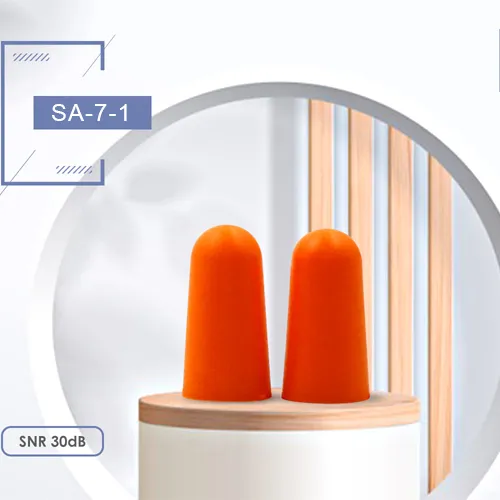
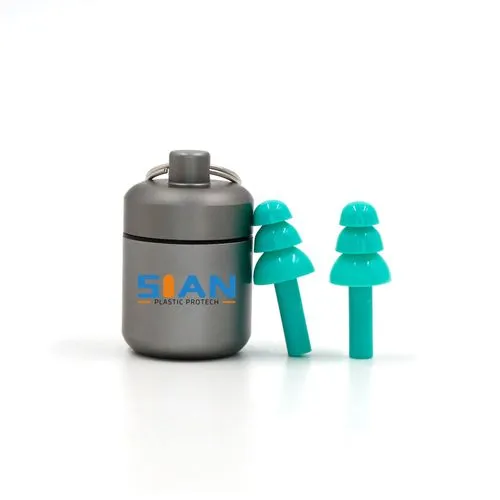
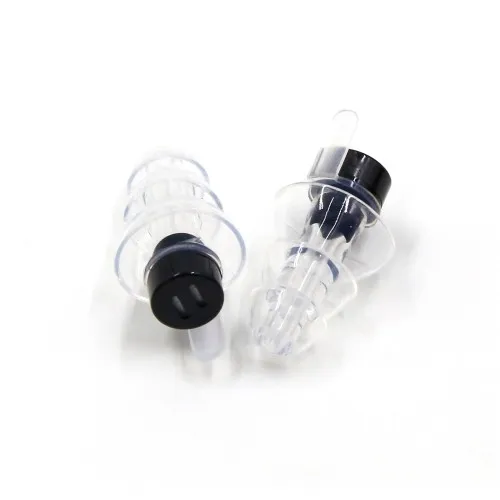
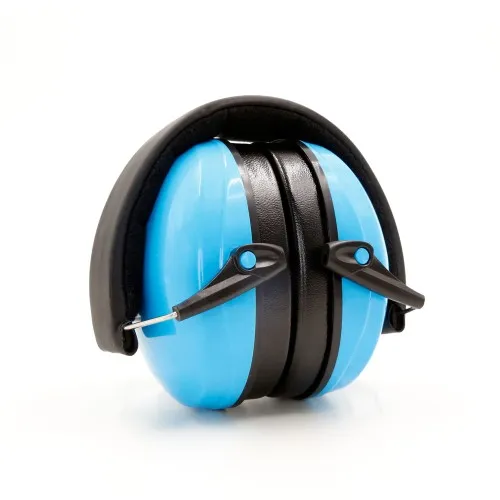
For crushing, raw and cement mills, and coolers (95-115 dB), high-NRR foam such as the SA-7-1 PU foam ear plugs is the default, and at the top of that range — a jaw crusher on hard clinker or a ball mill at full load — pair plugs with SA-8-10 earmuffs for dual protection, the only reliable way past roughly 105 dB(A). For the kiln floor, packing plant, and batching (85-95 dB), the enemy is wear-time, not decibels: a washable silicone plug like the SA-1-3 waterproof silicone ear plugs stays comfortable through a 12-hour shift, resists cement dust and washes clean — the property that decides whether protection is worn at hour nine. For control-room and maintenance staff who must hear radios, alarms, and the machine itself, filtered plugs such as the SA-2-7 acoustic mesh filtered ear plugs lower the level while preserving speech and warning sounds. The zone-by-zone method, including how to set wear rules workers accept, is in our how to choose ear protection guide, and the same logic that governs a general manufacturing plant extends across the cement process line.
One manufacturer's note from our own floor: the alkaline dust of a cement plant is unusually hard on disposable foam, which absorbs moisture and grit and should be treated as single-shift, single-use in these zones — not stretched across days to save cost. Washable silicone earns its place precisely where dust would otherwise turn a reusable foam plug into a hygiene problem.
Cost, MOQ, and a Sourcing Framework
A cement group program is a mixed-SKU order, not a single line item. In practice an integrated works buys three tiers: bulk disposable foam for the loud process zones and visitors (typical import cost $0.04-0.12 per pair at volume), washable silicone for the daily wearers on the kiln floor and packing plant ($0.30-0.80 per pair, replaced monthly instead of daily), and a smaller count of filtered plugs plus muffs for control-room, maintenance, and fan-house entries. Blended correctly, the reusable tiers usually reduce annual spend per head versus an all-disposable program — the arithmetic is worked through in our hearing protection ROI analysis.
On compliance paperwork, the split jurisdiction is the detail buyers miss. Both OSHA and MSHA accept the same NRR labeling derived from ANSI S3.19, so a single certified product line can serve the plant and the quarry — but MSHA inspectors focus on the mine-side records, so keep the attenuation data and the plant's noise survey filed against both authorities. For European and export sites, protection must be certified to EN 352, with SNR and H/M/L octave-band data rather than a single NRR. Factory-direct MOQs for custom-branded product typically start around 10,000 pairs for foam and 5,000 for silicone, with standard-catalog orders lower; the complete buyer guide covers vetting, sampling, and QC step by step.
Frequently Asked Questions
How loud is a cement plant?
The loudest continuous zones — jaw and impact crushers, raw mills, and cement mills — run 95-115 dB(A), while kilns, clinker coolers, process fans, and the packing plant hold 85-105 dB(A). Nearly every production role in an integrated cement works therefore sits at or above the 85 dB(A) action level, which is why hearing protection is mandatory-wear across most of the plant rather than a spot requirement.
What is the loudest area in a cement plant?
The grinding and crushing circuit. A ball mill or vertical roller mill at full load and a jaw or impact crusher on hard feed produce a continuous 95-115 dB(A) roar with low-frequency energy and impact peaks. These zones almost always require dual protection — plugs plus muffs — because a single protector cannot reliably bring the level at the ear below 85 dB(A) once the OSHA 50% derating is applied.
Does a cement plant follow OSHA or MSHA for noise?
Both, at different parts of the site. In the U.S., the process plant (crushing onward, kiln, mills, packing) is regulated by OSHA under 29 CFR 1910.95, while the attached raw-material quarry is regulated by MSHA under 30 CFR Part 62. Both set an 85 dB(A) action level, but they are separate agencies with separate inspections and records, so a single site must satisfy two compliance files. The same NRR-labeled protection can serve both.
What NRR do cement plant workers need?
After applying the 50% field derating, an NRR 32-37 foam plug delivers roughly 16-18 dB of real-world reduction — enough to bring a 100 dB(A) mill or crusher zone under 85 dB(A). Above about 105 dB(A), no single plug is enough and workers need dual protection. For the 85-95 dB(A) kiln floor and packing plant, a comfortable silicone or filtered plug with a lower rating protects more hearing over a full shift than an unworn high rating.
How do you protect quarry workers from blasting noise?
Quarry blasting is impulse noise — a millisecond pressure spike that can exceed 120 dB(C) — not the steady level a dosimeter averages, so it is managed by distance and timing first: personnel are cleared to a safe standoff before a shot. For the continuous exposure of drilling, crushing, and haulage that fills the rest of the shift, high-NRR foam plugs, or plugs plus muffs near the primary crusher, are selected against the measured TWA the same way as in the plant.
Sourcing hearing protection for a cement works, quarry, or concrete operation? Send EASTRAGON your zone map or dosimetry results and we match certified EN 352 and ANSI-tested protection to each zone — foam, washable silicone, filtered, and earmuff lines with consolidated documentation for both OSHA and MSHA files, from a manufacturer that molds PU foam and silicone in-house. As a Solution Integrator serving importers in 50+ countries, we ship samples in 3-5 business days. Browse the full product catalog.