Oil and gas operations generate some of the highest sustained noise levels of any workplace. Drill floors routinely exceed 100 dB. Compressor stations run 95-115 dB around the clock. Mud pumps, draw works, power tongs, and generators each add their own layer of noise to an already dangerous acoustic environment. According to industry assessments from AirComm Corporation, noise levels at drilling sites, pump houses, and compressor areas frequently surpass 100 dB(A). Despite this, hearing loss prevention in oil and gas lags behind other high-noise industries like manufacturing and aviation. Part of the reason is regulatory: OSHA partially exempts oil and gas drilling and servicing from the full hearing conservation standard. The other part is practical -- remote worksites, extreme weather, and contaminated environments make consistent hearing protection use genuinely difficult.
Noise Sources Across Oil and Gas Operations
Every phase of oil and gas production has its own noise profile. Understanding which equipment generates what level of noise is the first step toward selecting the right protection.
| Work Area / Equipment | Typical dB Range | Noise Type |
|---|---|---|
| Drill floor (rotary table, top drive) | 100-120 dB | Continuous + impact |
| Mud pumps | 95-115 dB | Continuous pulsing |
| Draw works | 90-110 dB | Variable |
| Power tongs / pipe handling | 95-115 dB (peaks to 130 dB) | Impact / impulse |
| Diesel generators | 90-105 dB | Continuous |
| Compressor stations | 95-115 dB | Continuous |
| Well testing / flaring | 100-140 dB | Variable, high peaks |
| Pump jacks (production phase) | 75-90 dB | Continuous cyclic |
| Pipeline pigging operations | 85-105 dB | Intermittent impact |
| Vac trucks | 95-110 dB | Continuous |
Two things stand out from this table. First, most operations land above 95 dB -- well past OSHA's 90 dB permissible exposure limit. Second, several sources produce impulse noise (power tongs, pipe handling, well testing) that can cause immediate cochlear damage from a single unprotected exposure. A roughneck on the drill floor during pipe connections faces both sustained high-level noise from the draw works and generators, plus impulse peaks above 120 dB when tongs break out connections. That combination is why oil field workers have some of the highest rates of occupational hearing loss across all industries.
OSHA Requirements: The Partial Exemption Explained
Here is where oil and gas gets unusual. Under OSHA's occupational noise standard (29 CFR 1910.95), paragraphs (a) and (b) apply to oil and gas well drilling and servicing, but paragraphs (c) through (n) do not. What does that mean in practice?
| Requirement | Applies to Oil & Gas Drilling? |
|---|---|
| Noise exposure shall not exceed 90 dB TWA (PEL) | Yes -- paragraph (a) |
| Feasible engineering/administrative controls first | Yes -- paragraph (b) |
| Hearing conservation program at 85 dB TWA | No -- paragraph (c) |
| Noise monitoring | No -- paragraph (d) |
| Audiometric testing | No -- paragraph (g) |
| Hearing protector requirements | No -- paragraph (i) |
| Training | No -- paragraph (k) |
This exemption does not mean hearing protection is optional. OSHA still requires that noise exposure not exceed 90 dB TWA. Since most drilling operations far exceed that level, employers must provide hearing protection as an engineering or administrative control under paragraph (b). The exemption only removes the formal hearing conservation program framework -- the monitoring schedules, audiometric baselines, and record-keeping requirements that apply to general industry. Many operators follow the full standard voluntarily, and API (American Petroleum Institute) guidance documents recommend comprehensive hearing conservation programs regardless of the OSHA exemption.
For downstream operations like refineries and petrochemical plants, the full 29 CFR 1910.95 standard applies without exemption. Workers in those facilities need the complete program: baseline audiograms, annual testing, training, and documented protector selection.
Selecting Hearing Protection for Oil Field Conditions
Oil field environments impose requirements that offices, factories, and warehouses never face. Hearing protection for this industry must survive extreme heat, cold, wind, dust, hydrocarbon exposure, and rough handling. A product that works perfectly in a climate-controlled factory may fail in the Permian Basin in August or on a North Sea platform in January.
Foam Ear Plugs for Drilling and Production
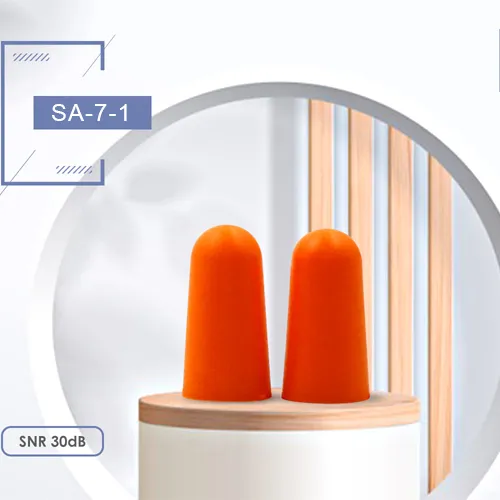
Disposable foam plugs remain the most practical daily-use protection for oil field workers. At 95-120 dB continuous exposure, you need the highest NRR available, and foam plugs with NRR 29-33 deliver more attenuation than any other single device. They are also disposable, which matters when plugs get contaminated with drilling mud, grease, or hydrocarbons within hours of use.
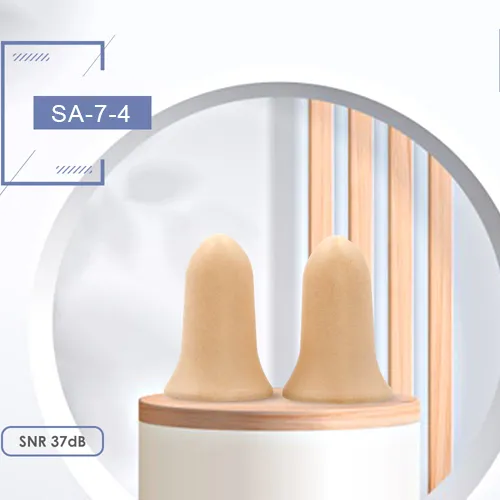
Two practical considerations for oil field foam plugs. First, temperature affects foam rebound speed. In cold weather, slow-recovery foam takes longer to expand in the ear canal. Our SA-7-4 Bell Shape Slow Rebound Foam Ear Plugs use a foam formulation that maintains consistent rebound across a wider temperature range than standard PU foam. Second, workers with greasy or muddy hands struggle to roll foam plugs properly. Pre-rolled or pod-style dispensers solve this -- the worker tears open a sealed packet and inserts the plug without touching the foam surface.
Earmuffs for High-Noise Areas and Cold Weather
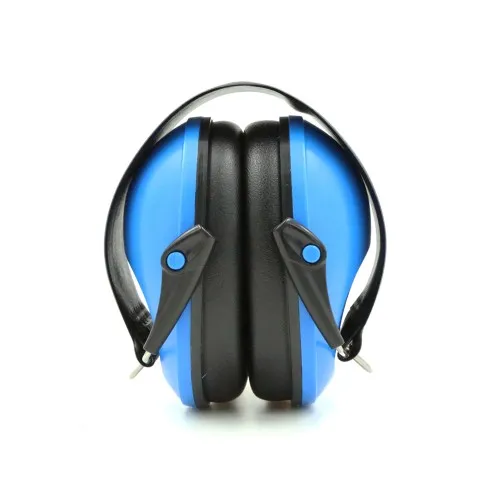
Earmuffs make sense for compressor station operators, well test supervisors, and any worker who moves frequently between high-noise and moderate areas. The SA-8-5 Foldable Earmuffs handle the on-off cycling that field work demands. In cold environments, earmuffs also provide thermal insulation -- a secondary benefit that improves compliance because workers want to wear them.
For operations above 100 dB, consider dual protection: foam plugs under earmuffs. The combined protection adds roughly 5 dB of real-world attenuation beyond the primary device alone. Use the NRR derating formula to calculate: take the higher-rated device, apply the OSHA derating ((NRR - 7) / 2), then add 5 dB for the second device.
Electronic Earmuffs for Communication-Critical Roles
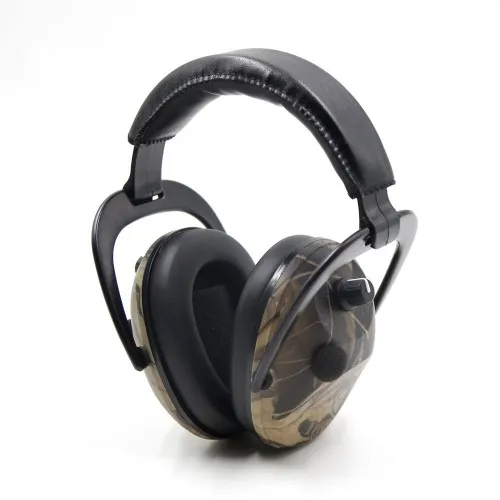
Drillers, tool pushers, and company men need to communicate with their crew while standing in 100+ dB noise. Removing hearing protection to talk defeats the purpose. Electronic earmuffs with level-dependent attenuation solve this by compressing harmful noise peaks while amplifying speech signals. They allow face-to-face conversation and radio communication without removing the muffs.
According to Sensear's industry analysis, communication breakdown on drill floors is both a hearing protection compliance problem and a safety hazard. When workers remove protection to hear instructions, they take an unprotected noise hit. When they keep protection in and miss a verbal warning, they face a different safety risk. Electronic earmuffs with speech-enhancement technology eliminate that tradeoff.
Noise Zones on a Typical Drilling Rig
A practical noise zone approach works on drilling rigs just as it does in warehouses and factories, but the thresholds shift higher.
| Zone | Areas | Expected dB | Minimum Protection |
|---|---|---|---|
| Red Zone (Dual Protection) | Drill floor during connections, mud pump room, well test operations | 100-140 dB | Foam plugs (NRR 29+) under earmuffs |
| Orange Zone (Mandatory) | Rig floor general, engine room, compressor area, shale shaker | 90-105 dB | Foam plugs NRR 29+ or earmuffs NRR 25+ |
| Yellow Zone (Recommended) | Pipe deck, catwalk, rig camp perimeter | 82-90 dB | Ear plugs available, recommended for extended stays |
| Green Zone | Doghouse (doors closed), living quarters, office trailer | Below 82 dB | None required |
Post zone signage at every access point. On most land rigs, the transition from Green to Red Zone can happen in 30 steps -- walking from the doghouse to the drill floor. Workers need protection ready before they step through that door, not after they arrive and realize their ears are ringing.
Challenges Specific to Oil and Gas Hearing Protection
Hydrocarbon and Chemical Contamination
Drilling mud, crude oil, diesel fuel, and completion fluids degrade some earplug materials over time. Silicone and thermoplastic plugs resist hydrocarbons better than PU foam, but foam plugs are disposable anyway -- the solution is frequent replacement rather than chemical resistance. Replace foam plugs every shift or whenever visibly contaminated. For reusable earmuff cushions, wipe down with a damp cloth between shifts and replace cushions every 6 months or when they no longer seal properly.
Extreme Temperatures
Desert operations (Permian Basin, Middle East, North Africa) push temperatures above 50C / 120F at ground level. Heat softens earmuff cushions, accelerates foam plug degradation, and makes any head-worn device uncomfortable. Workers in extreme heat often prefer foam plugs over earmuffs simply to reduce heat burden on the head. Arctic and offshore operations (North Sea, Alaska, Canada) present the opposite problem -- stiff foam that expands too slowly, frozen headband mechanisms, and condensation inside ear cups. Stocking both foam plug styles (standard PU and slow-rebound) gives workers options for different temperature conditions.
Hard Hat Compatibility
Nearly every oil field worker wears a hard hat. Standard over-head earmuffs conflict with hard hat brims. Cap-mounted earmuffs that clip onto hard hat accessory slots solve this, but verify compatibility with your specific hard hat model before ordering in bulk. The attachment mechanism varies between manufacturers, and a poor fit compromises both the hearing protection seal and the hard hat's impact protection.
12-Hour Shifts
Oil field crews typically work 12-hour shifts, not 8. This matters for two reasons. First, the OSHA PEL of 90 dB is based on an 8-hour TWA. At 12 hours, the equivalent exposure limit drops to roughly 87 dB to maintain the same noise dose. Workers who are "just under" the 8-hour limit may actually exceed safe exposure on a 12-hour rotation. Second, comfort over 12 hours is different from comfort over 8. Ear canal fatigue from foam plugs, headband pressure from earmuffs, and skin irritation all compound with the extra 4 hours. Offer at least two plug styles and one earmuff option so workers can rotate between devices during a shift.
Supplying Hearing Protection to Remote Sites
Oil and gas operations often run in locations far from supply chains -- offshore platforms, desert well pads, arctic drilling camps. Running out of hearing protection on site is a compliance failure and a safety failure simultaneously.
- Minimum 30-day buffer stock on site. Calculate consumption per worker per shift (assume 2 pairs of disposable plugs per 12-hour shift as baseline), multiply by headcount and 30 days, and stock that quantity plus 20% buffer for visitors and waste
- Sealed packaging matters. Heat, humidity, and dust degrade unpackaged foam plugs. Individually wrapped pairs last longer in storage and stay cleaner until use. Bulk barrel dispensers work in climate-controlled facilities but not on open well pads
- Supply chain lead time. At EASTRAGON, MOQ starts at 5,000 pairs with production lead time of 15-20 days and shipping 15-30 days depending on destination. For remote operations, plan orders 60-90 days ahead of need. We support quarterly bulk contracts with scheduled monthly shipments to reduce logistics complexity
Downstream: Refineries and Petrochemical Plants
Refineries and petrochemical facilities face a different regulatory landscape than upstream drilling. The full OSHA 29 CFR 1910.95 standard applies, including mandatory hearing conservation programs, noise monitoring, audiometric testing, and training. Noise sources in refineries include compressors, blowers, steam valves, and process piping -- many running 90-110 dB in continuous operation.
Refinery environments add one more consideration: intrinsic safety. In classified hazardous areas (Class I, Division 1 or 2), electronic hearing protection devices must be rated for the specific hazardous classification. Standard consumer-grade electronic earmuffs are not intrinsically safe. Passive hearing protection (foam plugs, passive earmuffs) has no electrical components and poses no ignition risk -- it is always acceptable in classified areas.
Frequently Asked Questions
How loud is a drilling rig?
Noise levels on a drilling rig range from 90 dB in peripheral areas to 120+ dB on the drill floor during pipe connections. Mud pumps and draw works typically run 95-115 dB. Power tong operations can produce impulse peaks above 130 dB. Most workers on an active drill floor face continuous exposure above 100 dB during a 12-hour shift.
Does OSHA require hearing conservation programs for oil and gas?
Partially. OSHA exempts oil and gas well drilling and servicing from paragraphs (c) through (n) of 29 CFR 1910.95, which cover the formal hearing conservation program framework. However, paragraphs (a) and (b) still apply, meaning noise exposure must not exceed 90 dB TWA and employers must use feasible controls. Downstream operations like refineries and petrochemical plants must comply with the full standard. API recommends voluntary adoption of the full program regardless of the exemption.
What NRR ear plugs do oil field workers need?
Given that most oil field noise levels exceed 95 dB and frequently reach 110-120 dB, workers need the highest NRR available. Foam ear plugs with NRR 29-33 are the standard baseline. For drill floor work above 100 dB, dual protection (plugs under earmuffs) is recommended. Apply the OSHA derating formula to calculate real-world attenuation: (NRR - 7) / 2 for a single device.
Can workers use electronic earmuffs on a drilling rig?
Yes, on drilling rigs and most upstream locations that are not classified hazardous areas. Electronic earmuffs with level-dependent attenuation are especially useful for drillers and supervisors who need to communicate in 100+ dB noise. In refineries or petrochemical plants with classified hazardous areas (Class I, Division 1 or 2), electronic devices must carry the appropriate intrinsic safety rating or be replaced with passive protection.
How often should hearing protection be replaced in oil field conditions?
Disposable foam plugs: every shift or whenever visibly contaminated with drilling mud, grease, or crude oil. Reusable plugs: clean after every shift, replace every 2-4 weeks depending on contamination exposure. Earmuff cushions: wipe down daily, replace cushions every 3-6 months or when they no longer create a proper seal. Headbands: replace when tension weakens (they should hold cups firmly against the head without manual pressure).
Need hearing protection for drilling rigs, compressor stations, or refinery operations? Contact EASTRAGON for product recommendations and samples. We supply foam plugs, earmuffs, and electronic hearing protection rated for oil and gas field conditions. MOQ from 5,000 pairs, samples ship within 7 days.