When a single ear plug or ear muff can no longer bring worker exposure below the legal limit, the answer is dual protection — wearing plugs and muffs at the same time. But two devices do not simply add their ratings together, and buyers who assume "NRR 33 plug + NRR 25 muff = NRR 58" over-order the wrong products and still fail their noise survey. This guide explains exactly when dual protection is required, how much attenuation it really delivers, and how to specify the plug-plus-muff combination correctly for high-noise plants.
When do you need dual hearing protection (ear plugs and ear muffs together)? Dual protection is needed when the 8-hour time-weighted average (TWA) noise exceeds roughly 100–105 dB, or when impulse peaks exceed 140 dB, because a single device can no longer bring exposure under the 85 dB action level. Wearing plugs and muffs together does not add the two ratings. NIOSH's field-validated rule is to take the higher-rated device's NRR and add only about 5 dB for the second device. So an NRR 33 plug worn with an NRR 25 muff gives roughly NRR 38 of real-world protection, not 58. Use dual protection for the loudest zones — blasting, drop forges, jet engine run-up, drilling and crushing — and confirm the combined figure against your workplace noise survey before ordering.
Why Two Devices Don't Add Up
The most expensive mistake in high-noise procurement is arithmetic. A buyer sees an NRR 33 foam plug and an NRR 30 muff, adds them, and specifies "NRR 63 protection" for a 108 dB drop-forge line. The workers wear both devices, the annual audiograms still show standard threshold shifts, and the safety manager cannot understand why. The reason is physics: once the ear canal is sealed by a well-fitted plug, most residual sound reaches the cochlea through bone conduction — vibration transmitted through the skull, bypassing the ear canal entirely. The second device cannot block a path it does not cover. This bone-conduction floor sits around 40–50 dB of attenuation, which is why no combination of plug and muff, however high their individual ratings, delivers more than roughly 40–50 dB of real protection.
Because of this, regulators and researchers use conservative addition rules rather than simple summation. Getting the rule right is the difference between passing and failing a hearing conservation program audit. For the underlying rating systems the numbers come from, see our guide to SNR and NRR ratings.
How Much Protection Does Dual Really Give? (The NIOSH +5 dB Rule)
NIOSH field method: take the higher-rated of the two devices and add 5 dB. This 5 dB allowance reflects the modest, diminishing benefit the second device provides once the first has sealed the primary sound path. The U.S. National Institute for Occupational Safety and Health (NIOSH) published this approach precisely because laboratory summation badly overstates real-world dual attenuation.
| Plug NRR | Muff NRR | Naive Sum (wrong) | NIOSH +5 dB (use this) |
|---|---|---|---|
| 33 | 25 | 58 | 38 |
| 29 | 27 | 56 | 34 |
| 31 | 31 | 62 | 36 |
Applied to exposure: OSHA 29 CFR 1910.95 further "derates" a single NRR by dividing by 2 after subtracting 7, because catalog ratings assume a perfect laboratory fit that rarely survives a real shift. For dual protection, the practical planning figure most safety officers use is the higher device's NRR plus 5 dB, then a real-world safety margin on top. If your zone measures 108 dB TWA and you need to reach the 85 dB target, you need about 23 dB of dependable field attenuation — achievable with dual protection but not with most single devices once derated.
When Is Dual Protection Required? A 5-Point Trigger List
Dual protection is not for every loud room. Over-specifying it causes overprotection, which isolates workers from warning signals and alarms and reduces compliance. Use this ordered trigger list to decide:
- 8-hour TWA above ~100–105 dB. When the time-weighted average exceeds what a single derated device can control, layer a second device. Most drop forges, blasting operations, and primary crushing zones qualify.
- Impulse or peak noise above 140 dB. Gunfire, stamping presses, pile driving and blasting produce peaks that a single protector cannot tame. This is standard practice in military and law-enforcement ranges.
- A single device still leaves a standard threshold shift. If audiograms show workers losing hearing despite compliant single protection, escalate to dual before the loss becomes permanent.
- Sustained exposure without relief. Long shifts in enclosed high-noise cells (jet-engine run-up bays, ship engine rooms) where workers cannot rotate out justify the extra margin.
- Regulator or customer mandate. Some site safety codes and OEM audit checklists require dual protection above a stated threshold regardless of the measured figure. Follow the stricter of law and contract.
Choosing the Right Plug-and-Muff Combination
The best dual set is not simply the two highest-rated devices. Comfort, communication, and fit determine whether workers actually keep both on for a full shift — and a device worn loose gives almost none of its rated protection. Match the combination to the task:
| Scenario | Recommended Dual Set | Why |
|---|---|---|
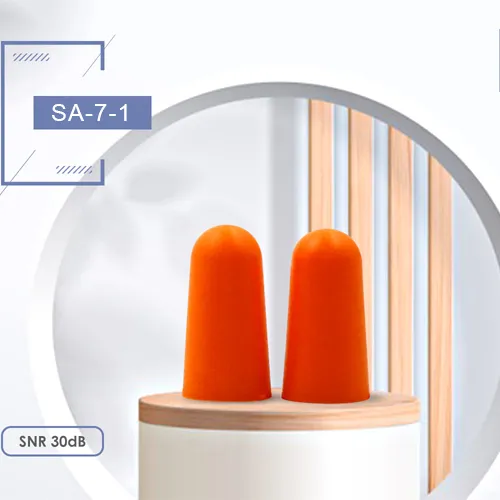
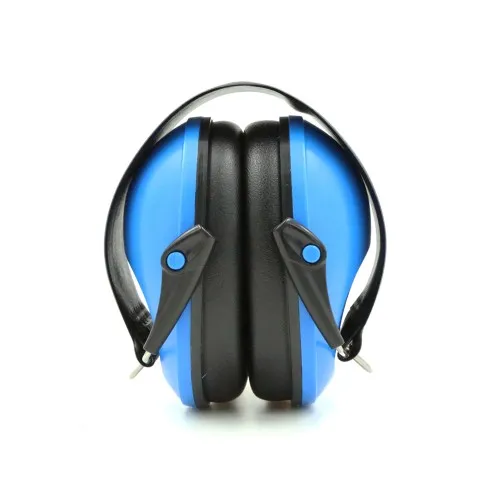
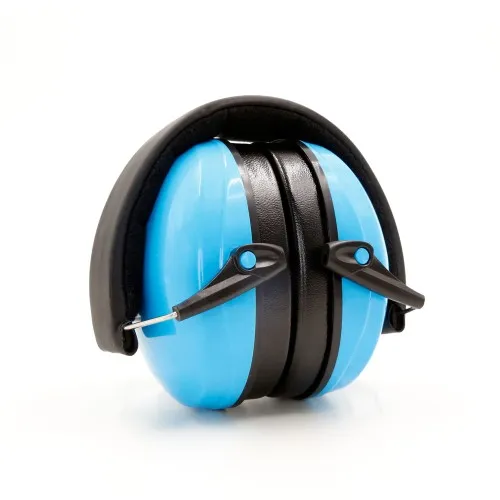
| Steady high-noise (forge, crusher) | High-NRR PU foam plug + passive muff | Maximum steady-state attenuation at lowest cost |
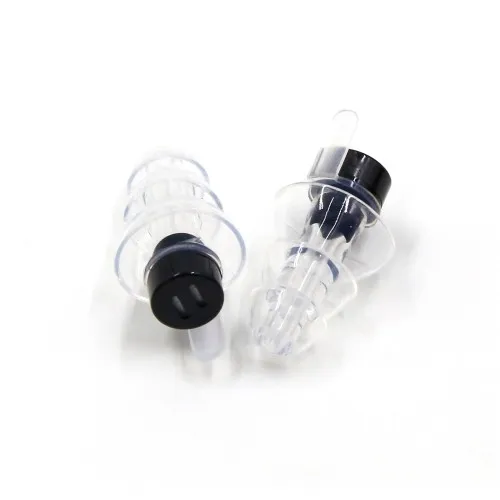
| Impulse noise + team comms | Foam plug + electronic level-dependent muff | Blocks the blast, passes speech — see electronic vs passive muffs |
| Food / hygiene zones | Metal-detectable corded plug + muff | Meets HACCP contamination control — see food-plant hearing protection |
For a broader single-versus-double comparison, our ear plugs vs ear muffs buyer's guide covers the trade-offs before you commit to layering both.
How to Fit Dual Protection Correctly
Dual protection only works when the plug is inserted properly first. A poorly rolled or shallow foam plug loses 10–15 dB, and the muff on top cannot recover it. Follow these steps:
- Insert the plug fully. Roll a foam plug tight, pull the ear up and back, insert deep into the canal, and hold until it expands. See our step-by-step fitting guide.
- Seat the muff over a clear path. Move hair, hard-hat straps, and safety-glasses arms out from under the muff cushion; any gap under the seal leaks noise around the muff.
- Check the seal. Cup and release the muffs; the sound should change noticeably. If it does not, the cushion is not sealing.
- Verify communication. Confirm workers can still hear alarms and colleagues; if not, consider a level-dependent electronic muff rather than a higher passive rating.
- Re-check after breaks. Plugs loosen over a shift; re-insert after every break to keep the rated attenuation.
Sourcing Dual Protection Sets in Bulk
Buying plugs and muffs from one manufacturer simplifies compliance: matched certification paperwork (CE EN 352, ISO 9001:2015), one point of contact for material and test data, and consistent supply for both halves of the set. As a China-based PPE manufacturer serving 50+ countries, we supply high-NRR foam and filtered plugs alongside passive and electronic muffs, so a buyer can specify a validated dual combination from a single order. For the full sourcing picture — certification, samples, and MOQ — see our complete hearing protection sourcing guide and our industrial ear protection selection guide.
Frequently Asked Questions
Do ear plug and ear muff NRR ratings add together?
No. Wearing two devices does not sum their ratings. The field-validated NIOSH method is to take the higher-rated device's NRR and add about 5 dB. An NRR 33 plug with an NRR 25 muff gives roughly NRR 38 of real protection, not 58, because most residual sound reaches the inner ear through bone conduction once the ear canal is sealed.
At what noise level is dual protection required?
Dual protection is generally needed when the 8-hour time-weighted average exceeds about 100–105 dB, or when impulse peaks exceed 140 dB. Below that, a single well-fitted device that brings exposure under the 85 dB action level defined in OSHA 29 CFR 1910.95 is usually sufficient and avoids overprotection. In the EU, the equivalent trigger comes from Directive 2003/10/EC on noise.
What is the maximum attenuation dual protection can provide?
Roughly 40–50 dB of real-world attenuation. Beyond this, sound reaches the cochlea through bone conduction of the skull, which no ear plug or ear muff can block, so higher combined ratings on paper do not translate into more protection.
Can dual protection be dangerous or reduce compliance?
Overprotection can isolate workers from alarms, machinery cues, and speech, which lowers situational awareness and makes workers remove protection. Use dual protection only where the noise survey requires it, and prefer level-dependent electronic muffs where communication matters.
Should I buy plugs and muffs from the same supplier?
It is easier to keep certification consistent and supply reliable when both halves of a dual set come from one manufacturer with matched CE EN 352 and ISO 9001:2015 documentation. Request samples of the specific plug and muff you intend to pair, and confirm the combined field figure against your workplace measurement before placing a bulk order.