Airport ramp operations produce some of the highest sustained noise levels in any workplace. A commercial jet engine at takeoff thrust generates 130-140 dB at 25 meters, and ground crews working ramp positions absorb that exposure across 8-12 hour shifts. The National Institute for Occupational Safety and Health (NIOSH) estimates that roughly 900,000 U.S. workers in aviation-related occupations face hazardous noise exposure daily. Noise-induced hearing loss is the most reported occupational health issue among airport ground personnel, ahead of musculoskeletal injuries and respiratory conditions.
The challenge for airport safety managers is that noise levels vary dramatically by zone. A cargo loading dock at 85-95 dB requires different PPE than a ramp position 30 meters from an idling turbofan at 120 dB. This guide maps noise levels to specific airport zones, explains why dual protection is mandatory in the highest-exposure areas, and provides product selection criteria for procurement teams sourcing PPE across multi-zone airport operations.
What is the best hearing protection for jet engine and airport ramp noise? Dual protection — NRR 33 foam ear plugs worn together with NRR 25-31 ear muffs. Ramp positions near operating jet engines reach 130-140 dB, where no single protector brings exposure below safe limits; OSHA requires dual protection once an 8-hour TWA exceeds 105 dB. For lower-noise airport zones — hangars at 90-105 dB, cargo and baggage at 85-100 dB — a single high-NRR foam plug or passive muff is sufficient. Match the protector to the zone using the selection matrix below.
Industry definition: aviation ramp noise is the high-intensity, low-frequency-dominant sound field produced by turbofan engines, auxiliary power units (APUs), and ground support equipment on the airport apron, typically measured at 100-140 dBA at operator positions. Official spec: under OSHA 29 CFR 1910.95, a hearing conservation program becomes mandatory once an employee's 8-hour time-weighted average (TWA) reaches 85 dBA, and dual hearing protection is required when the TWA exceeds 105 dBA. In the European Union, Directive 2003/10/EC sets the upper exposure action value 5 dB lower, at 85 dBA, so European airports must issue protection earlier than U.S. operations.
Noise Levels by Aviation Zone
The measurements below reflect operator-position readings in dBA slow response, drawn from FAA Advisory Circulars, military occupational health surveys, and airport industrial hygiene assessments. Actual levels vary with aircraft type, engine configuration, wind conditions, and ground surface reflectivity.
| Zone / Operation | Typical dB Range | Peak Conditions | Noise Character |
|---|---|---|---|
| Ramp / apron (near operating jet engines) | 130-140 dB | Takeoff thrust, engine run-up tests | Overwhelming broadband roar. Low-frequency dominance from turbofan bypass air. Physical vibration felt in the chest. Unprotected exposure causes pain within seconds and permanent threshold shift within minutes |
| Runway / taxiway vicinity | 100-115 dB | Aircraft taxiing under own power, reverse thrust on landing rollout | Intermittent high-level events with 30-90 second gaps. Reverse thrust produces sharp peaks 10-15 dB above taxi idle |
| Taxi / pushback positions | 100-110 dB | Tow tractor diesel + idling APU at close range | Sustained diesel engine noise from tow vehicles combined with auxiliary power unit (APU) whine. Less intense than jet thrust but continuous across entire pushback duration |
| Hangar / MRO (maintenance, repair, overhaul) | 90-105 dB | Pneumatic tools, rivet guns, engine ground runs inside partially enclosed hangars | Mixed: broadband tool noise with sharp impact peaks from riveting. Hangar acoustics amplify reflected sound 5-8 dB above open-air equivalent |
| Cargo loading / baggage handling | 85-100 dB | Belt loaders, tugs, container loader hydraulics, ULD roller noise | Continuous mechanical noise from conveyor systems and diesel/electric ground support equipment. Peak events from container drops and hydraulic cycles |
| Ground support equipment (GSE) yard | 82-95 dB | Multiple diesel tugs, lavatory carts, fuel trucks idling simultaneously | Cumulative diesel exhaust and engine noise. Individual units may be below 85 dB but combined fleet noise in confined GSE staging areas exceeds the action level |
The critical takeaway: ramp and runway zones require dual protection (ear plugs plus ear muffs together), while hangar and cargo areas can typically be managed with single high-NRR hearing protectors. The zone-based approach matches PPE to actual exposure rather than issuing one product for the entire airport.
Regulatory Framework for Aviation Hearing Protection
Three overlapping regulatory systems govern hearing protection in aviation workplaces. Procurement teams sourcing PPE for international airports or airlines operating across jurisdictions need products that satisfy all applicable standards.
OSHA 29 CFR 1910.95 (United States): Requires a hearing conservation program when any employee's 8-hour TWA reaches or exceeds 85 dB. At 90 dB TWA, engineering or administrative controls become mandatory before relying on PPE alone. OSHA applies to airport employers (airlines, ground handlers, MRO shops) but not to the FAA itself or military operations.
EU Directive 2003/10/EC + EN 352: Sets lower and upper exposure action values at 80 dB and 85 dB. European airports must provide hearing protection at 80 dB, which is 5 dB below the U.S. threshold. All hearing protectors must carry CE marking under EN 352 and report SNR attenuation data. Ground handling companies operating at EU airports must comply regardless of the airline's country of origin.
ICAO Annex 16 / ICAO Doc 9829 (International): ICAO establishes airport noise management through a "balanced approach" that addresses noise at the source, land-use planning, noise abatement procedures, and operating restrictions. While ICAO does not directly regulate PPE selection, its noise exposure guidelines inform national aviation authorities that set worker protection standards. Many countries reference ICAO thresholds when writing their own airport occupational health regulations.
Military aviation follows additional standards. The U.S. Department of Defense uses MIL-PRF-25575 for flight deck hearing protection and DODI 6055.12 for hearing conservation. NATO STANAG 2895 provides interoperability requirements for hearing protection across member forces. Military procurement often requires products that meet both ANSI S3.19/S12.6 and EN 352 testing protocols.
Product Selection by Zone
The selection matrix below uses the OSHA 50% derating formula: effective NRR = (labeled NRR - 7) / 2. This conservative calculation accounts for real-world fit variability and ensures workers receive adequate protection even with imperfect insertion or adjustment.
| Zone | Exposure Level | Minimum Derated NRR | Recommended Protection | Rationale |
|---|---|---|---|---|
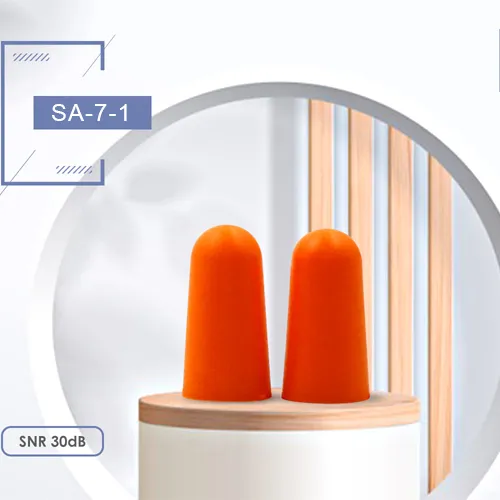
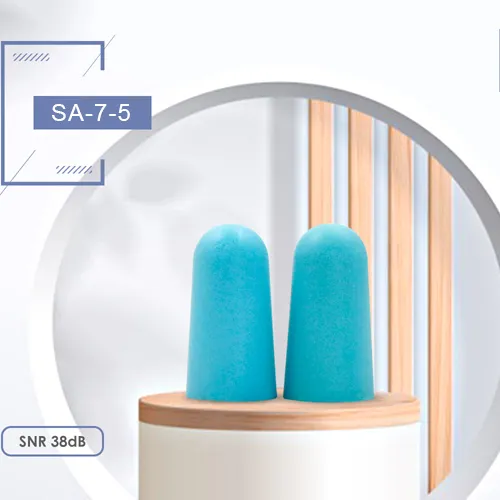
| Ramp / apron | 130-140 dB | Dual protection mandatory | PU foam plugs NRR 33 + over-ear muffs NRR 25-31 | No single hearing protector provides sufficient attenuation above 120 dB. Dual protection adds 5-10 dB of effective reduction beyond the higher-rated device alone. OSHA requires dual protection when TWA exceeds 105 dB with a single protector |
| Runway / taxiway vicinity | 100-115 dB | NRR 29+ (derated to ~11 dB); dual above 105 dB | PU foam plugs NRR 33 or dual protection for extended runway-side exposure | Intermittent peaks from reverse thrust require high single-event attenuation. Workers with sustained runway exposure should default to dual protection |
| Taxi / pushback | 100-110 dB | NRR 29+ (derated to ~11 dB) | PU foam plugs NRR 29-33 | Continuous exposure during pushback operations. Foam plugs preferred over muffs because wing walkers and tow operators need the ability to hear hand-signal confirmation calls |
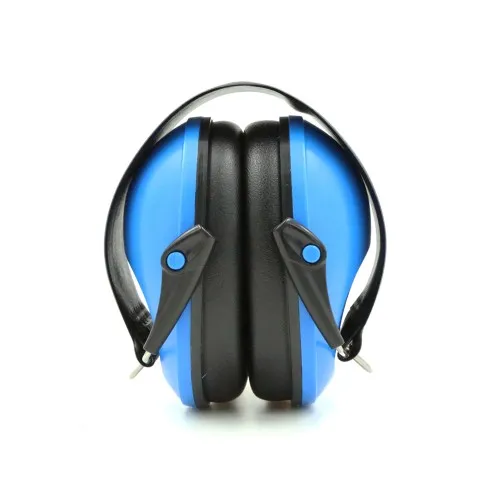
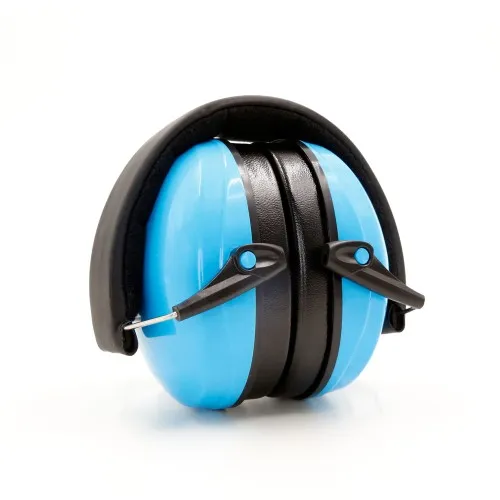
| Hangar / MRO | 90-105 dB | NRR 25-29+ (derated to ~9-11 dB) | PU foam plugs NRR 29-33 or passive ear muffs NRR 25-31 | Mixed noise profile. Foam plugs work well for general hangar noise. Muffs preferred for rivet gun and pneumatic tool operations where quick removal between tasks is needed |
| Cargo / baggage | 85-100 dB | NRR 23+ (derated to ~8 dB) | Foam plugs NRR 25-29 or banded ear plugs | Lower exposure allows lighter protection options. Banded plugs allow quick on/off for workers moving between noisy ramp-side positions and quieter cargo sorting areas |
| GSE yard | 82-95 dB | NRR 23+ (derated to ~8 dB) | Foam plugs NRR 25 or banded plugs | Cumulative fleet noise. Workers servicing vehicles may exceed 85 dB only intermittently. Banded plugs or pod-style plugs stored around the neck provide convenience for variable exposure |
Electronic vs. Passive Hearing Protection for Aviation
Airport ground operations present a specific dilemma that does not exist in most factory environments: the need to hear safety-critical audio signals (aircraft marshalling calls, vehicle horns, radio transmissions) while blocking 100-140 dB of jet engine noise. This makes the electronic vs. passive decision more consequential in aviation than in general industry.
Passive ear muffs and foam plugs block all sound equally across the frequency spectrum. A worker wearing NRR 33 foam plugs and NRR 25 muffs in dual configuration hears everything 30+ dB quieter, including voice commands, radio calls, and alarm tones. This creates a communication barrier that requires compensating measures: hand signals, light signals, or removing one device to communicate (which exposes the worker to full noise for that interval).
Electronic (level-dependent) ear muffs use external microphones and internal speakers to amplify low-level sounds (speech, alarms) while clamping down on impulse and sustained noise above a threshold, typically 82-85 dB. For aviation ground crews, electronic muffs allow workers to hear radio transmissions and marshalling commands without removing protection. The trade-off is cost ($40-$150 per unit vs. $8-$20 for passive muffs) and battery dependency.
When to use electronic muffs in aviation: Aircraft marshallers and wing walkers who must hear pilot/controller communication. MRO technicians who alternate between quiet inspection and loud tool work. Supervisors who move between zones and need to communicate with crews across noise levels.
When passive is sufficient: Ramp agents handling baggage and cargo at fixed positions. Fueling crews with standardized procedures that do not require verbal communication. Any position where radio communication is handled through headset systems independent of hearing protection.
Communication Solutions in High-Noise Aviation Environments
The communication problem in aviation ground operations goes beyond what electronic ear muffs alone can solve. At 130+ dB on an active ramp, even level-dependent electronics reach their amplification ceiling, and unaided voice communication is physically impossible.
Three communication architectures are used in airport ground operations, each with different PPE integration requirements:
1. Headset-based communication systems. Dedicated aviation ground crew headsets (David Clark, 3M Peltor, Sensear) integrate hearing protection (NRR 23-29) with two-way radio and intercom. These are the standard for marshalling, pushback, and aircraft servicing positions at major airports. The headset replaces separate ear muffs. Foam plugs worn underneath the headset provide dual protection for ramp positions during engine run-up.
2. In-ear communication with foam plug seal. Custom-molded or universal-fit in-ear communication devices sit inside the ear canal like an ear plug, providing both attenuation (NRR 22-28) and radio/intercom reception. These work well for workers who need head clearance (baggage handlers working inside aircraft cargo holds) where over-ear headsets are impractical.
3. Passive PPE with hand/light signal protocols. Many ground handling operations, especially at smaller airports and in cargo operations, rely entirely on visual signals. Workers wear passive ear plugs or muffs and communicate through standardized hand signals and wand signals. This approach is lower cost and eliminates battery/radio dependency, but requires rigorous training and line-of-sight between all team members.
Building a Hearing Conservation Program for Airport Operations
An airport hearing conservation program (HCP) differs from a factory HCP in three ways: multi-employer worksites, variable exposure patterns, and outdoor environmental factors. The framework below addresses these aviation-specific variables.
Zone-based noise monitoring. Fixed-position dosimetry does not work at airports because noise sources move (aircraft taxi, GSE traffic patterns shift). Install permanent noise monitoring stations at ramp positions, hangar entries, and cargo docks. Supplement with personal dosimeters on representative workers from each job classification during both peak and off-peak flight schedules. Map the results to create a noise contour overlay for the airfield, updated quarterly.
PPE dispensing by zone. Install hearing protection dispensers at zone transition points: terminal-to-ramp doors, hangar personnel entries, and GSE staging areas. Stock each dispenser with the protection type matched to that zone's exposure level. Ramp-side dispensers carry NRR 33 foam plugs and dual-protection kits. Hangar dispensers carry NRR 29 foam plugs and replacement muff cushions. This removes the "I forgot my ear plugs in the break room" failure mode.
Fit verification. Annual audiometric testing is the minimum legal requirement, but it only detects damage after the fact. Add real-time fit testing at onboarding and annually thereafter. Personal attenuation rating (PAR) systems measure individual workers' actual achieved attenuation with their specific ear plug type and insertion technique. Workers who consistently achieve less than 80% of the labeled NRR receive additional training or switch to a different plug type or size. This is particularly important in aviation where the consequences of inadequate protection are more severe than in a 90 dB factory.
Multi-employer coordination. Major airports have dozens of ground handling companies, airlines, MRO providers, and fueling contractors sharing the same ramp environment. The airport authority typically sets minimum PPE standards for all ramp access badge holders. Ground handling companies then implement their own HCPs within that framework. Procurement teams at ground handling companies should verify that their hearing protection meets the airport authority's minimum NRR requirements before ordering in bulk.
Outdoor environment considerations. Wind noise adds 5-15 dB of broadband noise on exposed ramp positions, particularly at airports in coastal or high-altitude locations. Rain degrades ear muff cushion seals over time. Extreme cold (below -10C) hardens foam plugs, reducing expansion and seal quality. Hot tarmac conditions (40C+) cause excessive sweating under ear muff cushions, encouraging workers to remove or loosen protection. Address these factors with seasonal PPE adjustments: cold-weather plugs with faster expansion formulas, moisture-wicking muff cushion covers for hot climates, and enclosed break stations where workers can briefly remove protection.
Dual Protection: When and How
OSHA mandates dual protection (ear plugs plus ear muffs worn simultaneously) when a worker's TWA exceeds 105 dB and a single hearing protector does not reduce exposure below 90 dB. In aviation, this applies to ramp agents during active flight operations, engine run-up test positions, and military flight deck crew.
Dual protection does not double the attenuation. Combining NRR 33 plugs with NRR 25 muffs does not produce NRR 58. The accepted calculation (NIOSH method) adds 5 dB to the higher-rated device: effective NRR = 33 + 5 = 38 before derating. After OSHA 50% derating: (38 - 7) / 2 = 15.5 dB effective reduction. This means dual protection brings a 130 dB ramp exposure down to approximately 114.5 dB at the eardrum, which is still above 85 dB but within the range where administrative controls (shift rotation, exposure time limits) can bring the TWA below the permissible limit.
Proper dual-protection technique matters. Insert foam ear plugs fully and allow 30-60 seconds for expansion before placing ear muffs over them. The muff cushion must seal completely around the ear without trapping the plug cord outside the cushion (which creates a sound leak path). Uncorded plugs are preferred for dual-protection configurations to eliminate this risk.
Cost Considerations for Airport PPE Programs
Airport ground handling operations run 16-24 hours daily with shift-based crews. PPE consumption scales with headcount, shift count, and turnover rate. Ground handling has historically high employee turnover (30-60% annually at major hubs), which means onboarding costs and initial PPE issuance are a significant budget factor.
| Protection Type | Cost Per Shift | NRR Range | Best Airport Application | Annual Cost (100 workers, 2 shifts) |
|---|---|---|---|---|
| Disposable PU foam plugs | $0.08-$0.15 | 29-33 | All zones, primary protection | $5,800-$10,900 |
| Dual protection kits (foam + disposable muffs) | $0.25-$0.40 | Combined 36+ effective | Ramp positions, engine run-up | $18,200-$29,200 |
| Reusable passive ear muffs | $0.02-$0.04 (amortized 12 months) | 24-31 | Hangar, cargo, supplemental | $1,500-$2,900 |
| Electronic ear muffs | $0.10-$0.25 (amortized 18 months) | 22-28 | Marshallers, supervisors, wing walkers | $7,300-$18,200 |
| Communication headsets | $0.15-$0.35 (amortized 24 months) | 23-29 | Pushback, marshalling, servicing | $10,900-$25,500 |
For a ground handling company with 100 ramp agents across two shifts, the annual hearing protection budget ranges from $5,800 (foam plugs only for moderate-noise zones) to $29,200 (dual protection at ramp positions). The cost of a single noise-induced hearing loss workers' compensation claim in the United States averages $30,000-$50,000 including medical treatment, lost work time, and indemnity payments. One prevented claim pays for the entire PPE program for multiple years.
Frequently Asked Questions
What NRR do I need for airport ramp work?
Ramp work near operating jet engines (130-140 dB) requires dual protection: NRR 33 foam ear plugs plus NRR 25+ ear muffs. No single hearing protector provides sufficient attenuation at these levels. After OSHA derating, dual protection with NRR 33 plugs + NRR 25 muffs provides approximately 15.5 dB of effective reduction, bringing 130 dB exposure to roughly 114.5 dB. Combine with administrative controls (shift rotation, limited time at ramp positions during takeoff) to bring the 8-hour TWA below 90 dB.
Can I use regular industrial ear muffs at an airport?
Yes, provided they meet the NRR requirements for the specific zone and carry the required certification (ANSI S3.19 or S12.6 for U.S. operations, CE EN 352 for EU airports). There is no "aviation-specific" certification for hearing protectors. The product performance requirements are identical to general industry. The difference is in selection: airport PPE programs must account for dual-protection needs, communication integration, and outdoor environmental factors that most factory programs do not encounter.
How do I protect workers who need to hear radio calls on the ramp?
Three options, ranked by protection level. First, integrated communication headsets (David Clark, Peltor, Sensear) that combine NRR 23-29 attenuation with built-in radio receivers, the standard for marshalling and pushback. Second, electronic (level-dependent) ear muffs that amplify speech and radio while blocking high-level noise, suitable for supervisors and workers who move between zones. Third, foam plugs at NRR 25-29 (not NRR 33) that reduce noise while still allowing some ambient awareness, acceptable only in zones below 105 dB.
Do military airports have different hearing protection requirements?
Military operations follow additional standards beyond OSHA and EU directives. The U.S. DoD uses DODI 6055.12 and MIL-PRF-25575 for flight deck and flight line hearing protection. Military fighter jets produce 140-150+ dB at close range, requiring specialized triple-flange plugs and communication-integrated helmets. NATO STANAG 2895 sets interoperability requirements across member forces. For ground crews at military airfields, the practical PPE selection is similar to commercial airports (dual protection at flight line, single protection in maintenance areas) but procurement must reference military specification numbers rather than commercial standards.
How much does hearing protection cost for airport ground crews?
Per-worker annual costs range from roughly $58 to $292 depending on the zone. Disposable PU foam plugs run $0.08-$0.15 per shift ($5,800-$10,900 per year for 100 workers across two shifts), while dual-protection kits for ramp positions cost $0.25-$0.40 per shift ($18,200-$29,200 per year). Electronic communication muffs for marshallers cost $40-$150 per unit, amortized over 18-24 months. Because a single noise-induced hearing loss claim averages $30,000-$50,000 in the United States, one prevented claim funds the entire PPE program for several years.
Is dual hearing protection legally required for airport ramp workers?
Yes, in the highest-exposure positions. Under OSHA 29 CFR 1910.95, dual protection (ear plugs plus ear muffs worn together) is required when a worker's 8-hour TWA exceeds 105 dBA and a single protector cannot bring exposure below 90 dBA. This applies to ramp agents during active flight operations, engine run-up test stands, and military flight-line crew. EU airports follow Directive 2003/10/EC, which sets the upper action value at 85 dBA — 5 dB below the U.S. threshold — so dual protection is triggered earlier in European operations.
Need to source hearing protection for airport ground operations or aviation maintenance? Contact EASTRAGON for bulk pricing on high-NRR foam ear plugs, foldable ear muffs, and dual-protection kits with CE EN 352 certification. We supply ground handling companies, MRO providers, and airport authorities across 50+ countries. Samples ship within 3-5 business days. Browse our full product catalog.