Construction sites consistently rank among the most hazardous noise environments in any industry. Workers operating jackhammers, concrete saws, pile drivers, and heavy excavation equipment face sustained noise exposure that can cause permanent hearing loss within months of unprotected work. For safety managers, procurement officers, and PPE distributors supplying construction companies, selecting the correct hearing protection is not a compliance checkbox — it is a direct determinant of whether workers retain full hearing function over the course of their careers.
This guide covers everything B2B buyers need to know about hearing protection for construction sites: regulatory thresholds, noise source data, product selection criteria, bulk procurement strategies, and OEM/ODM sourcing options for private-label programs.
Why Construction Sites Are Among the Loudest Workplaces
The construction industry generates noise from multiple simultaneous sources operating within confined or semi-confined spaces. Unlike manufacturing facilities where machinery is fixed and workers can distance themselves from noise sources, construction workers often operate equipment directly, placing them at the point of maximum sound pressure.
Sustained noise above 85 dB(A) causes cumulative cochlear damage through the destruction of hair cells in the inner ear. These cells do not regenerate. A worker exposed to 95 dB(A) for eight hours per day will experience measurable hearing threshold shifts within the first year of unprotected exposure, with irreversible loss typically confirmed by audiometric testing within three to five years.
Construction environments frequently exceed 90 dB(A) as a daily average, with peak exposures during blasting, pile driving, and concrete breaking operations reaching 110–130 dB(A). These peak levels require hearing protection with attenuation ratings well above what standard industrial PPE provides.
Regulatory Requirements for Construction Hearing Protection
In the United States, construction hearing protection is governed by OSHA 29 CFR 1926.52 (Occupational Noise Exposure) and 29 CFR 1926.101 (Hearing Protection). Key requirements include:
- Action Level: 85 dB(A) TWA — Employers must implement a hearing conservation program, provide hearing protection at no cost, and conduct audiometric testing.
- Permissible Exposure Limit (PEL): 90 dB(A) TWA — Maximum allowable 8-hour time-weighted average without engineering controls.
- Hearing protection must reduce worker exposure to 90 dB(A) or below, and OSHA recommends targeting 85 dB(A) or below when feasible.
- Hearing protectors must be ANSI S3.19 tested and carry an NRR (Noise Reduction Rating) label.
In the European Union, construction hearing protection is governed by EU Directive 2003/10/EC. Key thresholds:
- Lower Exposure Action Value: 80 dB(A) — Hearing protection made available.
- Upper Exposure Action Value: 85 dB(A) — Hearing protection use becomes mandatory.
- Exposure Limit Value: 87 dB(A) — Absolute ceiling even with hearing protection worn.
- All hearing protection sold in the EU must carry CE marking and comply with EN 352 series standards.
EU buyers should note that the SNR and NRR values are not directly interchangeable. For detailed conversion methodology, see our guide: Understanding SNR and NRR Ratings: Buyer's Guide. For certification differences, see: CE vs. ANSI Certification for Ear Plugs.
Common Construction Noise Sources and Required Protection Levels
The following table presents typical sound pressure levels for common construction equipment, alongside the minimum NRR and SNR required to bring worker exposure below 85 dB(A).
| Noise Source | Typical dB(A) | Min NRR Required | Min SNR Required | Recommended Protection |
|---|---|---|---|---|
| Jackhammer / Demolition Hammer | 102–112 | NRR 33+ | SNR 35+ | Dual protection (plugs + muffs) |
| Concrete Saw / Cut-Off Wheel | 99–104 | NRR 29+ | SNR 30+ | High-attenuation foam plugs or muffs |
| Pile Driver | 101–110 | NRR 32+ | SNR 34+ | Dual protection recommended |
| Angle Grinder | 95–100 | NRR 24+ | SNR 26+ | Foam ear plugs (NRR 29+) |
| Excavator / Bulldozer (cab) | 87–95 | NRR 14+ | SNR 15+ | Standard foam plugs or muffs |
| Air Compressor | 90–95 | NRR 18+ | SNR 20+ | Standard foam plugs |
| Concrete Mixer Truck | 88–93 | NRR 16+ | SNR 17+ | Standard foam plugs or muffs |
| Explosive Blasting (near field) | 120–140 peak | Dual mandatory | Dual mandatory | Plugs + muffs; blast-rated PPE |
Important: OSHA recommends applying a 50% de-rating to the labeled NRR to account for real-world fitting variability. A product labeled NRR 33 provides approximately 13 dB of effective attenuation under OSHA's formula: (NRR − 7) ÷ 2.
Choosing the Right Hearing Protection for Construction Workers
Construction site hearing protection must balance attenuation performance, wearability under physical conditions, compatibility with other PPE (hard hats, safety glasses, respirators), and durability in dusty, wet environments.
Foam Ear Plugs for Construction
Disposable PU foam ear plugs are the most widely used hearing protection on construction sites globally. Their low unit cost, high NRR performance (29–33 dB), and ease of distribution make them the default choice for general construction labor.
Key selection criteria for construction foam plugs:
- Slow-recovery foam maintains better canal seal during physical movement
- NRR 29 minimum for general construction; NRR 33 for high-noise operations
- Corded options reduce loss rate on busy sites and aid compliance monitoring
- Smooth surface resists concrete dust accumulation
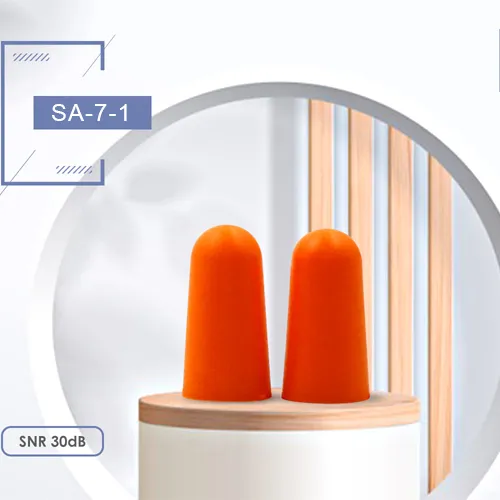
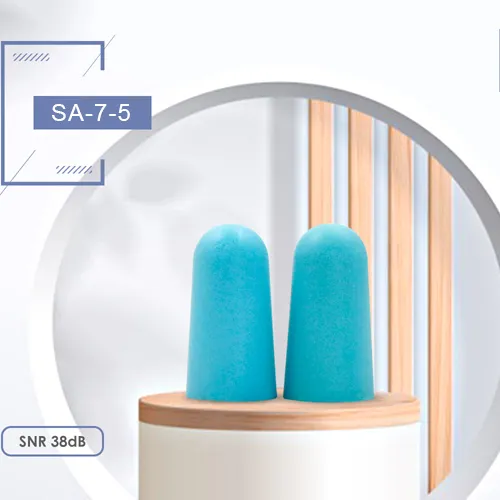
EASTRAGON's SA-7-1 Classical Bullet Shape PU Foam Ear Plugs are engineered with slow-recovery PU foam that maintains canal seal integrity during physical labor. For buyers requiring a firmer formulation for gloved insertion, the SA-7-5 Standard Bullet Shape Foam Ear Plugs offer enhanced durability.
Ear Muffs for Construction
Ear muffs are preferred for construction roles involving intermittent noise exposure — supervisors, equipment operators, workers moving between zones — because they can be donned and doffed quickly without requiring correct insertion technique.
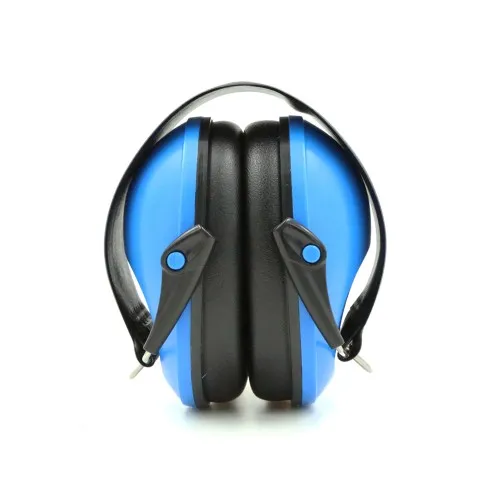
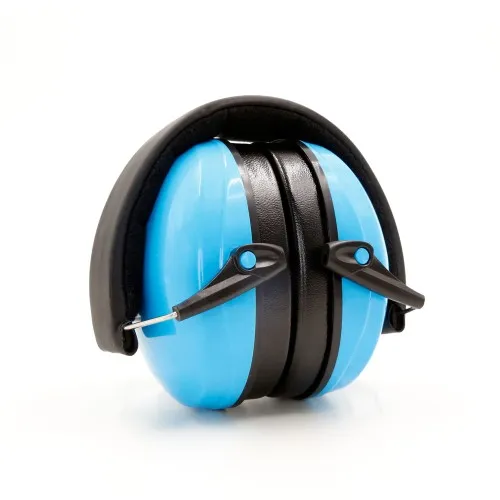
For hard-hat compatibility, buyers must specify helmet-mounted muffs or verify headband muffs fit over the construction helmet profile. EASTRAGON's SA-8-5 Durable Soundproof Foldable Earmuffs feature a foldable headband for storage in tool belts during non-noisy phases, increasing actual wear compliance.
Dual Protection (Plugs + Muffs)
Dual protection is required whenever noise exceeds 105 dB(A). Combined attenuation provides approximately 5 additional dB beyond the higher-rated single protector alone. Dual protection is mandatory for jackhammer operators, pile driving crews, and workers within 10 meters of blasting operations.
Browse the full EASTRAGON hearing protection product range to configure dual-protection bundles.
Bulk Procurement Strategies for Construction PPE Buyers
- Pilot quantity testing: Request 500–1,000 pairs for fit-testing before full-site rollout
- Specify by NRR band: Write specs as "NRR 29 minimum, PU foam, disposable" rather than locking to a single SKU
- Blanket order volumes: Negotiate per-project pricing for full lifecycle quantities
- Standardize on two SKUs maximum per site: One disposable foam plug + one ear muff
- Track consumption: 2–3 pairs per worker per shift is expected. Lower suggests non-compliance; higher suggests fitting issues
OEM/ODM Options for Construction Hearing Protection
Distributors and safety brands serving construction increasingly pursue private-label hearing protection. EASTRAGON operates as a specialized OEM/ODM manufacturer with production infrastructure for both foam ear plugs and ear muffs. Key considerations:
- Certification support: ANSI S3.19, EN 352-1 (muffs), EN 352-2 (plugs) from accredited laboratories
- Custom NRR/SNR targets: Foam density and geometry adjustable to achieve target attenuation
- Packaging: Site-durable resealable packaging; carry-box dispensers for foam plugs
- MOQ: 50,000–100,000 pairs for foam plugs; 500–2,000 units for ear muffs
For OEM vs ODM program details, see: OEM vs. ODM: Key Differences for PPE Products.
Frequently Asked Questions
What NRR rating is required for jackhammer operators on construction sites?
Jackhammers generate 102–112 dB(A). To bring exposure below 85 dB(A) using a single protector, workers require NRR 33+ after OSHA's 50% de-rating. In practice, jackhammer operators should use dual protection — foam ear plugs (NRR 29+) and ear muffs simultaneously — because sustained exposure exceeds what any single protector reliably controls across a full shift.
Are disposable foam ear plugs adequate for all construction workers?
Foam plugs with NRR 29–33 are adequate for the majority of construction workers exposed to 87–97 dB(A) — general laborers, concrete finishers, and medium-tool operators. Ear muffs are preferable for workers needing frequent on-off. Dual protection is required for sustained exposure above 100 dB(A).
How do I calculate disposable ear plug quantities for a construction project?
Formula: (noise-exposed workers) × (shifts per week) × (pairs per shift) × (project weeks) + 15–20% buffer. For 50 workers × 5 days × 2 pairs × 40 weeks = 20,000 pairs base + 3,000–4,000 buffer = 23,000–24,000 pairs total.
Can construction workers wear ear muffs with a hard hat?
Yes. Three compatible configurations: (1) Helmet-mounted muffs that attach to hard hat rails — most stable; (2) Foldable over-the-head muffs positioned under hat suspension; (3) Neckband or chinband muffs. Always verify attenuation data was tested with the mounted configuration.
What documentation should I request from a Chinese hearing protection manufacturer?
For U.S. import: ANSI S3.19 NRR test report from NVLAP-accredited lab, compliance declaration, and retail label confirming NRR per EPA 40 CFR Part 211. For EU import: CE Declaration of Conformity, EN 352 test report from a Notified Body, EU type examination certificate, and technical file reference. Both markets require ISO 9001:2015 or equivalent quality system confirmation.
EASTRAGON manufactures CE EN 352 certified hearing protection for construction environments. Whether you are tendering for a large infrastructure project or building a private-label PPE range, contact EASTRAGON to discuss your construction hearing protection needs.