Mining and quarrying expose workers to some of the highest sustained noise levels of any industry — drilling rigs hit 110–130 dB, crushers run 100–115 dB, and blasting peaks exceed 140 dB. According to NIOSH, miners are 3× more likely to develop noise-induced hearing loss than workers in general manufacturing. This guide covers the noise sources, regulatory requirements, and product selection criteria that B2B buyers need when supplying hearing protection to mining operations.
Mining Noise Sources and Typical Levels
Unlike factory environments where noise is relatively constant, mining sites combine continuous high-level background noise with unpredictable peak events. Here are the primary noise sources:
| Source | Typical Level (dB) | Duration / Pattern |
|---|---|---|
| Drilling (surface or underground) | 110–130 | Continuous during shift |
| Blasting | 140–170 peak | Impulse, 1–5 events per day |
| Crushing / Milling | 100–115 | Continuous |
| Haul trucks and loaders | 85–100 | Continuous in cab vicinity |
| Ventilation fans (underground) | 85–95 | 24/7 continuous |
| Conveyor systems | 80–95 | Continuous during operation |
The combination of continuous high-level noise plus impulse peaks makes mining one of the few industries where dual protection (ear plugs + ear muffs together) is routinely required rather than optional.
MSHA vs OSHA: What Mining Buyers Need to Know
In the United States, mining operations fall under MSHA (Mine Safety and Health Administration) rather than OSHA. Key differences that affect hearing protection purchasing:
- Permissible Exposure Limit: Both MSHA and OSHA use 90 dB TWA / 8 hours with a 5 dB exchange rate — the regulatory limit is identical
- Action Level: MSHA triggers at 85 dB (same as OSHA) — baseline audiograms, annual testing, and hearing protection availability become mandatory
- Enforcement: MSHA inspects mines 2–4× per year (vs OSHA's complaint-driven model) — compliance is actively verified, not self-reported
- Dual protection trigger: MSHA recommends dual protection when noise exceeds 105 dB — most drilling and crushing zones qualify
For EU-market mining operations, Directive 2003/10/EC applies with the stricter 87 dB effective limit and 3 dB exchange rate. Australian mines follow the Mining Safety Regulations 2017 (85 dB / 3 dB exchange). The bottom line: mining buyers almost always need higher-attenuation products than general industrial buyers.
Why Standard Industrial Hearing Protection Fails in Mining
Several mining-specific conditions make standard office or factory hearing protection unsuitable:
- Dust and dirt: Contaminated hands inserting foam ear plugs cause ear infections. Mining operations need pre-shaped or flanged plugs that require minimal hand contact, or ear muffs that avoid the ear canal entirely
- Hard hat compatibility: Over-the-head ear muffs interfere with mining helmets. Cap-mounted muffs that attach to hard hat slots are the standard solution
- Temperature extremes: Underground mines (30–40°C ambient) and northern open-pit mines (−30°C winter) both stress cushion materials. Gel cushions crack in cold; foam cushions trap heat
- Communication needs: Miners must hear warning signals, vehicle horns, and radio communication. Electronic ear muffs with level-dependent attenuation solve this — they block harmful peaks while passing speech frequencies
- Impulse noise: Blasting creates pressure waves that exceed the linear response of passive protectors. Peak-limiting electronic muffs provide superior impulse protection versus passive NRR alone
Product Selection Matrix for Mining Operations
Based on noise zone and task, here is a practical selection framework for B2B procurement:
| Zone / Task | Noise Level | Recommended Protection | Key Spec |
|---|---|---|---|
| Drilling (operator) | 110–130 dB | Dual: foam plugs + cap-mount muffs | Combined NRR ≥ 36 (plugs NRR 33 + muffs NRR 25, combined formula) |
| Blasting zone (100m radius) | 140+ dB peak | Dual: foam plugs + electronic peak-limiting muffs | Impulse peak attenuation ≥ 40 dB |
| Crushing / Milling | 100–115 dB | High-NRR foam plugs OR cap-mount muffs | NRR ≥ 29 single protection |
| Haul truck cab | 85–95 dB | Reusable flanged plugs or banded plugs | NRR 20–25, easy on/off |
| Maintenance / walking | 80–90 dB | Banded plugs or lightweight muffs | NRR 15–22, comfort priority |
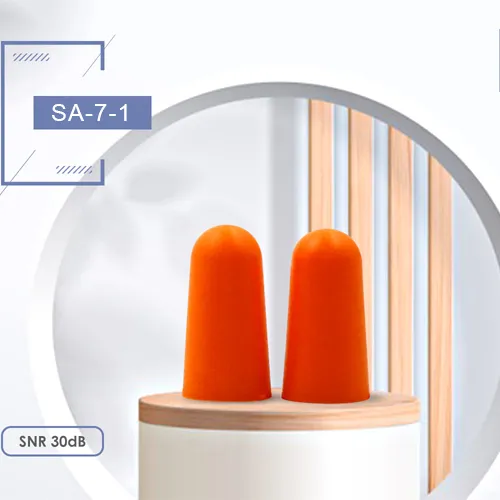
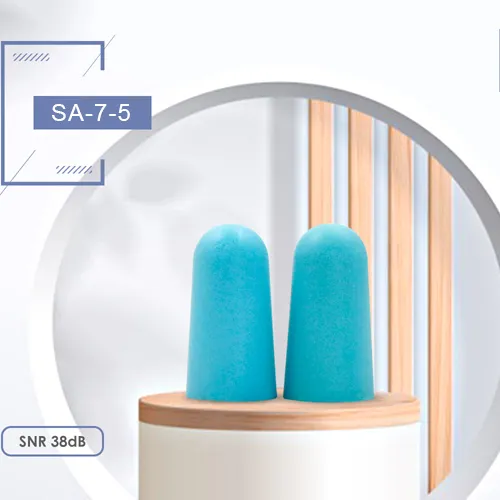
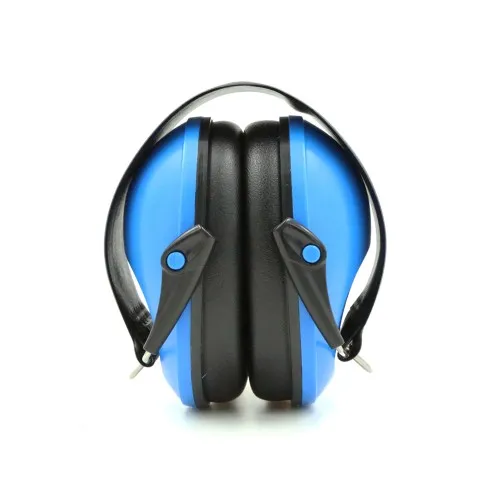
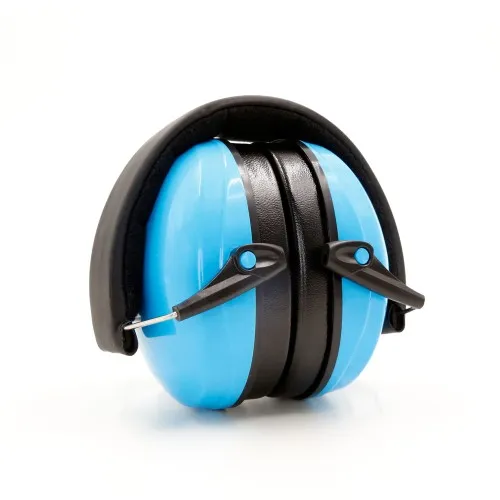
For the highest-noise zones, our SA-7-1 foam ear plugs (NRR 33) paired with cap-mount SA-8-5 earmuffs provide combined attenuation suitable for drilling environments. For truck drivers and maintenance crews needing frequent insertion/removal, the lower-profile SA-7-5 offers a balance of comfort and adequate protection.
Proper Fit Is Even More Critical in Mining
Real-world NRR in mining is typically 50–70% of lab-rated values due to poor fit, contamination, and hard-hat interference. Three practices that close the gap:
- Fit-testing programs: MSHA recommends individual fit testing (not just training). Each miner's actual attenuation is measured — workers who cannot achieve adequate seal get reassigned to different protector types
- Dispensing stations: Place plug dispensers at zone entry points so workers always have clean, fresh plugs available. Bulk dispensing reduces per-unit cost to under $0.10/pair for foam plugs at 50,000+ unit orders
- Size matching: One-size-fits-all fails in mining populations. Stock 2–3 plug sizes and offer free fit-kit samples so purchasing managers can identify which sizes their workforce needs before committing to bulk orders
Frequently Asked Questions
Is MSHA stricter than OSHA for hearing protection?
The permissible exposure limit is identical (90 dB TWA). However, MSHA enforces more aggressively through mandatory 2–4 inspections per year and higher penalty structures. Practically, mining operations maintain stricter compliance programs because the consequence of a citation is more immediate than under OSHA's complaint-driven model.
When is dual protection (plugs + muffs) required in mining?
MSHA recommends dual protection when 8-hour TWA exceeds 105 dB or when impulse noise (blasting) exceeds 140 dB peak. Most underground drilling operations and all blasting zones meet these thresholds. The combined NRR is calculated as: higher NRR + 5 dB (not both NRRs added together).
Can miners use the same ear plugs as factory workers?
Yes, if the NRR rating meets requirements. However, mining conditions (dust, heat, hard hats) often make standard foam plugs impractical without dispensing stations for hygiene. Many mining operations prefer pre-shaped or flanged reusable plugs that require less hand manipulation. For dual-protection zones, high-NRR foam plugs remain the best inner layer due to their superior seal.
How do I calculate hearing protection needs for a specific mine?
Step 1: Measure noise levels at each work zone (hire an occupational hygienist or use calibrated dosimeters). Step 2: Subtract 7 from the NRR, divide by 2, and subtract from measured level to get effective exposure. Step 3: Verify the result falls below 90 dB (MSHA) or 85 dB (NIOSH recommended / EU required). Step 4: If single protection cannot achieve this, specify dual protection. Contact EASTRAGON for a free attenuation calculation worksheet for your specific mine noise profile.
What certifications should mining ear plugs have?
For US mines: ANSI S3.19 or S12.6 tested, with NRR label (EPA-mandated). For Australian mines: AS/NZS 1270 or CE marking accepted. For EU mines: CE marking per EN 352 mandatory. EASTRAGON products carry CE EN 352 certification. For US or Australian mine sites, ask us which models already have the matching test reports before you write the spec.
Supplying hearing protection to mining or quarrying operations? Request bulk pricing from EASTRAGON — MOQ from 5,000 pairs, CE EN 352 certified, with cap-mount earmuff options. Samples ship within 7 days for fit-testing programs.