What is a workplace noise survey? A workplace noise survey is the structured measurement of noise levels across a site — walking the floor with a calibrated sound level meter, mapping zones, and running personal dosimetry on mobile workers — to determine each employee's daily exposure. OSHA requires monitoring when exposure may reach 85 dBA (8-hour TWA); under the UK Control of Noise at Work Regulations 2005, a competent risk assessment is triggered from 80 dB(A). The survey output — a zone map with measured levels — is what lets you match hearing protection ratings to real conditions instead of guessing.
A workplace noise survey is the measurement step that tells you whether your workers are over the action limit and exactly which hearing protection to buy. OSHA requires one whenever exposure may reach an 8-hour time-weighted average of 85 dBA. You measure with a calibrated sound level meter for spot readings and a personal noise dosimeter for full-shift exposure, then convert the result into a required Noise Reduction Rating using OSHA's 50% derating rule. According to the Occupational Safety and Health Administration, around 22 million U.S. workers are exposed to hazardous noise every year, and the National Institute for Occupational Safety and Health (NIOSH) estimates the resulting workers' compensation cost at hundreds of millions of dollars annually. Buying hearing protection without a survey first is guessing, and it is the most common reason safety managers over-spend on the wrong NRR. For UK sites, the survey duty flows from the Control of Noise at Work Regulations 2005, which trigger a competent risk assessment from 80 dB(A).
What a Noise Survey Actually Measures
Industry definition: a noise survey is a systematic assessment of sound levels across a workplace, used to identify areas and tasks where worker noise exposure exceeds occupational limits, expressed in A-weighted decibels (dBA) per the NIOSH methodology. A-weighting matters because it adjusts raw sound pressure to match how the human ear perceives loudness, weighting the mid and high frequencies that damage hearing most.
There are two distinct deliverables, and procurement teams confuse them constantly:
- Area survey (the noise map): spot readings taken across the facility with a sound level meter, producing a contour map of which zones exceed 85 dBA and which exceed 90 dBA. This tells you where to post signage and where protection is mandatory.
- Personal exposure assessment (the dose): a dosimeter worn by a representative worker for a full shift, capturing the real 8-hour time-weighted average that worker accumulates as they move between tasks. This is the number OSHA enforces.
When OSHA Requires a Noise Survey
Under OSHA 29 CFR 1910.95, monitoring is required whenever information indicates that any employee's exposure may equal or exceed an 8-hour TWA of 85 dBA, the action level. A practical trigger most safety managers use: if two people standing an arm's length apart have to raise their voices to be understood, the area is likely above 85 dBA and needs measuring.
You must repeat the survey whenever a change in production, process, equipment, or controls increases exposure, for example installing a new manufacturing line, adding a second shift, or moving a noisy compressor. The EPA noise regulations under 40 CFR Part 211 also govern how protector ratings must be labeled, which is why your survey result and the NRR on the box use the same decibel scale.
Sound Level Meter vs Dosimeter: Choosing Your Instrument
Both instruments measure decibels, but they answer different questions. Use this table to decide which the task needs:
| Factor | Sound Level Meter | Noise Dosimeter |
|---|---|---|
| What it captures | Instant level at one point | Cumulative dose over a full shift |
| Best for | Mapping zones, checking machines | Worker TWA, OSHA compliance record |
| Standard | ANSI S1.4 Type 2 or better | ANSI S1.25 |
| Worn by worker? | No, handheld by assessor | Yes, mic at the shoulder |
| Output | dBA at that moment | % dose and 8-hour TWA |
For a defensible compliance file you need both: the sound level meter to build the area map and the dosimeter to prove the actual exposure of workers who move between warehouse, packing, and production zones during one shift. Calibrate every instrument with an acoustic calibrator before and after each survey, and discard the data set if the post-check drifts more than 0.5 dB.
How to Conduct the Survey, Step by Step
- Walk the floor first. Identify every noise source and every task. Note intermittent peaks (a stamping press) separately from steady noise (an HVAC plant).
- Take area readings. Hold the sound level meter at head height where the worker normally stands, at least one meter from any reflecting surface, and record the average over 10-15 seconds per point.
- Deploy dosimeters on representative workers. Choose people whose role covers the loudest tasks. Run the dosimeter for the full shift, including breaks.
- Calculate the 8-hour TWA. The dosimeter does this automatically using a 5 dB exchange rate for OSHA or a 3 dB exchange rate for NIOSH and most of Europe. Know which rule applies before you buy protection, because the two methods can differ by several decibels for variable noise.
- Compare against the limits and document everything. Date, instrument serial, calibration record, and the map. This file is what an inspector asks for first.
Reading the Result: From TWA to a Buying Decision
Once you have the 8-hour TWA, the survey result maps directly onto the protection class you need. This is the table to give your procurement team:
| 8-hour TWA result | OSHA status | Required action | Suggested protector class |
|---|---|---|---|
| Below 85 dBA | Below action level | No mandatory program | Optional, offer plugs on request |
| 85-89 dBA | Action level reached | Hearing conservation program, free protection offered | NRR 22-29 (foam or silicone plugs) |
| 90-99 dBA | Permissible limit exceeded | Protection mandatory, controls required | NRR 29-33 foam plugs or NRR 25-31 muffs |
| 100 dBA and above | High hazard | Dual protection plus administrative controls | Plug + muff combined, see highest-NRR guide |
To convert a survey reading into a target NRR, apply OSHA's derating: estimated protection equals (NRR minus 7) divided by 2, the same 50% rule explained in our NRR and SNR ratings guide. So a 95 dBA zone needs to come down to under 85 dBA, meaning at least 10 dB of real reduction, meaning a labeled NRR of roughly 27 or higher once you account for derating. If your survey shows different limits by country, our noise exposure limits by country guide lists the OSHA, EU, and global thresholds side by side.
Matching Survey Zones to Products
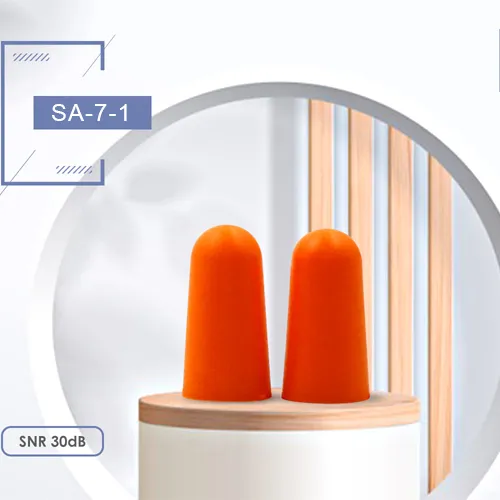
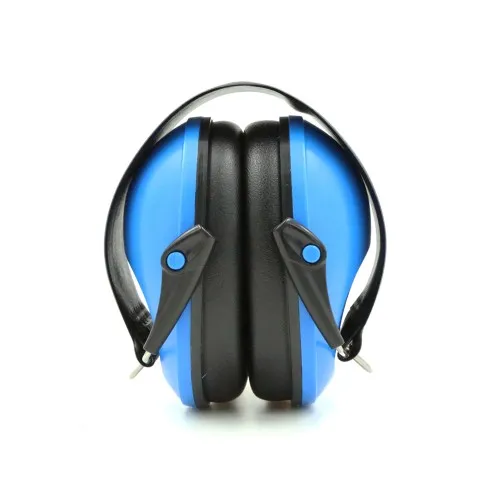
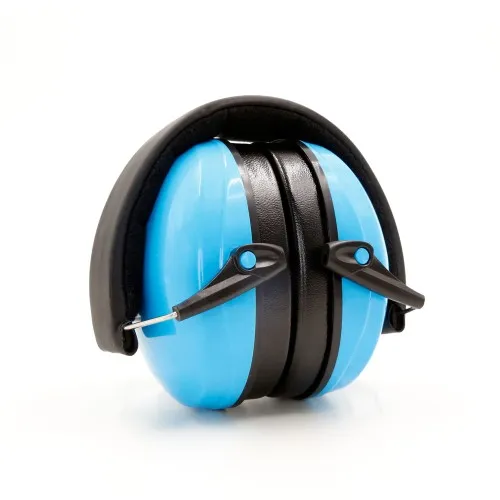
A finished survey turns into a clean bill of materials. For the 85-95 dBA zones that cover most food processing and assembly areas, our SA-7-1 NRR 33 foam ear plugs give a wide safety margin at the lowest cost per worker. For zones with frequent on-and-off movement, foldable SA-8-5 ear muffs are faster to don than rolling a plug. For the 100 dBA-plus zones flagged red on your map, pair plugs and muffs and confirm both carry CE EN 352 and ANSI certification. When you are unsure which type fits a given reading, our how to choose ear protection guide ranks the four types by noise level.
Frequently Asked Questions
How often should a workplace noise survey be repeated?
There is no fixed calendar interval in OSHA 1910.95, but you must re-survey whenever a process, equipment, or control change may have increased exposure. As a practical rule, most safety managers run a full survey every two years and an interim spot check after any significant change to the floor, such as a new line or a new shift pattern.
Can I use a smartphone app instead of a sound level meter?
Not for compliance. Phone apps are useful for a rough first walk-through to see if an area might be over 85 dBA, but they are not ANSI S1.4 calibrated and their readings vary by handset and microphone. OSHA records and any legal defense require a calibrated Type 2 instrument or better, calibrated immediately before and after the survey.
What is the difference between the action level and the permissible exposure limit?
The action level is 85 dBA as an 8-hour TWA, the point at which a hearing conservation program becomes mandatory and protection must be offered. The permissible exposure limit (PEL) is 90 dBA, the point above which engineering or administrative controls are required, not just protection. A zone can be below the PEL but still above the action level, which is why a survey reports both.
Do I survey by area or by worker?
Both, because they answer different questions. The area survey shows where the hazard is so you can post signage and decide where protection is mandatory. The personal dosimeter shows what a specific worker actually accumulates across a shift, which is the figure OSHA enforces. A worker can pass through several loud zones briefly and still exceed the limit, something an area map alone will miss.
How does the survey result tell me which NRR to buy?
Subtract your target level (usually 85 dBA) from the measured TWA to get the real reduction you need, then work backward through OSHA's 50% derating formula, protection equals (NRR minus 7) divided by 2. A 97 dBA reading needs about 12 dB of real reduction, which after derating means a labeled NRR of roughly 31 or higher. Always plan around the derated number, never the headline rating on the box.
Have a survey result and need protection matched to it? Contact EASTRAGON with your dBA zones and we will spec the right NRR for each one, from bulk foam plugs to certified ear muffs and dual-protection kits. We supply factories across 50+ countries with CE EN 352 and ANSI documentation included, and samples ship within 3-5 business days. Browse the full product catalog.