The printing and packaging industry exposes workers to sustained noise levels that rival heavy manufacturing. A flexographic press running at production speed generates 88-97 dB, rotary die cutters produce 92-105 dB of repetitive impact noise, and corrugated board production lines sustain 95-102 dB across the entire floor. According to the Bureau of Labor Statistics, printing and packaging plants rank among the top 20 manufacturing sectors for occupational noise exposure, yet hearing protection compliance rates in these facilities lag behind heavier industries like metal fabrication and oil and gas. The paper that feeds these presses is itself made in even louder plants — the upstream pulp and paper mills run chippers and refiners at 100-110 dB around the clock.
One reason for the gap: noise in print and packaging facilities is continuous and broadband rather than obviously painful. Workers acclimate to it. That steady 90-95 dB hum from a corrugator does not trigger the same protective instinct as a 110 dB grinder, but it causes identical permanent damage over an 8-hour shift. This guide maps noise levels to specific machine types, addresses ink-solvent and dust interactions with hearing protection, and provides a selection matrix for procurement managers sourcing PPE across multi-line operations.
Noise Levels by Machine Type
The measurements below reflect operator-position readings in dBA slow response, collected from industrial hygiene assessments and equipment manufacturer data. Actual levels vary with machine age, maintenance condition, substrate type, and production speed.
| Machine / Process | Typical dB Range | Peak Conditions | Noise Character |
|---|---|---|---|
| Corrugator (single-facer + double-backer) | 95-102 dB | High-speed runs on heavy flute profiles (B/C/BC) | Continuous low-frequency rumble from steam drums and belt vibration. Covers the entire corrugator aisle |
| Flexographic Press (6-8 color) | 88-97 dB | High-speed ink stations with UV drying, board substrate | Rhythmic mid-frequency noise from impression cylinders and anilox rolls. Drying systems add high-frequency hiss |
| Rotary Die Cutter | 92-105 dB | Heavy corrugated board, complex die patterns | Sharp repetitive impact noise from die engagement. Steel-to-steel contact produces peaks above steady-state levels |
| Flat-Bed Die Cutter | 90-100 dB | Thick board, multi-up layouts | Hydraulic press cycle noise plus board ejection impact. Slower repetition rate than rotary but higher per-impact energy |
| Folder-Gluer | 85-93 dB | High-speed folding with vacuum assist | Steady mechanical noise from folding sections. Glue application and compression rollers add constant broadband sound |
| Offset Lithographic Press | 85-95 dB | Multi-unit presses at maximum speed | Blanket-to-impression cylinder contact plus ink train roller noise. Older presses without sound enclosures are loudest |
| Slitter-Scorer / Slitter-Rewinder | 88-96 dB | High-speed slitting of film or board | High-frequency blade contact noise combined with web tension vibration. Narrow slits on rigid material amplify screech |
| Palletizer / Stacker | 82-92 dB | Robotic high-speed stacking of bundled product | Intermittent impact noise from stack placement plus hydraulic arm movement. Cumulative exposure over full shifts |
| Pneumatic Strapping / Banding Machine | 90-100 dB peak | Steel strapping on heavy loads | Brief sharp impact at each strap tensioning. Plastic strapping is quieter (85-92 dB) but still above action level |
| Compressed Air Systems / Blow-Off Stations | 95-105 dB | Open nozzles for dust removal or web cleaning | High-frequency aerodynamic noise. One of the loudest point sources in packaging plants. OSHA-cited violation source |
Why Printing and Packaging Noise Is Easy to Underestimate
Three factors cause underprotection in print and packaging facilities compared to industries with obviously dangerous noise:
Continuous broadband masking. Corrugators and large presses produce steady noise that workers stop noticing within the first hour of a shift. A continuous noise pattern at 93 dB does not feel urgent the way a 105 dB impact does, but it delivers the same 8-hour dose as a far louder intermittent source.
Multi-machine stacking. Print floors typically run 3-8 machines simultaneously in open layouts. Individual machines may each measure 88-93 dB, but the combined floor-level exposure at operator positions reaches 95-100 dB once contributions from adjacent lines are added. The rule: when two equal sources combine, the total increases by 3 dB. Three sources of 90 dB each produce roughly 95 dB.
Short-duration high peaks from die cutters and air blow-offs. Rotary die cutters produce impact peaks above 100 dB with each revolution. Compressed air blow-off stations used for web cleaning regularly exceed 100 dB at operator distance. These peaks are brief enough that workers dismiss them, but they contribute disproportionately to cumulative dose and can cause acoustic trauma with repeated exposure.
Chemical and Dust Interactions with Hearing Protection
Print and packaging environments present two compatibility issues that do not exist in most other manufacturing settings:
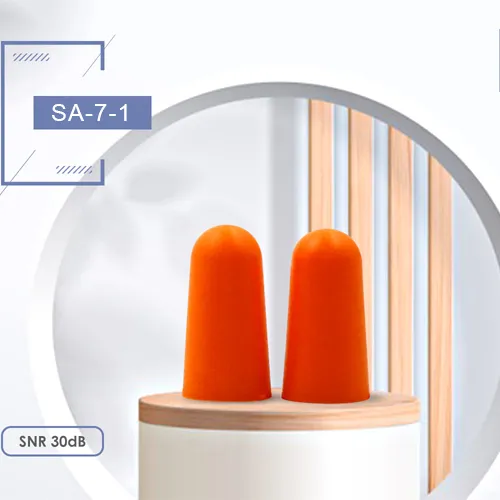
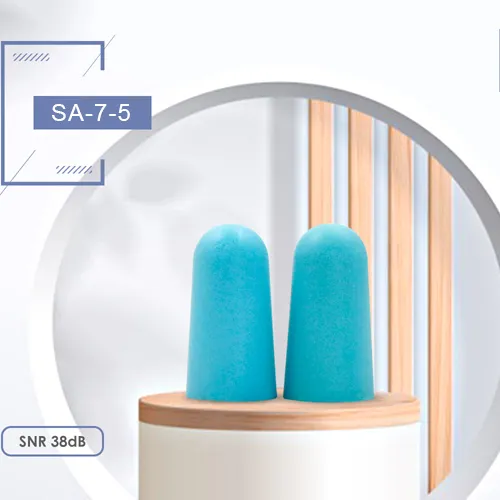
Solvent exposure. Flexographic and gravure printing use solvent-based inks (ethyl acetate, isopropanol, MEK). These solvents can degrade certain silicone and thermoplastic elastomer ear plug materials over months of repeated exposure. For facilities using solvent inks, specify PU foam ear plugs (chemically resistant to common print solvents) or verify material compatibility with the supplier before committing to reusable options.
Paper dust. Corrugating and converting operations generate fine cellulose dust that accumulates on reusable ear plugs and ear muff cushions. Paper dust is hygroscopic -- it absorbs moisture and forms a paste that degrades the seal between the ear plug and the ear canal. Foam ear plugs perform better in dusty print environments because they are replaced each shift, eliminating the buildup problem entirely. For muffs, establish a weekly cushion-cleaning protocol or use disposable hygiene covers.
Selection Matrix by Station
The matrix below matches hearing protection type to specific workstations using the OSHA 50% derating formula: effective NRR = (labeled NRR - 7) / 2. This ensures real-world protection accounts for imperfect fit.
| Workstation | Exposure Level | Minimum Derated NRR | Recommended Protection | Rationale |
|---|---|---|---|---|
| Corrugator aisle | 95-102 dB TWA | NRR 29+ (derated to ~11 dB) | PU foam ear plugs NRR 33 | Continuous exposure, dusty environment favors disposable foam. High NRR needed for 95+ dB sustained noise |
| Flexo press operator | 88-97 dB TWA | NRR 25+ (derated to ~9 dB) | PU foam NRR 29-33 or filtered plugs NRR 24 | Communication needed with press crew. Filtered plugs allow speech while reducing machine noise. Foam for higher-noise older presses |
| Rotary die cutter | 92-105 dB peaks | NRR 29+ (derated to ~11 dB) | PU foam NRR 33 + ear muffs for extended runs above 100 dB | Impact noise pattern requires high single-event attenuation. Dual protection (plugs + muffs) when TWA exceeds 100 dB |
| Folder-gluer operator | 85-93 dB TWA | NRR 23+ (derated to ~8 dB) | Foam NRR 29 or filtered plugs | Moderate noise allows filtered option for communication. Disposable foam for budget-focused programs |
| Slitter-scorer / rewinder | 88-96 dB TWA | NRR 25+ (derated to ~9 dB) | PU foam NRR 29-33 | High-frequency blade noise is well-attenuated by foam. Silicone plugs are second choice but check solvent compatibility |
| Palletizer / end-of-line | 82-92 dB TWA | NRR 23+ (derated to ~8 dB) | Foam NRR 25-29 or banded ear plugs | Intermittent exposure. Banded plugs allow easy on/off as workers move between quiet and noisy zones |
| Compressed air blow-off | 95-105 dB at source | NRR 29+ (derated to ~11 dB) | PU foam NRR 33 + engineering controls | Replace open nozzles with OSHA-compliant safety nozzles (reduces noise 10-15 dB at source). Hearing protection still required |
| Shipping / warehouse area | 82-88 dB TWA | NRR 23+ (derated to ~8 dB) | Foam NRR 25 or banded plugs | Lower exposure but still above 85 dB action level in many facilities. Easy-on/off banded option for drivers and dock workers |
Cost Comparison Per Shift
Printing and packaging operations run 2-3 shifts, and consumable PPE cost scales directly with headcount and shift count. The table below compares protection options per worker per shift based on 2026 bulk pricing at typical MOQ levels.
| Protection Type | Cost Per Shift | NRR Range | Best For | Limitations |
|---|---|---|---|---|
| Disposable PU foam plugs | $0.08-$0.15 | 29-33 | Corrugator, die cutter, blow-off stations | Single-use waste generation. Some workers dislike roll-down insertion |
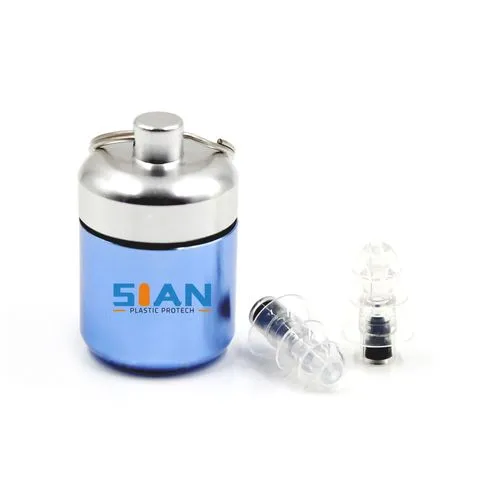
| Reusable filtered plugs | $0.03-$0.05 (amortized over 3-month life) | 20-27 | Press operators, folder-gluer, QC inspectors | Requires cleaning schedule. Solvent compatibility must be verified |
| Banded ear plugs | $0.04-$0.08 (amortized) | 22-28 | Palletizer, shipping, multi-zone movement | Lower NRR than foam. Band pressure can cause discomfort over 8 hours |
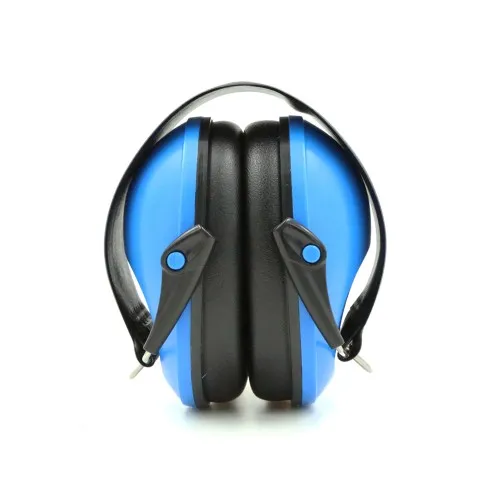
| Passive ear muffs | $0.02-$0.04 (amortized over 12-month life) | 24-31 | Corrugator, die cutter supplemental | Heat buildup in warm press areas. Interference with bump caps and safety glasses |
| Dual protection (foam + muffs) | $0.10-$0.19 | Combined 36+ effective | Rotary die cutter sustained runs above 100 dB | Communication severely limited. Reserve for highest-exposure stations only |
For a 200-person corrugated packaging plant running two shifts, disposable foam plugs cost $6,400-$12,000 per year. Switching the 60% of workers in moderate-noise areas (folder-gluers, palletizers) to reusable filtered plugs reduces the annual PPE budget by roughly 40% while improving communication on the production floor.
Compliance Requirements for Print and Packaging
Print and packaging facilities fall under general industry standards in most jurisdictions. The three regulatory frameworks most relevant to this sector:
OSHA 29 CFR 1910.95 (United States): Requires a hearing conservation program when any employee's 8-hour TWA reaches or exceeds 85 dB. At 90 dB TWA, engineering or administrative controls become mandatory before relying on PPE alone. Most corrugator and die-cutter operators exceed the 90 dB threshold.
EU Directive 2003/10/EC + EN 352: Sets lower and upper exposure action values at 80 dB and 85 dB respectively. Hearing protectors must be CE-marked to EN 352 and rated using the SNR system. European packaging plants must provide hearing protection at 80 dB -- 5 dB lower than the US threshold.
Country-specific standards: Brazil NR-15 uses 85 dB/8h with a 5 dB exchange rate (vs. OSHA's 5 dB and NIOSH's 3 dB). China GB/T 23466 specifies NRR testing requirements for domestic-market hearing protectors. Multi-country packaging operations should source PPE that carries both CE and ANSI certification to simplify global procurement.
Engineering Controls Before PPE
Four high-impact engineering interventions specific to printing and packaging that reduce noise at the source:
Replace open compressed-air nozzles. Open-bore blow-off nozzles are the single most cited noise violation in packaging plants. Replacing them with engineered safety nozzles (Silvent, EXAIR, or equivalent) reduces noise 10-15 dB at the operator position and also reduces air consumption by 30-50%. ROI is typically under 6 months from compressed air savings alone.
Enclose corrugator wet-end and dry-end sections. Partial acoustic enclosures around the single-facer and double-backer sections reduce ambient corrugator noise by 8-12 dB. This is the most expensive intervention (typically $50,000-$150,000 for a full corrugator line) but it reduces noise exposure for every worker on the corrugator floor.
Install vibration-isolating mounts on die cutters. Rotary and flat-bed die cutters transmit impact energy through the floor structure, raising ambient noise levels at adjacent stations. Vibration isolation pads or spring mounts reduce transmitted noise by 5-8 dB and also extend machine bearing life.
Maintain rubber rollers and bearings. Worn impression rollers, hardened ink train rollers, and dry bearings on flexo presses add 3-8 dB of avoidable noise. A preventive maintenance program that replaces rollers on manufacturer schedules rather than run-to-failure typically pays for itself in both noise reduction and print quality improvement.
Frequently Asked Questions
Do ink solvents damage silicone ear plugs?
Some solvents used in flexographic and gravure printing -- particularly MEK, toluene, and xylene -- can swell or degrade silicone and TPE ear plug materials over repeated exposure cycles. PU foam plugs are chemically inert to these common print solvents. If you prefer reusable plugs in a solvent-heavy environment, request a material compatibility data sheet from your PPE supplier and test a sample set for 30 days before bulk ordering.
How do I calculate noise exposure when workers move between machines?
Use the OSHA dose calculation method. Measure the noise level at each station. Record how many minutes each worker spends at each station per shift. Calculate the fractional dose: D = (C1/T1) + (C2/T2) + ... where C is actual time at that level and T is the maximum allowed time. If D exceeds 1.0 (100%), the worker's TWA exceeds 90 dB and controls are required.
Should corrugator operators wear ear muffs or ear plugs?
For corrugator operators exposed to 95-102 dB TWA, high-NRR foam ear plugs (NRR 29-33) provide sufficient protection in most cases. Ear muffs are a secondary option but can cause heat buildup in the warm environment near steam drums. Reserve dual protection (plugs + muffs) for positions where measured TWA consistently exceeds 100 dB, such as directly adjacent to the single-facer.
What NRR rating do I need for a die-cutting station?
Apply the OSHA 50% derating: effective protection = (NRR - 7) / 2. For a 100 dB TWA at a die-cutting station, you need an effective reduction of at least 15 dB to reach 85 dB, which requires a labeled NRR of at least 37 -- higher than any single ear plug provides. This is why dual protection (NRR 33 plugs + NRR 25 muffs) is standard protocol for high-exposure die-cutting positions.
Are there specific hearing protectors for workers who also need eye and head protection?
Yes. Mounting ear muffs to hard hats or bump caps is standard in packaging plants where overhead conveyors or stacking equipment create head-strike risks. Cap-mounted muffs maintain consistent positioning and eliminate the headband interference problem with safety glasses. Foldable ear muffs are an alternative for workers who move between protected and unprotected areas.
How often should disposable ear plugs be replaced in a dusty packaging environment?
Replace foam ear plugs at every shift change in corrugated and converting environments. Paper dust accumulates on the plug surface and degrades the acoustic seal. Some safety managers issue two pairs per shift for workers near corrugators or slitters, providing a mid-shift replacement. The cost difference ($0.08-$0.15 per additional pair) is negligible compared to the hearing damage risk from a compromised seal.
Need to source hearing protection for your printing or packaging operation? Contact EASTRAGON for bulk pricing on foam ear plugs, filtered plugs, and ear muffs with CE EN 352 certification. We ship samples within 3-5 business days. Browse our full product catalog.