Automotive plants pack four distinct noise environments into one building. Stamping presses hit 95-115 dB, robotic welding cells run 90-100 dB, paint booths sit at 80-90 dB, and final assembly lines sustain 85-95 dB across full shifts. Each zone demands different hearing protection. This guide maps the noise profile of a typical car factory, recommends protection by zone, and covers bulk procurement for plant-wide rollouts.
Noise Zones in Automotive Manufacturing
A car moves through roughly four production stages between raw sheet metal and finished vehicle. Each stage generates noise through different mechanisms, and the protection that works on the stamping floor is overkill -- or insufficient -- for the paint booth next door.
| Production Zone | Typical dB Range | Primary Noise Sources | Noise Character |
|---|---|---|---|
| Stamping / Press Shop | 95-115 dB | Hydraulic and transfer presses, blanking dies, coil feeders | Impulsive peaks on every press stroke |
| Body-in-White / Welding | 90-100 dB | Robotic spot welders, MIG welding, grinders, rivet guns | Mixed: continuous hum plus intermittent peaks |
| Paint / Coating | 80-90 dB | Spray booths, ventilation fans, conveyor drives | Steady broadband, lower frequency |
| Final Assembly | 85-95 dB | Torque wrenches, pneumatic drivers, conveyor systems, test benches | Continuous with tool bursts |
According to a study published in the Journal of Occupational Health on auto part factory workers, welding unit workers showed significantly higher rates of hearing threshold shifts compared to workers in quieter departments. The data reinforces what plant safety managers already suspect: zone-based protection assignment outperforms a one-product-fits-all policy.
Workers in automotive plants rarely stay in one zone all day. A maintenance technician might start in stamping, walk through the body shop, and finish a shift in final assembly. Personal dosimetry captures what area monitors miss -- the accumulated exposure across zones during a full rotation. If your plant has not run personal dosimetry in the past 12 months, that is the first investment before any product decision.
Recommended Hearing Protection by Zone
The table below maps each automotive production zone to a protection specification. The logic follows the OSHA derating formula: (NRR - 7) / 2 gives the real-world noise reduction you can count on. For a deeper explanation of how NRR and SNR ratings translate to actual protection, see our complete buyer's guide to SNR and NRR ratings.
| Zone | Target Attenuation | Recommended Product | Why This Choice |
|---|---|---|---|
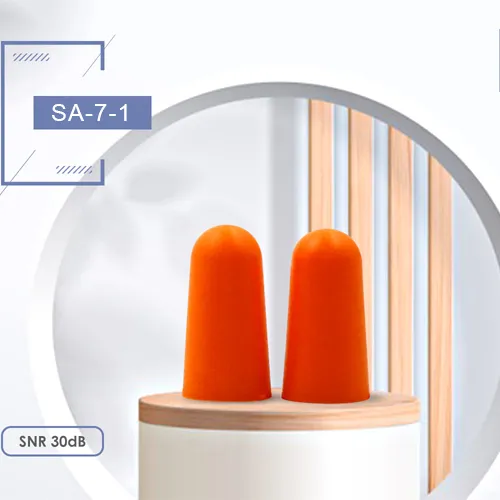
| Stamping (95-115 dB) | NRR 29-33 | SA-7-1 PU Foam Ear Plugs (NRR 33) | Maximum attenuation. Disposable -- no contamination buildup from press oil and metal dust |
| Body-in-White / Welding (90-100 dB) | NRR 25-33 | PU foam ear plugs, corded. NRR 29-33 | Cord prevents loss when removing gloves. Compatible with welding helmets -- no seal compromise |
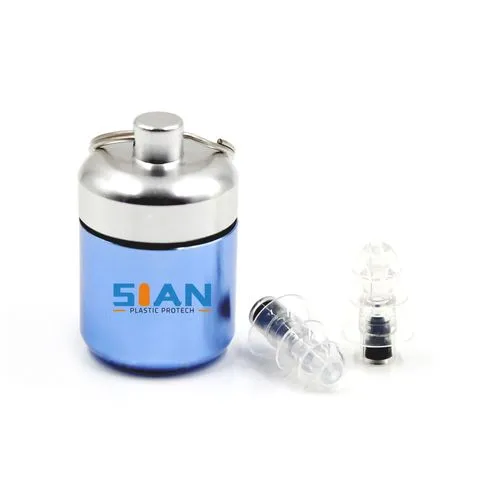
| Paint / Coating (80-90 dB) | NRR 12-20 | SA-2-1 Filtered Earplugs | Speech communication preserved. Lower attenuation matches moderate noise. Compatible with respirator straps |
| Final Assembly (85-95 dB) | NRR 20-29 | Foam plugs NRR 29 or filtered plugs NRR 20, matched to station measurement | Mixed environment -- some stations need foam, others work fine with filtered |
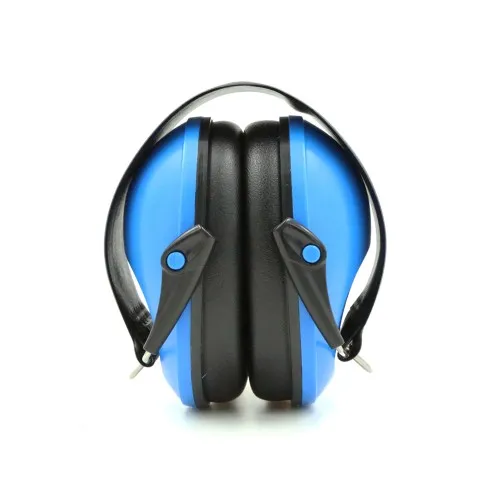
| Visitors / Plant Tours | NRR 22-25 | SA-8-5 Foldable Earmuffs | No fit training needed. Quick on/off. Reusable across visits |
Dual protection -- foam plugs under earmuffs -- should be evaluated for any stamping press operator with measured TWA above 100 dB. The combined setup adds roughly 5 dB of real-world attenuation beyond the higher-rated device alone. For background on how dual protection calculations work, the construction site hearing protection guide covers the framework in detail.
Selecting the Right NRR for Each Station
Plant safety managers sometimes default to "give everyone NRR 33 foam plugs." That approach protects against noise, but it creates a different problem: over-protection isolates workers from verbal warnings, vehicle horns, and equipment alarms. In a plant where forklifts share floor space with assembly workers, not hearing a backup alarm is a safety hazard of its own.
The practical approach uses three tiers.
Tier 1: Maximum Protection (NRR 29-33)
Reserved for stamping, heavy grinding, and any station with measured TWA above 95 dB. Workers in these areas typically rely on visual signals and light-based warning systems rather than audible alerts, so high attenuation does not create a secondary hazard. Standard PU foam plugs at NRR 33 remain the default for these zones.
Tier 2: Balanced Protection (NRR 20-28)
Assembly stations, sub-assembly areas, and robotic welding cells where workers need to hear team communication and line-stop signals. Mid-range foam plugs or high-attenuation filtered plugs both work here. The choice often comes down to replacement frequency: foam is daily, filtered is bi-weekly to monthly with cleaning.
Tier 3: Communication-Priority Protection (NRR 12-20)
Paint booths, quality inspection stations, and areas below 90 dB where speech intelligibility is operationally important. Filtered earplugs reduce volume evenly across frequencies instead of muffling everything. Workers report higher satisfaction and -- more importantly -- higher voluntary compliance in these zones.
Automotive-Specific Challenges
Car plants share noise problems with general manufacturing, but three factors make automotive facilities different enough to address separately.
Shift length and rotation. Most automotive plants run two or three shifts. Workers on 10 or 12-hour shifts accumulate more noise dose than the 8-hour TWA assumes. At 12 hours, the equivalent exposure limit drops from 90 dB to roughly 87 dB. A station that measures 89 dB is compliant on paper for an 8-hour shift but exceeds the safe dose at 12 hours.
Mixed PPE stacking. Automotive workers often wear safety glasses, hard hats or bump caps, and sometimes respirators -- all at the same time as hearing protection. Earmuff headbands compete with hard hat suspension systems and safety goggle temples for the same space on the head. This is why foam ear plugs dominate in automotive: they sit inside the ear canal and do not interfere with any other PPE layer. For more on this equipment compatibility issue, see our welding and fabrication guide.
Impulsive noise from stamping. Continuous noise and impulsive noise damage hearing through different mechanisms. A press that fires every 6 seconds generates peak SPL events that standard TWA measurements can underestimate. EN 352 and ANSI S12.6 test methods include impulse noise performance data, but most product labels only show the single-number NRR. When specifying for stamping, request the full octave-band attenuation data from your supplier to verify low-frequency performance against press strike frequencies.
Bulk Pricing, MOQ and Lead Times
Automotive plants consume hearing protection at scale. A single stamping plant with 300 workers using two pairs of disposable plugs per shift burns through 12,000 pairs per month on a 20-day schedule. EASTRAGON supplies hearing protection direct from our factory with full CE EN 352-2 and ANSI S3.19 certification.
- Foam ear plugs (disposable): MOQ 5,000 pairs per SKU. A typical automotive plant trial starts at 10,000-20,000 pairs covering two product types across four zones
- Filtered ear plugs (reusable): MOQ 5,000 pairs per SKU. Lower consumption rate makes smaller initial orders practical
- Earmuffs: MOQ 1,000 units per SKU. Primarily for visitor programs and supervisory walkthrough kits
Lead times: Standard catalog SKUs ship in 15-20 working days from order confirmation. OEM and private label programs with custom packaging run 20-25 working days. Sample orders dispatch within 3-5 working days.
Volume pricing breaks at 50,000 pairs, 200,000 pairs, and container-load quantities. For plants running annual contracts, scheduled monthly shipments reduce warehousing needs and ensure consistent stock rotation.
Frequently Asked Questions
What hearing protection do stamping press operators need?
Stamping presses generate 95-115 dB with impulsive peaks on every stroke. Operators need NRR 29-33 disposable foam ear plugs as the baseline. For stations with measured TWA above 100 dB, evaluate dual protection: foam plugs under earmuffs. Request octave-band attenuation data from your supplier to verify the plug performs at the low frequencies where press noise concentrates.
Can assembly line workers use filtered ear plugs instead of foam?
Yes, in zones measuring below 95 dB. Filtered ear plugs (NRR 12-20) reduce noise while preserving speech clarity, which improves both compliance rates and safety on mixed-traffic floors. For assembly stations above 95 dB, foam plugs at NRR 29+ are required. Measure each station individually -- noise varies significantly along the same line.
How many pairs of ear plugs does an automotive plant use per month?
For disposable foam plugs at two pairs per worker per shift on a single-shift operation: multiply headcount by 40 (2 pairs x 20 working days) for monthly consumption. A 300-worker plant on one shift uses approximately 12,000 pairs per month. Add 20% buffer for visitors, waste, and replacement. Multi-shift operations multiply accordingly.
Do EASTRAGON ear plugs meet automotive OEM supplier requirements?
EASTRAGON foam and filtered ear plugs carry CE EN 352-2 (EU) certifications. Both standards are accepted by major automotive OEMs and their Tier 1-2 suppliers globally. Full test reports, material safety data sheets, and compliance documentation are available for supplier qualification packages. Contact us for documentation.
What is the best hearing protection for paint booth workers?
Paint booths typically run 80-90 dB from spray equipment and ventilation systems. Filtered ear plugs with NRR 12-16 provide sufficient attenuation while allowing clear communication between spray operators. They also avoid interference with respirator straps, which is a common problem with over-ear earmuffs in paint environments.
How do I start a hearing protection trial at our plant?
EASTRAGON ships sample kits within 3-5 working days. A practical trial covers two product types (foam + filtered) across your highest-noise and moderate-noise zones for 30 days. We provide trial protocol guidance including fit testing checkpoints and worker feedback forms. Request a free sample kit with your noise survey data and we will recommend specific products for each zone.
Ready to spec hearing protection across your automotive plant? Send EASTRAGON your floor plan and noise survey data -- we will build a zone-matched product recommendation within 48 hours. Samples ship free, MOQ from 5,000 pairs, and full OEM programs are available for Tier 1-2 automotive suppliers.