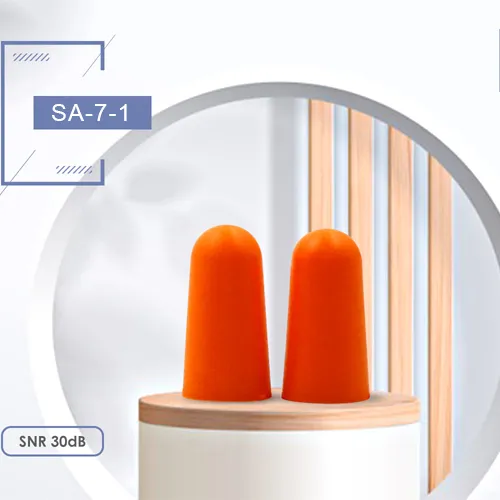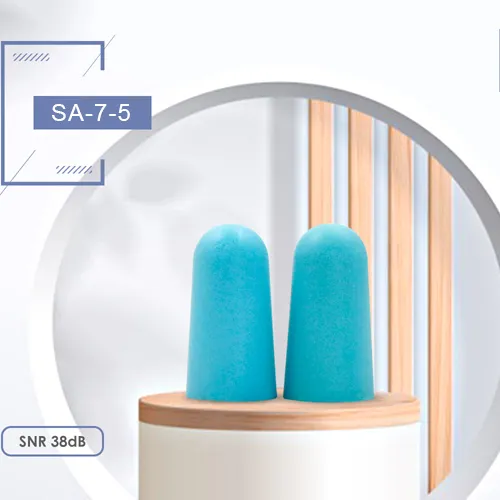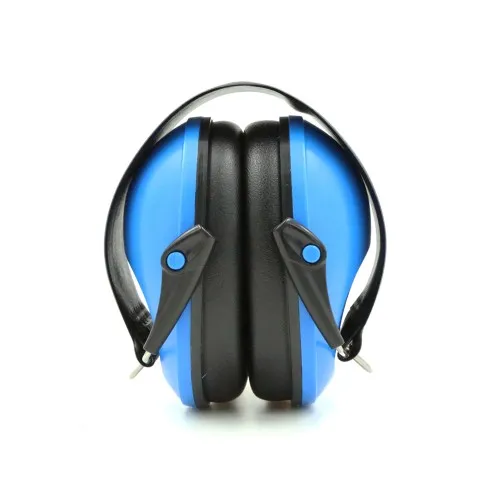
What hearing protection fits under a welding helmet? In-ear plugs — foam or reusable silicone, NRR 29 minimum — are the only option that works reliably under a welding helmet. Ear muff cups sit exactly where the helmet headgear and face-shield straps pass, breaking the cushion seal and cutting rated attenuation by up to 50%. With grinding at 110 dB and plasma cutting at 115 dB on the same floor, welders need corded plugs they can reinsert with gloves on, worn under the helmet with no interference.
For welding and metal fabrication, ear plugs are almost always the correct choice over ear muffs — welding helmets and face shields break the seal on ear muff cups, reducing rated attenuation by up to 50%. Grinding peaks at 110 dB, plasma cutting reaches 115 dB, and impulsive hammer blows can hit 120 dB. Under those conditions, a compromised ear muff provides inadequate protection. This guide covers noise levels by process, helmet-compatible hearing protection options, a process-by-process selection framework, and EASTRAGON bulk purchasing details for safety managers and PPE distributors.
Noise Levels in Welding and Metal Fabrication
Welding shops are among the most acoustically complex industrial environments. Unlike a manufacturing plant with steady-state machine noise, a fabrication floor combines continuous background noise, high-impulse transient events, and prolonged grinding — often within the same 8-hour shift. Understanding each noise source separately is essential for correct hearing protection selection.
According to OSHA's occupational noise exposure standards, workers must be enrolled in a hearing conservation program at 85 dB TWA and must wear hearing protection at 90 dB TWA. The welding environment frequently exceeds both thresholds.
| Process | Typical Noise Range | Primary Noise Character | Compliance Risk |
|---|---|---|---|
| MIG / TIG welding (arc) | 85–95 dB | Continuous, broadband hiss | Moderate — borderline 85 dB action level |
| Angle grinding | 100–110 dB | High-frequency continuous | High — mandatory protection required |
| Plasma cutting | 105–115 dB | Continuous, high-pitched | Very high — double protection may apply |
| Oxy-fuel cutting | 90–100 dB | Hiss plus intermittent pop | High |
| Chipping / hammer scaling | 110–120 dB | Impulsive peaks | Very high — peak impulse risk |
| Press brake / punch press | 95–110 dB | Impulsive, low-frequency | High |
| Shearing and cutting | 95–105 dB | Impact plus continuous | High |
A welder running a MIG torch may spend significant time at a manageable 90 dB — but the same worker will typically pick up an angle grinder multiple times per shift, instantly pushing exposure above 105 dB. Safety managers must account for peak task noise, not just average shift levels, when specifying hearing protection for fabrication workers.
Ear Plugs vs Ear Muffs Under Welding Helmets
The single most overlooked issue in welding PPE programs is the acoustic compromise introduced by welding helmets and face shields. A standard auto-darkening welding helmet has a thick headband that presses against the skull. When ear muff cups are worn simultaneously, the headband shifts the muff cushion out of plane, creating a gap at the temple or jaw line. Lab tests show this gap can reduce real-world NRR attenuation by 25–50%, turning an NRR 25 ear muff into an effective NRR 12–18 in the field.
Face shields present the same problem in different form: the shield's chin guard or lateral cheek coverage creates interference with the muff cup path. The result is a protection device that looks compliant from a distance but fails the worker when it matters most.
Ear plugs avoid this problem entirely. Because they sit entirely within the ear canal, no external headgear interferes with their attenuation mechanism. Proper insertion of a foam ear plug achieves its rated NRR regardless of what is worn on the head. For a detailed explanation of how NRR and SNR ratings are calculated and applied, see our complete buyer's guide to SNR and NRR ratings.
| Factor | Ear Plugs | Ear Muffs |
|---|---|---|
| Welding helmet compatibility | Full compatibility — no seal interference | Significant seal compromise from headband pressure |
| Face shield compatibility | Full compatibility | Cheek guard creates cup gap on most designs |
| Effective NRR with helmet | Rated NRR maintained (e.g., NRR 33) | Effective NRR typically drops to 12–18 |
| Heat comfort during welding | No contact with outer ear — minimal heat | Cups trap heat against ear — uncomfortable in hot environments |
| Spark and spatter risk | No external surface to catch sparks | Foam cushion can be damaged or ignited by weld spatter |
| Disposable hygiene option | Yes — full daily or per-shift replacement | Limited — only cushion replacement available |
| Visible compliance check | Difficult — requires closer inspection | Easy — immediately visible to supervisors |
| Best application | All welding and fabrication with helmets | Visitor access to shop floor (no helmet worn) |
For the welding environment specifically, high-NRR disposable foam ear plugs represent the correct default specification. Reusable silicone ear plugs are a viable alternative where hygiene programs support daily cleaning, but their lower NRR ceiling (typically NRR 22–27 versus foam's NRR 29–33) makes them marginal for plasma cutting and heavy grinding. Ear muffs should be reserved for visitors or short-duration entries into the shop where a welding helmet is not worn.
How to Choose Protection by Welding Process
Rather than applying a single product across the entire welding operation, safety managers achieve better compliance and protection outcomes by matching hearing protection to the primary noise source of each work station. This process-based framework uses three tiers based on measured TWA.
Tier 1 — MIG / TIG Arc Welding (85–95 dB TWA)
At the arc welding bench, noise is moderate and continuous. Workers spend extended time in one position, making comfort a primary driver of compliance. A mid-range foam ear plug with NRR 29–32 provides adequate protection with margin to spare. Corded ear plugs are strongly preferred here: the cord prevents the plug from being set down on the bench and contaminated with metal filings or coolant fluid. Look for plugs with a T-shaped or tapered profile for comfortable all-day wear.
Tier 2 — Grinding and Cutting (100–115 dB TWA)
Angle grinding and plasma cutting require maximum-rated protection. Specify foam ear plugs at NRR 33 as the standard for any workstation where grinding is a primary task. At these noise levels, the OSHA-derated effective protection (NRR − 7) ÷ 2 should still deliver at least 13 dB of attenuation — enough to bring 110 dB exposure down to approximately 97 dB, within the 8-hour PEL range. For workers who spend the majority of their shift grinding, dual protection (foam ear plugs plus compatible over-helmet muffs) should be evaluated based on site noise measurement data. See our guides on high-noise construction environments and shipyard and shipbuilding trades for dual-protection framework details applicable to fabrication shops.
Tier 3 — Chipping, Scaling, and Hammer Work (110–120 dB peak)
Impulsive noise from hammers, chisels, and scaling tools generates peak SPL events that conventional TWA calculations can underestimate. At this tier, NRR 33 foam ear plugs are mandatory, and dual protection should be treated as the default rather than an exception. The impulsive character of the noise also argues for foam over silicone: foam provides better broadband attenuation, including the low-frequency components of impact noise that flanged silicone plugs may transmit more freely.
Selecting by Worker Type
- Full-time fabrication welder: NRR 33 foam ear plug, corded, daily replacement.
- Grinder / plasma cutter operator: NRR 33 foam ear plug + dual-protection evaluation per noise survey.
- Welding supervisor or QC inspector: Passive ear muff (NRR 22–25) acceptable for brief walk-through inspections where no helmet is worn.
- Shop visitor / short-duration entry: Disposable foam ear plugs, uncorded, single use. NRR 29 minimum.
For a broader framework covering noise assessment methodology applicable to fabrication environments, see our hearing protection guide for manufacturing plants.
Bulk Pricing, MOQ and Lead Times
For safety managers, procurement officers, and PPE distributors sourcing hearing protection for welding and fabrication operations, EASTRAGON offers factory-direct supply with CE EN 352-2 certification on all foam ear plug lines.
Standard minimum order quantities:
- Foam ear plugs (disposable): 5,000 pairs per SKU — suitable for a single plant trial or first container order from a regional distributor
- Corded foam ear plug sets: 5,000 pairs per SKU
- Passive ear muffs: 1,000 units per SKU
Lead times from confirmed order:
- Standard catalog SKUs: 15–20 working days
- OEM / custom color or cord length: 20–25 working days
- First-time sample orders: dispatched within 3–5 working days
OEM and private label availability: EASTRAGON supports full OEM programs including custom packaging artwork, private label branding, and custom NRR or SNR test certificates under your brand name. Minimum quantities for OEM packaging runs are the same 5,000-pair threshold for foam ear plugs. Volume price breaks apply at 50,000 pairs, 200,000 pairs, and container-load quantities.
All welding-specification foam ear plugs are available with product-level test reports, material safety data, and CE/ANSI certification documentation ready for distributor or end-customer compliance files.
Frequently Asked Questions
Can I wear ear muffs under a welding helmet?
Technically yes, but it is not recommended for primary hearing protection. The headband of a welding helmet compresses the ear muff cushion and breaks the acoustic seal, reducing real-world attenuation by 25–50% compared to the rated NRR. Ear plugs are the correct specification for workers wearing welding helmets, as they are unaffected by external headgear.
What NRR rating do I need for angle grinding?
Angle grinding generates 100–110 dB at the operator position. OSHA's derating formula — (NRR − 7) ÷ 2 — means a foam ear plug rated NRR 33 delivers approximately 13 dB of effective protection in real-world use. For a 110 dB grinding environment, that brings exposure to approximately 97 dB. For workers grinding full-shift, NRR 33 foam ear plugs are the minimum specification, and a dual-protection evaluation is recommended.
Are disposable foam ear plugs safe in a welding environment?
Yes. Foam ear plugs sit inside the ear canal and have no external surface exposed to weld spatter or grinding debris. Unlike ear muff foam cushions, which can be damaged by hot particles landing on the cup exterior, foam ear plugs are unaffected by the welding environment. Standard daily or per-shift replacement maintains hygiene and attenuation performance.
What is the MOQ for EASTRAGON welding-specification ear plugs?
The standard MOQ is 5,000 pairs per SKU for foam ear plugs, including corded variants suited for welding environments. OEM and private label programs are available at the same 5,000-pair threshold. Sample orders are fulfilled within 3–5 working days. Lead time for standard production orders is 15–20 working days from order confirmation.
Do EASTRAGON ear plugs meet OSHA requirements for welding noise?
EASTRAGON foam ear plugs are tested and certified to CE EN 352-2 for the EU and global markets, with full CE test documentation available on request. Buyers selling into the United States should confirm the NRR labeling and ANSI S3.19 test report that EPA and OSHA (29 CFR 1910.95) require for that market.
Request a free sample kit and technical specification sheet for welding environments. EASTRAGON supplies safety managers, PPE distributors, and procurement officers across 50+ countries. Submit your requirements and receive a response within 24 hours.