Pharmaceutical plants generate more noise than most people expect. Tablet compression machines run at 90-100 dB, fluid bed granulators reach 88-95 dB, and high-speed filling lines sustain 82-88 dB across full shifts. The complication is that standard industrial hearing protection may not meet cleanroom particulate and contamination requirements. This guide covers noise sources in pharma production, cleanroom-compatible hearing protection options, and procurement considerations for GMP-regulated facilities.
Noise Sources in Pharmaceutical Production
Pharma manufacturing noise comes primarily from mechanical equipment running at high speeds inside enclosed or semi-enclosed rooms. Unlike open-plan factories, pharmaceutical production rooms are often small, with hard walls and limited acoustic absorption -- conditions that amplify equipment noise through reflection.
| Production Area | Typical dB Range | Primary Noise Sources | Noise Character |
|---|---|---|---|
| Tablet Compression | 90-100 dB | Rotary tablet presses (turret rotation, punch strikes, forced feeders) | Continuous with rhythmic impact from punch tooling |
| Granulation / Milling | 88-95 dB | Fluid bed dryers/granulators, hammer mills, oscillating granulators, conical mills | Broadband, continuous. Hammer mills generate impulsive peaks |
| Coating / Spray Drying | 85-92 dB | Coating pans, spray dryers, air handling units, exhaust fans | Steady broadband from air movement and drum rotation |
| Filling & Packaging | 82-88 dB | High-speed cartoners, bottle fillers, blister pack machines, conveyor systems | Continuous mechanical with periodic peaks from packaging operations |
| Utilities / Mechanical Rooms | 90-105 dB | HVAC systems, compressors, vacuum pumps, purified water systems, boilers | Continuous low-frequency drone |
A noise assessment study of pharmaceutical facilities by Larson Davis found that workers in solid dosage production areas routinely encounter noise levels above 85 dB TWA, the threshold at which OSHA requires enrollment in a hearing conservation program. The challenge is that pharmaceutical workers often move between production suites during a single shift, accumulating exposure across multiple noise environments.
Why Standard Industrial Hearing Protection Falls Short in Pharma
A cotton fiber shed from a foam earplug is a nuisance on a construction site. Inside an ISO Class 7 cleanroom producing injectable drugs, that same fiber is a potential batch contamination event. Three constraints make pharmaceutical hearing protection selection different from general manufacturing.
Particulate Shedding
ISO 14644-1 sets airborne particulate limits by cleanroom class. Standard PU foam earplugs shed microscopic fibers during insertion, removal, and while worn. In ISO Class 7 and stricter environments, shedding plugs may push particle counts above acceptable limits during dynamic operation. The practical response is either low-shedding foam formulations, smooth-skin silicone plugs, or wrapped disposable plugs designed for controlled environments.
GMP Documentation Requirements
FDA 21 CFR Part 211 and EU GMP Annex 1 require that any material introduced into a classified production area be documented, justified, and traceable. Hearing protection worn inside production suites needs material safety data sheets, particulate shedding test data, and sometimes a supplier qualification audit. The procurement process is slower than ordering standard industrial PPE, but choosing a supplier who already holds this documentation eliminates months of qualification work.
Gowning Compatibility
Pharmaceutical workers in classified areas wear full gowning: coveralls, hoods, face masks, goggles, and sometimes respirators. Over-ear earmuffs conflict with hood coverage and goggle straps. Most pharma facilities default to in-ear plugs for this reason, reserving earmuffs for non-classified utility areas where gowning is minimal.
Recommended Hearing Protection by Pharma Production Zone
The recommendations below follow the same OSHA derating approach used in our SNR and NRR ratings guide: (NRR - 7) / 2 gives the real-world attenuation for planning purposes.
| Zone | Target Attenuation | Recommended Product | Why This Choice |
|---|---|---|---|
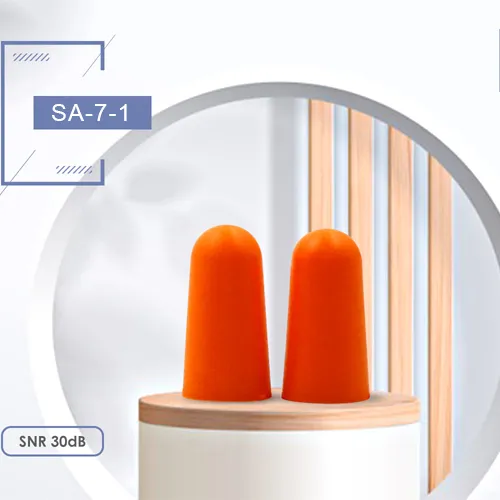
| Tablet Compression (90-100 dB) | NRR 25-33 | SA-7-1 PU Foam Ear Plugs (NRR 33) or smooth-skin variant | Maximum attenuation for highest-noise pharma zone. Disposable eliminates cross-contamination between suites |
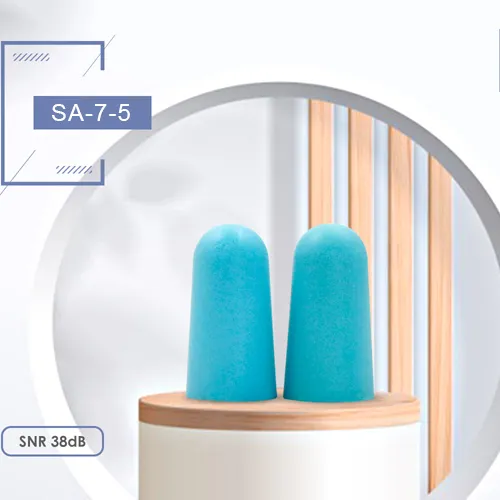
| Granulation / Milling (88-95 dB) | NRR 22-29 | SA-7-5 Foam Ear Plugs (NRR 29) corded | Cord prevents dropped plugs in granulation equipment. Mid-high attenuation matches zone noise |
| Coating / Spray Drying (85-92 dB) | NRR 18-25 | Foam plugs NRR 25 or filtered plugs NRR 20 | Workers need to hear process alarms and communicate with operators in adjacent suites |
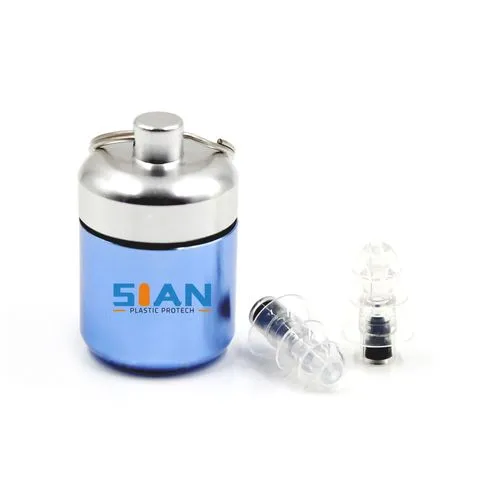
| Filling & Packaging (82-88 dB) | NRR 12-20 | SA-2-1 Filtered Earplugs | Speech clarity preserved. Lower attenuation matches moderate noise. Compatible with gowning |
| Utilities / Mechanical (90-105 dB) | NRR 25-33 | Foam plugs NRR 33 (standard industrial grade acceptable -- non-classified area) | No cleanroom constraints. Maximum protection for extended maintenance work near compressors |
For any zone where measured TWA exceeds 100 dB -- typically utility rooms with large compressor banks -- evaluate dual protection: foam plugs under earmuffs. The construction site guide covers the dual protection calculation framework in detail.
Cleanroom Compatibility Checklist
Before specifying hearing protection for classified production areas, verify these five points with your supplier.
- Particulate shedding data: Request test results per ISO 14644-1 or equivalent. Standard PU foam is acceptable for ISO Class 8 and unclassified areas. ISO Class 7 and stricter may require low-shedding or wrapped variants
- Material compatibility: Confirm the plug material does not react with process chemicals or cleaning agents used in your facility (isopropanol, hydrogen peroxide vapor, peracetic acid)
- Individually wrapped packaging: Plugs entering classified zones should be individually poly-wrapped to prevent contamination during storage and distribution
- Latex-free certification: Latex allergies are common in pharmaceutical workforces. Confirm TPE or silicone materials with no natural rubber content
- Color coding: Detectable (typically blue) ear plugs are standard in food and pharma to allow visual identification if a plug is dropped into product
Compliance Framework: OSHA, EU GMP, and ISO 14644
Pharmaceutical hearing protection programs must satisfy two regulatory streams simultaneously: occupational safety rules and product quality rules. These streams rarely reference each other, which creates coordination gaps.
Occupational safety (OSHA / EU Directive 2003/10/EC): Requires audiometric testing, noise monitoring, and hearing protection when TWA exceeds 85 dB. The country-by-country noise exposure limits vary, but 85 dB as the action level is nearly universal. Hearing conservation programs must include annual audiograms, training, and access to at least two types of hearing protection.
Product quality (FDA 21 CFR 211, EU GMP Annex 1, ISO 14644): Any PPE worn in classified areas must not compromise product quality. This means hearing protection selection is not just the EHS manager's decision -- Quality Assurance must review and approve materials entering production suites. Cross-functional sign-off between EHS and QA is the practical workflow.
A 2025 integrated noise management framework published in Sustainability noted that organizations combining occupational safety noise controls with production quality requirements achieve higher compliance rates than those managing them separately. The pharma industry's existing cross-functional audit culture makes this integration more natural than in other manufacturing sectors.
Procurement and Supplier Qualification
Pharmaceutical procurement cycles for PPE run 2-4 months from initial vendor assessment to approved supplier status. The bottleneck is usually documentation, not product testing. EASTRAGON supplies hearing protection direct from our factory with full certification packages ready for pharma supplier qualification.
- Foam ear plugs (disposable): MOQ 5,000 pairs per SKU. For facilities using individually wrapped plugs in classified areas, wrapped packaging is available from 10,000 pairs
- Filtered ear plugs (reusable): MOQ 5,000 pairs per SKU. Includes cleaning protocol documentation for GMP environments
- Documentation package: CE EN 352-2 certificate, ANSI S3.19 test report, material safety data sheet, material composition declaration, biocompatibility statement
Lead times: Standard catalog SKUs ship in 15-20 working days. OEM and private label programs with pharma-specific packaging run 20-25 working days. Sample orders dispatch within 3-5 working days.
Frequently Asked Questions
Can standard foam ear plugs be used in pharmaceutical cleanrooms?
Standard PU foam ear plugs are acceptable in ISO Class 8 and unclassified pharmaceutical production areas. For ISO Class 7 and stricter environments, request particulate shedding test data from your supplier. Low-shedding foam variants or smooth-surface silicone plugs are the alternatives when standard foam does not meet cleanroom particle limits.
What noise level requires hearing protection in a pharma plant?
OSHA sets the action level at 85 dB TWA (8-hour time-weighted average). At this threshold, employers must provide hearing protection and enroll workers in a hearing conservation program with annual audiometric testing. Most tablet compression rooms and granulation areas exceed 85 dB, making hearing protection mandatory in those zones.
Do ear plugs need to be individually wrapped for GMP areas?
FDA and EU GMP guidelines do not explicitly mandate individual wrapping for hearing protection. However, most pharmaceutical QA teams require it for plugs entering classified production suites as a contamination control measure. Individually wrapped plugs also simplify distribution through gowning airlocks and reduce handling contamination.
How do I get ear plugs approved for our pharmaceutical facility?
Start with a sample request to your supplier. You need four documents for QA review: the CE or ANSI test certificate, material safety data sheet, material composition declaration, and particulate shedding data if used in classified areas. EASTRAGON provides all four documents with sample shipments to accelerate the qualification process. Contact us with your cleanroom classification and we will include the relevant documentation.
What color ear plugs should pharmaceutical plants use?
Blue or other high-contrast colors are recommended. If a plug falls into product during manufacturing, blue plugs are immediately visible against most pharmaceutical powders and liquids. This is the same foreign-body detection logic used in food processing plants. Some facilities also use metal-detectable ear plugs for an additional detection layer.
How many ear plugs does a pharmaceutical plant consume per month?
For disposable foam plugs at one pair per worker per shift: multiply the headcount in classified areas by 20 working days. A solid dosage facility with 80 production workers uses approximately 1,600 pairs per month on a single-shift operation. Add 15-20% for QA holds, visitor access, and waste. Multi-shift and multi-suite operations multiply accordingly.
Need hearing protection qualified for your pharmaceutical facility? Send EASTRAGON your cleanroom classification and noise survey data -- we will recommend specific products for each production zone and include all QA documentation with your sample shipment. Samples ship free, MOQ from 5,000 pairs.